

Every time you create an account, verify a phone number, upload a photo, or even browse a website,
fragments of your identity scatter across the internet.
Over time, these fragments form a digital version of you — one that companies profile,
governments analyze, advertisers target, and algorithms try to predict.
Increasingly, this online self is not something you manage but something that manages you.
- What is “digital identity” in the modern age?
- Your identity is shaped by systems you don’t see
- The illusion of control: deleting is not enough
- When your identity is no longer yours: the rise of inferred data
- Multiple identities: your online selves don’t match
- Why anonymity keeps shrinking
- The geopolitics of identity: who owns your digital self?
- The corporate takeover of identity
- What a healthier digital identity future could look like
- Your digital identity is a moving target
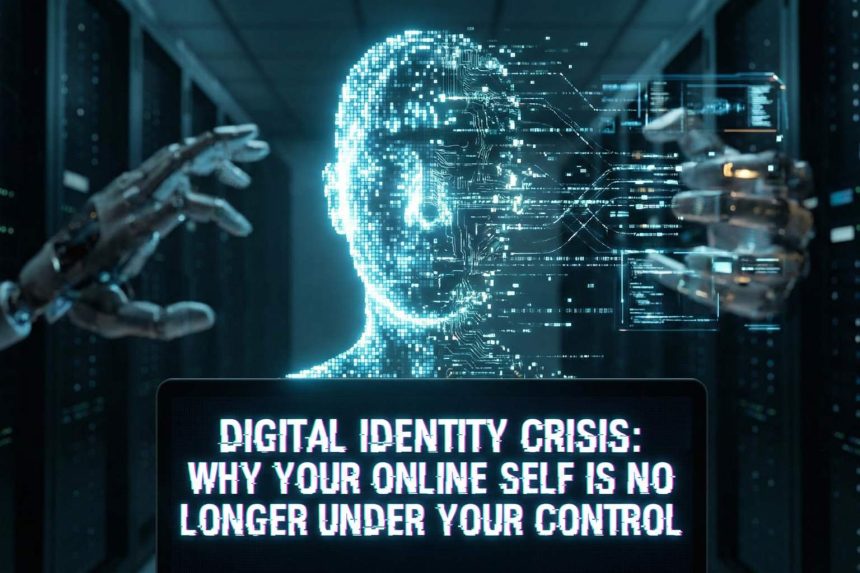
This is the digital identity crisis: the widening gap between who you think you are online,
and who the internet decides you are.
What is “digital identity” in the modern age?
Digital identity used to be simple: a username, a password, maybe a profile picture.
Today, it is a constantly evolving ecosystem of:
- Personal data (name, age, phone, email)
- Behavioral patterns (searches, clicks, scrolling speed)
- Biometrics (face, fingerprint, voice)
- Metadata (location, device, time of activity)
- Social connections (contacts, messages, networks)
- Inferred traits (personality, political orientation, interests)
You might control some of this — but much of it is created or inferred without your knowledge.
Your identity is shaped by systems you don’t see
Platforms and algorithms build models of who you are based on:
- What you post — and what you delete
- How long you pause on a video
- Which faces your camera detects in photos
- Apps you installed years ago
- Where you take your phone each day
These pieces are analyzed, cross-referenced, and used to determine:
- Which ads you receive
- Which news you see
- Which prices you’re offered
- Which opportunities are shown to you
- Whether automated systems classify you as low or high risk
In many cases, you are unaware that these decisions are being made at all.
The illusion of control: deleting is not enough
Many people believe that deleting accounts, clearing history, or using incognito mode
gives them control over their digital identity.
Unfortunately, deletion rarely erases your digital footprint.
- Data brokers store copies of your information indefinitely
- Shadow profiles maintain details about non-users
- Old app permissions continue transmitting data
- Backups and archives remain for years
- Devices share identifiers you cannot reset
The version of you stored in corporate databases often outlives your attempts to clean up.
When your identity is no longer yours: the rise of inferred data
One of the biggest shifts in the digital identity crisis is the rise of inferred identity —
data about you that you never provided.
Algorithms predict intimate details such as:
- Sexual orientation
- Relationship status
- Budget level and financial stress
- Medication needs
- Mental health indicators
- Political persuasion likelihood
These predictions can be surprisingly accurate — and yet completely unverified.
They become part of your identity in the eyes of platforms, advertisers, and sometimes governments.
Multiple identities: your online selves don’t match
The online world splits your identity into parallel versions:
- The social identity – what you post, like, share
- The advertising identity – who marketers think you are
- The behavioral identity – what your patterns reveal
- The algorithmic identity – predictions about your future
- The biometric identity – how your body authenticates you
- The shadow identity – data collected without your consent
These identities do not always align — and you have limited visibility into most of them.
Why anonymity keeps shrinking
True anonymity is becoming nearly impossible due to:
- Device fingerprinting
- Cross-site tracking
- WiFi and Bluetooth background signals
- IP-based household identification
- Behavioral biometrics
Even when you try to hide your identity, your behavior becomes your signature.
The geopolitics of identity: who owns your digital self?
Digital identity has become a geopolitical asset.
Nations compete for power by controlling:
- National digital ID systems
- Biometric databases
- Cloud hosting infrastructure
- Data localization policies
- Access to private platform datasets
Identity is no longer just personal — it has strategic value.
The corporate takeover of identity
Major tech companies increasingly function as identity providers:
- “Login with Google”
- “Sign in with Apple”
- “Login with Facebook”
These systems are convenient, but they centralize power over how people prove who they are.
Losing access to an account can lock you out of:
- Financial apps
- Government services
- Healthcare portals
- Communication platforms
Identity becomes a product — and losing it becomes a vulnerability.
What a healthier digital identity future could look like
Solving the digital identity crisis requires a shift toward systems that give individuals more control:
- Decentralized identity (self-managed identifiers)
- Zero-knowledge authentication (prove something without revealing everything)
- Minimal data collection by design
- Revocable permissions for apps and services
- Legal limits on inference and profiling
These solutions aim to rebalance power away from corporations and governments.
Your digital identity is a moving target
The crisis is not simply that you lack control.
It’s that your identity now evolves independently of you, through systems you cannot see and rules you did not choose.
Companies shape how you appear to others.
Algorithms shape how you appear to yourself.
Understanding this shift is the first step toward regaining agency —
because in the digital age, protecting your identity is not about hiding who you are,
but understanding who the internet believes you to be.