

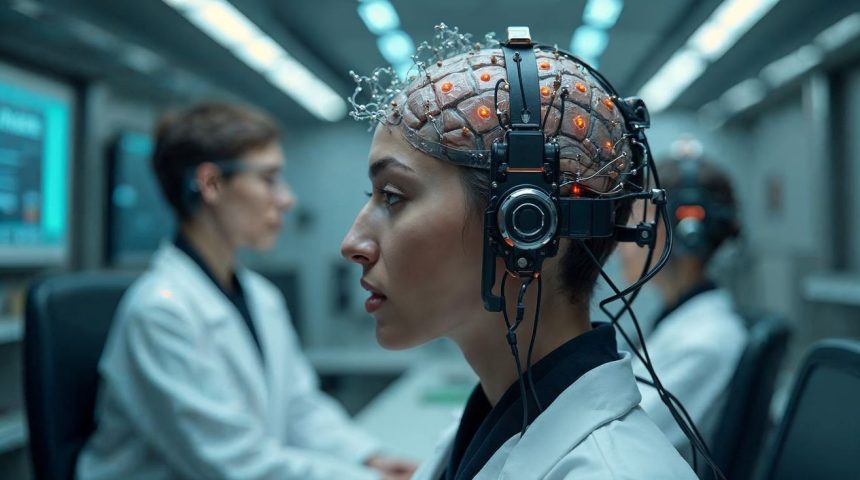
Imagine a world where your mind’s whispers could be heard by a computer, where your private thoughts might not be so private anymore. Sounds like science fiction, right? But with the rapid advancements in brain-computer interfaces (BCIs), this futuristic vision is inching closer to reality. It’s both fascinating and a little unsettling, isn’t it?
The Promise of Brain-Computer Interfaces
At the core of this technological revolution is the brain-computer interface. In simple terms, BCIs are systems that create a direct communication pathway between the brain and an external device. Think of them as a bridge—one that could allow you to control a computer just by thinking. These interfaces are not just a concept; they’re already being used in medical fields. For instance, BCIs have allowed individuals with paralysis to control prosthetic limbs or communicate with loved ones, offering them a new lease on life.
The potential applications are breathtaking. Imagine being able to type out an email just by thinking of the words, or controlling your smartphone without lifting a finger. It’s the kind of technology that could redefine how we interact with the digital world and, quite possibly, how we interact with each other. Yet, as with all powerful tools, BCIs come with their own set of challenges.
The Ethical Minefield
With great power comes great responsibility—or, in this case, a myriad of ethical dilemmas. As BCIs develop, they inevitably raise questions about privacy and consent. If a computer can access your thoughts, who controls that information? Could your mind be hacked? These are not just theoretical concerns. A Forbes article discusses the very real possibility of BCIs being misused in ways that could compromise personal privacy.
Moreover, there’s the issue of consent. If someone else can access your thoughts, even with your permission, where do we draw the line? This question becomes even more complex when considering individuals who may not be able to give informed consent, such as those with severe disabilities or cognitive impairments. It’s a delicate balance to strike, ensuring that the benefits of BCIs do not come at the cost of our fundamental rights.
The Science Behind Reading Thoughts
Delving into the science, you might wonder: how exactly do BCIs read thoughts? The process involves detecting and interpreting the brain’s electrical activity using electrodes. These electrodes can be placed on the scalp or implanted directly into the brain. The recorded signals are then translated into commands that a computer can understand. It’s a bit like learning a new language, one that allows your brain to “talk” to machines.
However, this process is not without its hurdles. The brain is a complex organ, and decoding its signals with precision is no small feat. Researchers are continuously refining their methods to improve accuracy and reliability. A Nature article highlights recent advancements in non-invasive BCIs, which aim to make the technology more accessible and safer for everyday use.
The Road Ahead
As we look to the future, the possibilities for BCIs seem almost limitless. However, with this potential comes the need for careful consideration and regulation. It’s crucial that we establish guidelines to protect individuals’ privacy and rights, ensuring that BCIs are used ethically and responsibly. Public discourse and legislative action will play a vital role in shaping how this technology is integrated into society.
So, where does that leave us? The journey towards fully integrated BCIs is just beginning, and it’s a path paved with complexity and promise. While the idea of machines reading our thoughts might seem daunting, it’s a brave new frontier that could revolutionize our lives in ways we can’t yet fully imagine.
As we navigate this evolving landscape, one thing is clear: BCIs have the potential to change everything—from how we communicate to how we understand the human mind. The key will be balancing innovation with ethical considerations, ensuring that this powerful technology is a force for good.
And who knows? In the near future, you might just find yourself thinking about how to write an article, and your computer will do the typing for you. Until then, let’s keep the conversation going. How do you feel about a world where thoughts could be exposed? Share your thoughts—no interface required!