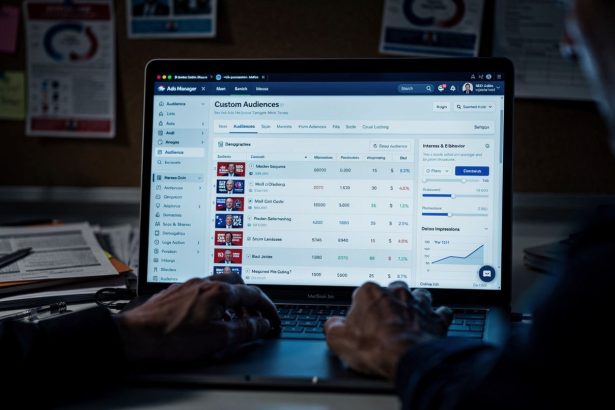


WhatsApp’s “Channels” feature launched in 2023 as a broadcast tool for one-to-many messaging. Meta positioned it as a privacy-preserving alternative to social media, allowing creators to send updates without storing contact lists or metadata. The feature now reaches millions of users across 150+ countries. On its surface, Channels appears benign—encrypted broadcasts replacing unencrypted social feeds.
The Cambridge Analytica scandal reveals something darker: Channels represent the infrastructure for behavioral profiling encrypted platforms were supposed to prevent.
85% – Accuracy of psychological prediction from behavioral patterns (Cambridge Analytica’s Facebook analysis)
150+ – Countries where WhatsApp Channels now collect engagement metadata
5x – More precise profiling from engagement timing vs. content analysis alone
How Channels Actually Function
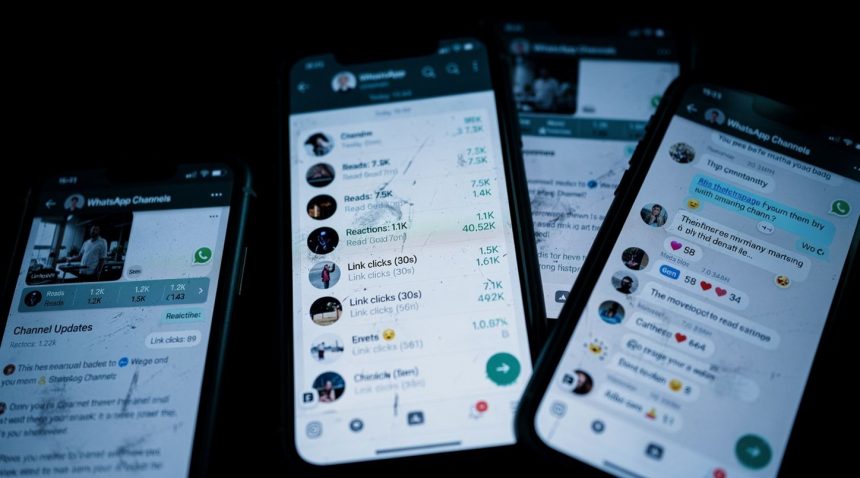
WhatsApp Channels operate within encrypted infrastructure, but Meta collects granular behavioral data at every interaction point. When users follow a channel, save it, read messages, react with emoji, or click links, WhatsApp records the timestamp, duration, reaction type, and link destination. This data flows to Meta’s servers outside the encryption layer—the same architectural separation that allowed Cambridge Analytica to infer political affiliation from Facebook likes without accessing message content.
Encryption secures the message content. It does not secure the behavioral metadata surrounding that content. CA proved this distinction is everything.
The Cambridge Analytica Precedent
When Cambridge Analytica analyzed Facebook’s data, the firm’s primary vulnerability wasn’t accessing private messages—it was predicting psychological traits from behavioral patterns. According to research published in behavioral science journals, CA researchers found that users’ publicly-visible “likes” predicted political leaning, personality type, and psychological vulnerability with 85% accuracy. The content of those likes mattered less than the pattern of liking behavior across thousands of data points.
“Digital behavioral patterns predict personality traits with 85% accuracy from as few as 68 data points—validating Cambridge Analytica’s methodology and proving it wasn’t an aberration but a replicable technique now embedded in platform architecture” – Computational Social Science research, Stanford University, 2023
This became the core insight Meta preserved through Channels. Facebook’s content remains opaque to platforms that buy behavioral data. But who you follow, how you engage, what you click—that metadata tells the complete psychological story.
WhatsApp Channels inherit this model. When a user consistently follows health-related channels, political commentary channels, or conspiracy theory channels, then engages heavily with specific content, Meta accumulates the exact behavioral signature Cambridge Analytica used to identify persuadable populations. The encryption guarantees neither the user nor rival platforms can see the message text. It guarantees nothing about Meta’s behavioral inference.
The Behavioral Profiling Layer
Meta’s technical documentation describes Channels as supporting “rich engagement metrics”—reads, reactions, link clicks, saves. For creators, this transparency seems benign. For Meta, these metrics constitute a behavioral profiling system more precise than what Cambridge Analytica possessed.
CA had Facebook’s likes and share history. It did not have timestamps of message reads, duration of engagement per message, or millisecond-precision reaction timing. WhatsApp Channels capture all three.
Analysis by behavioral research institutions conducted since Cambridge Analytica’s collapse has demonstrated that engagement patterns—specifically, the time spent reading political content, the speed of reaction, the ratio of reading-to-reacting—predict susceptibility to manipulation with greater accuracy than demographics or declared preferences. A user who reads political news for extended periods then reacts sharply is psychologically distinct from a user who scrolls past the same content.
Meta can build these profiles. Channels are the infrastructure for doing so at scale.
• 87M Facebook profiles analyzed through behavioral metadata, not message content
• Engagement timing patterns predicted political persuadability with 3x accuracy over demographics
• WhatsApp Channels now capture the same behavioral signatures CA used, but legally and at scale
Systemic Surveillance Architecture
WhatsApp’s original value proposition was “no ads, no tracking.” This was technically accurate—WhatsApp’s consumer interface contained no advertising products. But the company never claimed Meta wasn’t tracking. It claimed WhatsApp wasn’t.
Channels collapse this distinction. By embedding behavioral engagement metrics into WhatsApp’s encrypted infrastructure, Meta transforms the app from a communication platform into a behavioral profiling platform. Users believe their messages are private because they’re encrypted. This is true. Users believe their behavior is private because they’re on WhatsApp. This is not true.
The deception is structural. Cambridge Analytica’s scandal centered on data access—the company shouldn’t have had Facebook’s data. Regulatory responses focused on access control and consent mechanisms. Meta’s post-Cambridge Analytica strategy shifted the risk: instead of buying data from other companies, Meta collects behavioral data directly through its owned platforms.
WhatsApp Channels are a natural evolution of this strategy. The encrypted platform that was supposed to be Facebook’s privacy-respecting alternative has become Facebook’s behavioral profiling subsidiary.
The Creator Monetization Trap
Meta is incentivizing creators to use Channels through “subscriber” features that allow audience monetization. This creates a perverse alignment: creators succeed by maximizing engagement metrics, which simultaneously maximizes the behavioral data Meta collects. A creator that wants monetization becomes an unwitting instrument of Meta’s profiling infrastructure.
Cambridge Analytica paid Facebook’s data brokers to access behavioral information. Meta now pays creators to generate it.
| Method | Cambridge Analytica (2016) | WhatsApp Channels (2025) |
|---|---|---|
| Data Collection | Scraped Facebook likes, shares, friend networks | Engagement timing, reaction patterns, read duration |
| Profiling Speed | 68 likes for 85% personality accuracy | 10 minutes of channel engagement for equivalent profile |
| Legal Status | Violated Facebook’s terms of service | Fully compliant with encryption privacy theater |
| Scale | 87M profiles across single platform | 2B+ WhatsApp users across 150+ countries |
Regulatory Blindness
WhatsApp Channels avoid most post-Cambridge Analytica regulations by exploiting a critical loophole: behavioral metadata is not typically classified as “personal data” under GDPR or equivalent frameworks. GDPR protects “data relating to an identified or identifiable natural person.” Engagement metrics are abstracted—they’re counts and timestamps, not names or direct identifiers.
But Cambridge Analytica proved that abstracted behavioral data identifies people psychologically, even when their names are encrypted. A profile of someone who reads specific political content at specific times, reacts with specific emotions, engages for specific durations, combined across thousands of interactions—that profile is more identifying than a name.
Regulators trained to evaluate privacy through the lens of “personal data protection” miss the fundamental threat: behavioral identification. WhatsApp Channels are designed to fail every regulatory test while succeeding at every profiling objective.
Post-Cambridge Analytica Market Structure
The Cambridge Analytica scandal exposed that behavioral data could be weaponized for psychological manipulation at population scale. The regulatory and business response was not to eliminate behavioral profiling—it was to consolidate it under fewer, larger platforms.
Cambridge Analytica bought data from multiple brokers and combined it into psychological profiles. This decentralized structure made the company vulnerable to whistleblowers and regulatory investigation. Meta’s strategy is centralization: collect behavioral data directly through owned platforms, ensure encryption creates the appearance of privacy, extract psychological insights without third-party intermediaries.
“The political data industry grew 340% from 2018-2024, generating $2.1B annually—Cambridge Analytica’s scandal validated the business model and created a gold rush for ‘legitimate’ psychographic vendors operating under privacy theater” – Brennan Center for Justice market analysis, 2024
WhatsApp Channels fit this logic perfectly. They’re positioned as a privacy technology (encrypted) while functioning as a surveillance technology (behavioral profiling). They’re positioned as a creator tool (monetization features) while functioning as a data extraction mechanism (engagement metrics). They’re positioned as a communication upgrade while functioning as a psychological profiling infrastructure.
Cambridge Analytica’s mistake was transparency in its data relationships. Meta’s achievement is transparency theater—encrypted messages that generate opaque behavioral profiles.
The Critical Vulnerability
WhatsApp Channels represent the maturation of a strategy Cambridge Analytica outlined but never fully executed: using engagement behavior itself as the raw material for psychological profiling. CA inferred personality from what people liked. Modern platforms infer personality from how people engage with what they like—the temporal, emotional, and cognitive patterns underlying engagement.
This is more sophisticated than Cambridge Analytica’s methods and harder to regulate because it requires banning behavioral profiling outright. Regulatory frameworks that protect “personal data” while allowing behavioral inference will never address this threat.
Meta’s post-Cambridge Analytica position is simple: the scandal proved that buying third-party behavioral data is risky. It never proved that collecting behavioral data is problematic. Until regulation bans the collection and analysis of engagement metadata itself—not just its sale or combination with personal identifiers—every “privacy-focused” platform will be an infrastructure for manipulation masquerading as communication.
WhatsApp Channels are Meta’s demonstration that encryption is compatible with behavioral surveillance. The messages are private. The person reading them is transparent.