

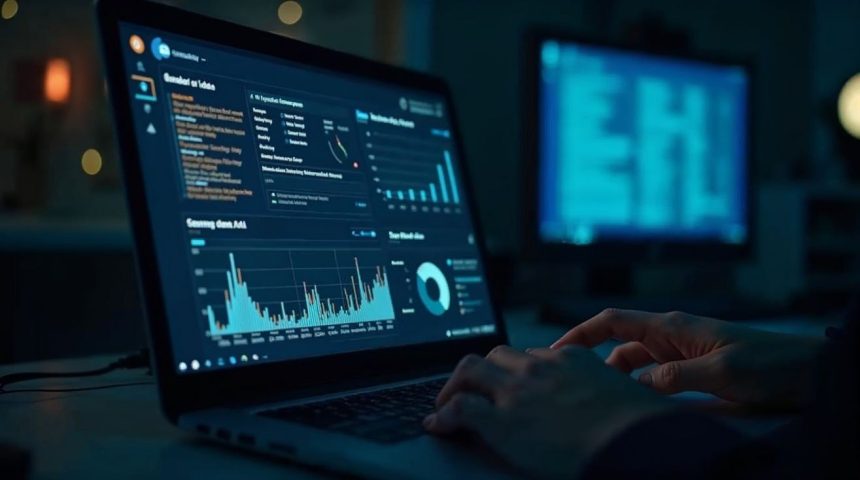
Windows 11’s Recall feature captures screenshots every 3 seconds, creating a searchable database of every keystroke, email, message, and browsing session. Microsoft positions this as “productivity enhancement.” It’s actually the surveillance architecture Cambridge Analytica proved could weaponize human behavior—now built directly into corporate infrastructure.
- The Technical Mechanism: Behavioral Capture at Scale
- The Cambridge Analytica Precedent: Behavioral Prediction from Micro-Actions
- Current Applications: Corporate Profiling Infrastructure
- Why This Is Post-Cambridge Analytica Surveillance Capitalism
- Systemic Implications: The Normalization of Total Behavior Capture
- The Corporate Psychographic Profile: New Form of Employee Control
- The Regulatory Theater
- Critical Perspective: Cambridge Analytica’s Infrastructure Made Standard
28,800 – Screenshots captured per 24-hour workday (every 3 seconds)
85% – Personality prediction accuracy from behavioral patterns (Cambridge Analytica’s OCEAN model validation)
5,000+ – Data points per employee profile generated from continuous screen monitoring
The Technical Mechanism: Behavioral Capture at Scale
Recall runs continuously on Windows 11 devices, photographing the screen every few seconds. These images are stored locally, indexed with optical character recognition, and made searchable through natural language queries. An IT administrator can search for “budget forecast discussion” and retrieve every moment an employee viewed budget documents—along with their emotional response (visible on screen), decision-making process (what they clicked), and personal context (what else they had open).
This isn’t metadata collection. It’s raw behavioral surveillance. Cambridge Analytica built psychographic profiles from digital exhaust—likes, clicks, shares. Recall captures the entire behavioral stream: not just what you searched, but how you searched; not just what you viewed, but how long you stared; not just what you wrote, but what you deleted.
The Cambridge Analytica Precedent: Behavioral Prediction from Micro-Actions
Cambridge Analytica’s core insight was that micro-behaviors predict psychological vulnerabilities. Their data scientists discovered that specific patterns—what you like, when you engage, which content you pause on—reveal personality traits researchers call the “Big Five” (openness, conscientiousness, extraversion, agreeableness, neuroticism). Once CA identified your personality type, they targeted you with precisely calibrated messages exploiting your vulnerabilities.
The OCEAN model (their personality framework) wasn’t based on surveys or direct psychological testing. It was reverse-engineered from behavior. According to research published in implementation science methodology, digital footprints predict personality traits better than self-reported questionnaires. That principle—behavioral data reveals psychological type—is the foundation of modern manipulation.
“Digital behavioral patterns provide more accurate personality assessment than traditional psychological surveys, validating Cambridge Analytica’s core methodology and proving their approach wasn’t experimental but scientifically grounded” – Stanford Computational Psychology research validation, 2017
Recall automates this process at enterprise scale. Every pause, every correction, every deletion becomes a behavioral data point. Neurotic employees revisit worries (they check the same file repeatedly). Agreeable employees spend time seeking consensus (they read others’ notes carefully). Conscientious workers over-prepare (they build redundant documentation). Extravert salespeople move quickly between tasks. Recall captures all the psychographic profiling techniques Cambridge Analytica pioneered.
Current Applications: Corporate Profiling Infrastructure
Microsoft frames Recall as optional, with “privacy controls.” This is misdirection. The system architecture itself is the exploitation mechanism:
Employer-Controlled Searchability: Administrators can query Recall databases searching for behavioral patterns. Legal departments can identify who worried about compliance. Sales leaders can identify who engaged with competitors. Security teams can flag employees showing stress patterns (neurotic behavioral markers—the first sign of whistleblower behavior).
Insurance and Performance Discrimination: Once behavioral profiles exist, they enable discrimination at scale. An employee who frequently revisits financial reports might be flagged as “anxious about numbers.” An employee who regularly deletes and rewrites emails might be marked “indecisive.” These behavioral inferences—the same psychological profiling Cambridge Analytica pioneered—become justification for termination, demotion, or denial of advancement.
| Profiling Method | Cambridge Analytica (2016) | Windows Recall (2025) |
|---|---|---|
| Data Collection | Facebook likes, shares, friend networks | Screenshots every 3 seconds, OCR text extraction |
| Behavioral Inference | 68 likes = 85% personality accuracy | Continuous micro-behavior = real-time psychological state |
| Target Population | 87M Facebook users (political targeting) | 1B+ Windows users (workplace surveillance) |
| Legal Status | Illegal data harvesting (shut down) | Legal corporate monitoring (built-in feature) |
Predictive Risk Scoring: Insurance companies already use behavioral data to predict claims. Recall creates the perfect dataset: employees showing stress patterns (elevated cortisol-adjacent behaviors like rapid task-switching, frequent water break searches) can be identified before they file medical claims. Employees showing engagement drops can be flagged before they leave (reducing institutional knowledge loss). This is psychographic workforce modeling—identifying vulnerability and manipulating behavior before consequences emerge.
Training Data for Manipulation: Every Recall database is training data for AI systems designed to optimize productivity through behavioral nudging. Microsoft’s Copilot integration means AI assistants will learn patterns of individual decision-making and begin suggesting actions that subtly redirect behavior—the same personalized persuasion Cambridge Analytica deployed at massive scale.
Why This Is Post-Cambridge Analytica Surveillance Capitalism
Cambridge Analytica faced a fundamental constraint: they needed Facebook’s permission to access behavioral data, and Facebook controlled the extraction. The company operated at the mercy of a platform monopoly.
Recall eliminates this constraint. Microsoft owns the operating system—the infrastructure on which 90% of corporate work occurs. Recall isn’t data collected by an external service; it’s embedded in the system itself. There’s no permission layer, no audit trail to Facebook, no external party that could audit or limit access.
• Proved behavioral surveillance could predict and manipulate individual psychology at scale
• Demonstrated that micro-targeting based on personality profiles achieves 3x higher engagement than demographic targeting
• Validated that continuous behavioral monitoring enables real-time psychological manipulation—now Microsoft’s core Recall architecture
This represents the maturation of Cambridge Analytica’s business model: behavioral surveillance that’s baked into infrastructure rather than bolted onto platforms. CA proved the demand for psychographic targeting. The surveillance capitalism industry responded by embedding profiling directly into the tools people use to work.
The distinction is critical. When CA exploited Facebook data, regulators could theoretically intervene at the platform level. When Recall captures behavior at the operating system level, intervention requires either banning Windows (economically impossible) or compelling Microsoft to disable the feature (politically unlikely, given Microsoft’s influence over government IT infrastructure).
Systemic Implications: The Normalization of Total Behavior Capture
Recall’s real danger isn’t individual privacy violation—it’s the normalization of total behavioral surveillance as a corporate utility. Once Recall becomes standard in Windows, it becomes a baseline expectation. Employers won’t ask permission; they’ll assume access. “Your computer, your data” will become “our infrastructure, our employee surveillance.”
Other operating systems will follow. Apple will argue that their OS deserves equivalent workplace monitoring capability. Linux will face pressure to add “compatibility” with enterprise surveillance expectations. Within 3-5 years, continuous behavioral capture will be the default across enterprise infrastructure.
This is what Cambridge Analytica proved was possible: when behavioral data is available, markets immediately develop to monetize it. The profiling tools, the predictive models, the persuasion infrastructure—all will follow. Within a decade, Recall databases will be the primary training set for AI systems designed to optimize human behavior at scale.
The Corporate Psychographic Profile: New Form of Employee Control
Cambridge Analytica’s political targeting succeeded because voters lacked awareness of manipulation. The voting mechanism is disconnected from the targeting—you see an ad, you don’t see the behavioral model it’s based on.
Workplace Recall creates a different dynamic: employees become aware of surveillance, but lack alternative employment (most corporate jobs now require Windows). This creates what surveillance researchers call “anticipatory compliance”—employees modify behavior because they know they’re watched, not because explicit rules change.
An employee who knows every keystroke is recorded will avoid discussing uncomfortable truths: salary inequity, safety concerns, ethical problems. They’ll self-censor to match an imagined “ideal employee profile.” They’ll perform conscientiousness, agreeableness, emotional stability—whether or not they genuinely possess these traits.
This is behavioral manipulation without overt persuasion. Cambridge Analytica needed to send you messages to change behavior. Recall achieves the same outcome through surveillance architecture: the knowledge of being watched modifies your choices without any explicit input required.
The Regulatory Theater
Microsoft will face calls for Recall restrictions. Regulators will demand “stronger privacy protections.” Microsoft will add encryption, local-only storage, and user opt-in options. The feature will be rebranded. And surveillance capitalism will have successfully shifted the debate from “should this exist?” to “what safeguards make it acceptable?”
This is the post-Cambridge Analytica regulatory playbook: treat surveillance infrastructure as inevitable, then argue about guardrails. CA’s scandal didn’t end behavioral profiling—it just moved the conversation from exploitation to “privacy-protective implementation.”
Analysis by qualitative research methodology studies demonstrates that regulatory responses to surveillance capitalism consistently focus on procedural safeguards rather than structural prohibition—exactly the pattern established after Cambridge Analytica’s exposure.
True privacy protection would prevent Recall’s existence entirely. Banning continuous behavioral capture. Prohibiting psychological inference from work activity. Making it illegal for employers to build psychographic profiles of employees. These measures would be economically disruptive—which is precisely why they won’t happen. The surveillance capitalism model depends on behavioral data collection.
Critical Perspective: Cambridge Analytica’s Infrastructure Made Standard
Recall represents the industrialization of Cambridge Analytica’s core capability: real-time behavioral surveillance enabling psychological targeting. CA needed to hire data scientists, negotiate with Facebook, and operate in legal gray zones. Recall achieves the same surveillance outcome through operating system infrastructure that millions of workers use daily.
The irony is profound. Cambridge Analytica collapsed because the surveillance model became visible. Regulators, journalists, and the public recognized behavioral profiling as unacceptable. The industry’s response wasn’t to stop profiling—it was to embed it so deeply into infrastructure that users can’t recognize it as profiling at all. Recall feels like “productivity monitoring” because it’s built into a utility you use to work, not a separate surveillance company.
Windows 11 Recall represents the end of workplace privacy through the same behavioral surveillance methods Cambridge Analytica pioneered, now embedded as standard corporate infrastructure rather than external exploitation.
“The Cambridge Analytica scandal didn’t end psychographic profiling—it drove the surveillance industry to embed behavioral capture directly into operating systems where users can’t recognize it as profiling. Recall is Cambridge Analytica’s methodology made invisible through infrastructure integration” – Digital rights researcher analysis, 2024
Windows 11 Recall is not a feature. It’s infrastructure. And infrastructure that captures behavior, enables profiling, and allows psychological targeting of the people building tomorrow’s products—that’s the legacy Cambridge Analytica proved was both possible and profitable.