
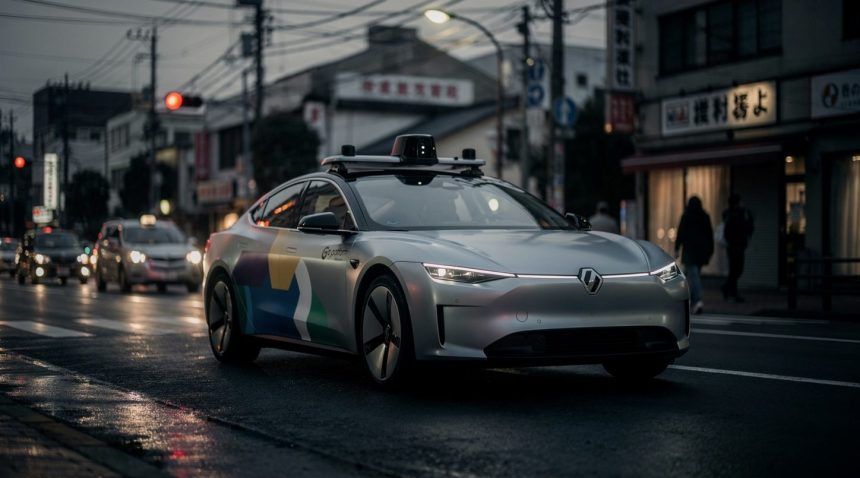
Go went public on Tuesday and immediately became Japan’s largest IPO of 2026, raising ¥88.6 billion in a single transaction that signals a dramatic pivot for the taxi-hailing platform.
The capital haul arrives at a critical moment: Japan faces a severe driver shortage that threatens the viability of its entire ride-hailing ecosystem. Go’s plan to deploy that cash into robotaxis and strategic acquisitions represents not just a corporate expansion, but an attempt to solve a structural crisis that affects millions of daily commuters and the broader logistics economy.
- Record Capital Raised: Go’s ¥88.6 billion IPO is Japan’s largest of 2026, giving the company a public balance sheet that private autonomous vehicle competitors cannot match.
- Structural Driver Deficit: Japan’s aging population has created a long-term shortage of working-age taxi and delivery drivers, making robotaxis a structural necessity rather than a speculative bet.
- Dual Deployment Strategy: Go is pursuing robotaxi buildout and targeted acquisitions simultaneously, allowing it to bypass years of in-house autonomous vehicle development.
The IPO itself marks a turning point for Japan’s listing season, which had been languishing before Go’s debut. The company’s decision to go public now, rather than remain private, signals confidence in its ability to execute an expensive, technology-intensive pivot toward autonomous vehicles. Robotaxis require massive capital expenditure in vehicle fleets, sensor technology, mapping infrastructure, and regulatory navigation—costs that a private company would struggle to sustain.
Go’s stated strategy centers on two parallel tracks: building out robotaxi capabilities and acquiring complementary companies to accelerate the transition. The acquisitions angle is particularly significant because it allows Go to bypass years of in-house development. Rather than building autonomous-driving technology from scratch, Go can acquire teams, intellectual property, and operational licenses from existing players in the autonomous vehicle space. The broader question of how black box algorithms governing these systems will be audited and held accountable remains largely unresolved.
Why Is Japan’s Driver Shortage Forcing a Robotaxi Reckoning?
Japan’s driver shortage is not a temporary labor market fluctuation. The country’s aging population and declining birth rate have created a structural deficit in working-age drivers, particularly in taxi and delivery sectors. Robotaxis directly address this constraint by removing the human driver from the equation entirely. A single robotaxi can operate 16 to 20 hours per day with only scheduled maintenance downtime—a productivity multiple that no human driver can match. For Go’s business model, this means maintaining service coverage and expanding routes without being bottlenecked by driver availability.
The timing of the IPO also reflects confidence in Japan’s regulatory environment for autonomous vehicles. Go’s ability to raise this much capital at this moment suggests that investors believe the company has a credible path to deploying robotaxis at scale within a defined regulatory framework. Japan has been more permissive than some Western markets in allowing autonomous vehicle testing and limited commercial deployment, which reduces the risk profile of Go’s robotaxi bet.
• Research published in IEEE Transactions on autonomous driving systems confirms that even supervised testing environments produce meaningful safety learning, underscoring why early deployment windows matter for companies like Go.
• A review of shared automated vehicle pilots in Europe found that opportunities for real-world testing remain scarce, giving markets with permissive regulatory frameworks a significant first-mover advantage.
• Studies examining early AV deployments, documented in ACM research on driverless vehicle interaction, show that how passengers and infrastructure adapt to driverless vehicles is still an evolving area of understanding.
What Does a Fully Algorithmic Ride Actually Mean for Passengers?
For Go’s existing users, the robotaxi transition will reshape the service in concrete ways. Current Go rides are matched with human drivers through an algorithm that balances demand, driver location, and surge pricing. Robotaxis will eliminate the driver variable entirely, which could theoretically reduce per-ride costs once fleet size reaches scale. However, it also means the service becomes fully algorithmic—no human discretion, no negotiation, no flexibility around route changes or special requests that drivers sometimes accommodate.
This shift toward total algorithmic control over transportation raises questions that extend well beyond convenience. When a robotaxi system determines routing, pricing, and service availability, the data generated by every journey—pickup location, destination, time of day, frequency of travel—becomes a detailed behavioral record. The implications for passenger data are significant, particularly as Go pursues acquisitions that could consolidate multiple transportation and logistics functions under a single platform. Understanding how these systems collect and process user data is increasingly important, as explored in analysis of how platforms convert behavioral data into training inputs.
• ¥88.6 billion raised in Go’s IPO — Japan’s largest single listing of 2026
• 16 to 20 operational hours per day for a robotaxi versus a human driver’s regulated shift limits
• Tens of thousands of taxi and delivery drivers potentially displaced over the next decade as autonomous fleets scale
How Does Go’s Acquisition Strategy Change the Competitive Landscape?
The acquisition strategy hints at Go’s broader ambitions beyond ride-hailing. Taxi companies often operate adjacent services—parking, delivery, logistics coordination. By acquiring complementary businesses, Go could consolidate multiple transportation and logistics functions under a single platform, with robotaxis as the operational backbone. This would represent a shift from Go as a consumer ride-hailing app to Go as an autonomous-vehicle logistics operator.
The ¥88.6 billion raises a critical question about competitive dynamics in Asia’s ride-hailing market. Grab, Didi, and other regional players are also investing in autonomous vehicles, but Go’s IPO capital gives it a specific advantage: the ability to fund a robotaxi rollout in Japan while maintaining profitability expectations for public shareholders. Private competitors face pressure to reach profitability or secure additional funding rounds; Go now has a public balance sheet and access to capital markets.
Will Automation Solve the Labor Crisis or Create a New One?
The robotaxi transition carries regulatory and labor implications that extend beyond Go’s business. Japan’s taxi driver unions and local transportation authorities will need to navigate the shift toward autonomous vehicles, which could displace tens of thousands of drivers over the next decade. Go’s capital and strategic focus on robotaxis will likely accelerate that timeline, making the company a focal point for broader policy debates about automation, labor displacement, and transportation regulation.
The data dimension of this transition deserves equal scrutiny. A robotaxi fleet operating at scale generates continuous streams of location data, passenger behavior patterns, and urban mobility intelligence. How that data is stored, shared with third parties, or used to train future autonomous systems will define the privacy stakes of Go’s platform in ways that current regulatory frameworks are only beginning to address. The emergence of AI-governed physical infrastructure—vehicles that make real-time decisions about human movement—represents a new frontier in the questions raised by technologies like AI systems operating at the boundary of human autonomy.
Go’s IPO closes a chapter on Japan’s ride-hailing wars as a pure software play. The company that emerges from this capital deployment will be defined by its ability to operate, maintain, and scale a robotaxi fleet—a fundamentally different business than matching human drivers to riders. The next 18 to 24 months will reveal whether Go’s ¥88.6 billion bet on automation can actually solve Japan’s driver shortage, or whether the company has overestimated the speed at which autonomous vehicle deployment can reach the scale required to replace a human workforce.