A police drone lifts off from a rooftop in your city, its camera lens already pointed downward, and no one on the street below knows it’s there.
This is no longer speculation or science fiction. Police departments across thousands of U.S. cities have quietly deployed surveillance drones as standard equipment. The shift from skepticism to widespread adoption happened so gradually—and so quietly—that most American residents have no idea they are being watched from above.
- Deployment Without Debate: Police drones are now operational in thousands of U.S. jurisdictions, yet public debate about this capability has been minimal and consent has rarely been sought.
- Fragmented Legal Protections: No uniform federal regulation governs police drone use, meaning your privacy rights depend almost entirely on which city you live in and how much local pressure has been applied.
- Data Retention Gaps: Most police departments that operate drone programs have not clearly answered how long aerial footage is retained, who can access it, or whether it can be cross-referenced with other data sources.
The scale is staggering. Drones are now operational across thousands of jurisdictions nationwide. Yet public debate about this capability has been minimal, consent has rarely been sought, and the legal frameworks governing their use remain fragmented and often inadequate. What started as a tool for specialized operations has become routine aerial surveillance infrastructure.
The transformation reveals a pattern familiar to anyone who has studied how surveillance systems expand in democracies: they begin with a narrow, sympathetic use case, gain acceptance among law enforcement, and then expand into something far broader than the original justification. As the ACLU’s National Security Project has documented, domestic drone surveillance raises profound questions about the right to criticize government and the protection of civil associations—questions that have not been adequately resolved before deployment accelerated.
How Did Police Drones Become Routine So Quickly?
Early resistance to police drones was genuine. Civil liberties advocates raised alarms about privacy, mission creep, and the absence of clear rules. But that skepticism has given way to what the industry now frames as “a new era of public safety.” Police departments have rebranded drone surveillance as a solution to crime, missing persons, and emergency response. The language matters. It shifts the conversation from “Are we comfortable being watched?” to “Wouldn’t you want police to find your missing child?”
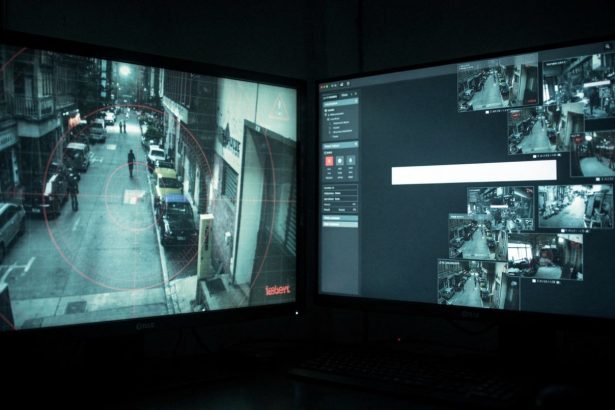
The mechanics of police drone surveillance are straightforward and worth understanding because they operate over your neighborhood. These aircraft carry high-resolution cameras capable of capturing detailed imagery from hundreds of feet in the air. They can loiter over an area for extended periods. They can be deployed rapidly. They create a persistent aerial record of movement patterns, gathering locations, and associations—data that reveals not just where you go, but who you spend time with and what you do.
• Police drone programs now operate across thousands of U.S. jurisdictions, with adoption accelerating sharply after 2020
• No uniform federal warrant requirement exists for aerial drone surveillance over public spaces
• Data retention policies vary by department and are frequently absent or written after deployment begins
• A small number of cities have imposed strict limitations or outright bans; most have not
Why Does This Mirror the Cambridge Analytica Data Model?
This capability mirrors a data-collection pattern that became infamous during the Cambridge Analytica scandal: the harvesting of behavioral data at scale, without explicit consent, to build profiles of individuals and groups. Cambridge Analytica didn’t use drones; it used Facebook’s API and third-party data brokers to vacuum up information about millions of people’s online behavior, location history, and social connections. The goal was psychographic profiling—understanding not just demographics but psychological vulnerabilities. As Christopher Wylie, the whistleblower who exposed Cambridge Analytica, made clear, the danger was never just the data itself—it was what became possible once that data existed and was combined with behavioral inference tools.
Police drones don’t yet employ the same algorithmic profiling, but they collect the foundational layer: movement data, association data, and location patterns. Once that data exists, the temptation to apply predictive analytics, behavioral inference, and micro-targeting to law enforcement decisions becomes nearly irresistible. The infrastructure for mass surveillance is being built before the rules to govern it are written. This is precisely the dynamic that the Cambridge Analytica playbook normalized—collect first, define the use case later, and rely on institutional inertia to prevent accountability.
• The EFF and ACLU have documented cases where law enforcement used surveillance technology to monitor constitutionally protected activity, including protest and political organizing, without judicial oversight
• A joint EFF-ACLU brief found that the San Francisco Police Department violated surveillance law by using third-party camera networks to spy on Black Lives Matter protests—demonstrating that surveillance mission creep is not hypothetical but documented
• Legal advocates warn that once surveillance infrastructure is embedded in operational practice, courts and legislatures face significant pressure not to reverse it, regardless of constitutional concerns
What Happens to the Footage After the Drone Lands?
What makes the current moment critical is that police departments have moved past the experimental phase. Drones are no longer novel tools being tested in a handful of cities. They are becoming standard equipment, deployed routinely, often without warrants, often without public knowledge. The absence of uniform federal regulation means that rules vary wildly by jurisdiction—or don’t exist at all.
Some police departments have adopted policies requiring warrants for drone surveillance. Others operate under minimal restrictions. A few have been transparent with their communities about drone deployment. Many have not. This patchwork creates a situation where your privacy protections depend almost entirely on which city you live in and how much pressure local activists have applied to your police department.
The legal ambiguity is not accidental. Law enforcement agencies have learned that rapid deployment often outpaces regulation. By the time courts and legislatures catch up, the technology is already embedded in operational practice. Challenging it becomes harder because police departments can argue that reversing course would harm public safety—the same argument used to justify the technology in the first place.
What is particularly troubling is the data retention question. When a police drone captures aerial footage of your neighborhood, how long is that footage kept? Who has access to it? Can it be cross-referenced with other data sources? Can it be searched retroactively? These questions are rarely answered clearly, even by police departments that have adopted drone programs. The data exists. It is being collected. The policies governing its use are often written after the fact, if at all. This pattern closely resembles the dynamics that neighborhood-level platforms have also exploited, as documented in reporting on how apps like Nextdoor enable street-level data collection with minimal oversight.
Is the Government’s Aerial Surveillance Power Constitutionally Bounded?
This is where the parallel to Cambridge Analytica becomes most urgent. In that scandal, data was collected first, consent was absent, and the scope of use was hidden. By the time the public learned what had happened, the data had already been weaponized. Police drone programs are following a similar trajectory: collection first, transparency and consent later—if ever—and scope of use determined by whoever controls the data.
The difference is that Cambridge Analytica operated in the private sector, harvesting data for political microtargeting. Police drones operate with government authority, collecting data over public spaces, with the power to detain, arrest, and prosecute based on what they see. The stakes are higher. The accountability mechanisms are, in practice, weaker.
• Civil liberties organizations have consistently found that surveillance technologies introduced for narrow purposes expand in scope once operationally embedded, a pattern documented across body cameras, license plate readers, and now drones
• ACLU analysis of police body camera programs found that the presence of surveillance technology does not automatically produce accountability—policy frameworks and enforcement mechanisms are required independently
• Legal scholars note that Fourth Amendment protections have not kept pace with aerial surveillance capabilities, leaving a significant gap between constitutional expectation and operational reality
What Can Residents Actually Do?
For residents, this means several concrete realities. You are likely already being surveilled from above in ways you do not know about and have not consented to. The footage being collected may be retained indefinitely and used in ways you cannot predict or contest. The legal protections you might expect—warrants, transparency, oversight—may not apply, depending on where you live.
Some cities have begun pushing back. A few jurisdictions have banned police drone use outright or imposed strict limitations. But these are exceptions. Most cities have either embraced drones or have not yet decided how to regulate them. The decisions that will determine the scope of aerial surveillance in American life will be made in the next few years—not decades from now.
The infrastructure is already there. Drones are already in the air. The only variable left is whether residents demand rules to govern what is collected, how long it is kept, who can access it, and under what circumstances it can be used against them. That demand has to come before the technology becomes too entrenched to challenge—not after.