
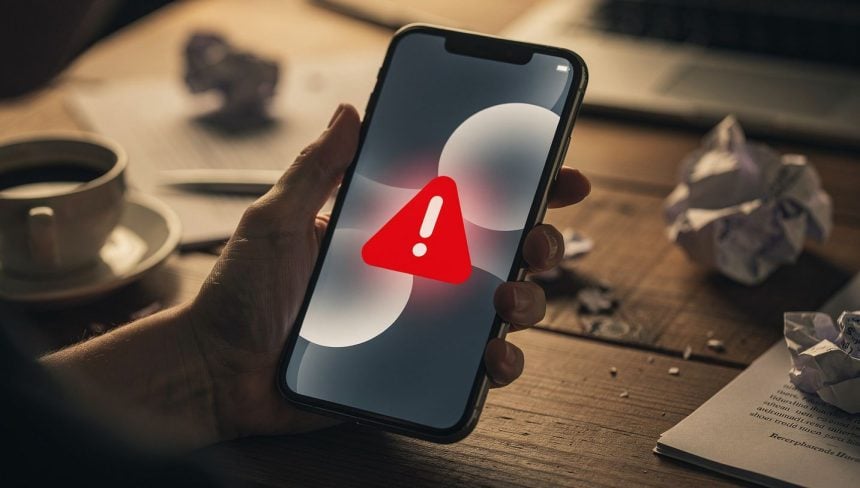
Your iPhone’s lock screen just became a window into state-sponsored surveillance. Apple has begun displaying direct notifications to users who are individually targeted by mercenary spyware—government-backed tools designed to infiltrate phones and extract data from specific people deemed threats by foreign regimes.
This shift marks a fundamental change in how ordinary people learn they are under active surveillance. Until now, most victims never knew. Apple’s Threat Notifications system makes that targeting visible, urgent, and impossible to ignore. The company is essentially saying: someone with state resources wants inside your phone, right now.
- Individualized Targeting: Unlike mass surveillance programs, mercenary spyware campaigns focus on specific individuals—journalists, dissidents, activists—with surgical precision, making each attack a deliberate act of state aggression.
- Zero-Click Infection: Some spyware variants, including tools documented by NSO Group clients, can compromise a device through a missed call alone, requiring no action from the target whatsoever.
- Structural Parallel to Cambridge Analytica: Both mercenary spyware and the Cambridge Analytica data operation share the same core logic—identify a specific person, extract intimate data about them, and act on that information without their knowledge or consent.
The notification system works by flagging when Apple’s security infrastructure detects mercenary spyware attempts directed at a specific user. When triggered, the alert appears directly on the lock screen and in Settings, warning the person that they are being targeted and offering guidance on protective steps. The company explains that Threat Notifications help protect iPhone users by making them aware of these campaigns before a breach occurs.
What makes this development significant is not just the warning itself—it’s what it reveals about the scale and targeting precision of state-backed surveillance operations. These aren’t mass-collection programs harvesting metadata from millions. These are individualized campaigns, each one focused on a specific person. A journalist in one country. A dissident in another. An activist. A business executive. A researcher. The existence of a notification system at all implies Apple is detecting these attempts with enough regularity to warrant a formalized response.
How Does Mercenary Spyware Actually Work?
Apple’s decision to alert users directly represents a departure from the company’s historical posture of handling security threats silently, behind the scenes. By making these targeting attempts visible, Apple has essentially opened a door that was previously locked. Users can now see, in real time, that they are valuable enough—or threatening enough—to warrant the attention of a nation-state’s surveillance apparatus.
The mercenary spyware industry itself operates as a shadow market. Companies like NSO Group have sold surveillance tools to governments worldwide, tools designed to bypass encryption and access everything on a phone: messages, photos, location history, financial records, communications with sources or family members. Research tracking NSO Group’s Pegasus spyware documented its deployment across operations in 45 countries, a finding that underscores how normalized the commercial sale of state-grade surveillance tools has become. These tools don’t require the target to click a malicious link or download anything suspicious. Some variants can infect a phone through a missed call alone.
• Documented cases of targeted digital surveillance show that high-risk individuals—including human rights defenders and journalists—are routinely selected for spyware deployment based on their political activities or professional roles, not random selection.
• A review of mobile surveillanceware published in Electronics distinguishes mercenary spyware from conventional malware by its explicit design for espionage and intelligence gathering, often deployed with national security justifications by client governments.
• Forensic investigations have repeatedly found that targets of these campaigns had no technical indication of compromise—the infection left no visible trace on the device’s surface behavior.
Why Apple’s Notification System Changes the Surveillance Equation
What Apple’s notification system does is make visible the invisible infrastructure of targeting that has always existed beneath the surface of digital life. For years, researchers and privacy advocates have documented mercenary spyware deployments against journalists, human rights workers, and political opponents. But those discoveries came after the fact—through forensic analysis, through leaked records, through investigations. The targets themselves often had no idea they were compromised.
Now Apple is flipping that script. The company is using its position as the operating system provider—the gatekeeper of the iPhone itself—to intercept targeting attempts before they succeed and alert the person being hunted. This is a structural intervention, not a patch. It repositions the platform from passive infrastructure into an active participant in the user’s defense.
This has a direct parallel to the mechanisms of behavioral surveillance that emerged from the Cambridge Analytica scandal. In that case, the targeting was psychological and political: companies harvested personal data at scale, built psychographic profiles of individuals, and then micro-targeted them with tailored messaging designed to influence their beliefs and behavior. The victims of that targeting never knew they were being profiled. The data collection happened in the background, consent was eroded through obscure terms of service, and the targeting itself was invisible.
The structural similarity is stark. Both systems identify specific individuals as targets worthy of special attention. Both extract intimate data about those individuals. Both operate in the shadows, relying on the target’s ignorance. The difference is the mechanism: Cambridge Analytica used behavioral microtargeting and psychological profiling to influence; mercenary spyware uses technical exploitation to surveil. But the underlying logic is identical—locate the person, understand them, and act on that understanding without their knowledge.
Apple’s notification system breaks that pattern of invisibility. It says: you are being targeted, and you deserve to know.
• The core innovation of Apple’s Threat Notifications is not technical detection—security researchers have been identifying spyware infections for years—but the decision to route that intelligence directly to the individual being targeted, bypassing institutional intermediaries.
• This approach shifts the power dynamic: instead of governments and spyware vendors operating with informational asymmetry over their targets, the target receives a real-time signal that the asymmetry exists.
• The practical limitation remains significant: for journalists or activists in authoritarian environments, receiving such a notification may itself create risk, as it confirms to the target—and potentially to observers—that they are under active surveillance.
Who Gets Targeted, and What Are They Risking?
The company hasn’t disclosed exactly how many users have received these notifications or which countries’ governments are behind the campaigns. That information would be sensitive—it would reveal which regimes are actively trying to surveil their own citizens or foreign nationals they consider threats. But the fact that Apple has built this detection and notification system at all suggests the company is seeing a consistent pattern of targeting attempts.
For users who receive one of these alerts, the implications are immediate and unsettling. An iPhone is not just a phone—it’s a repository of your location history, your communications, your financial data, your health information, your photos, your contacts. If a government-backed operation is trying to access it, they are trying to access your life. The intimacy of that intrusion is difficult to overstate: a compromised device hands an adversary not just data points but the texture of a person’s existence.
Apple’s guidance to targeted users includes recommendations to enable additional security features, update to the latest iOS version, and consider using a passcode or biometric authentication if they haven’t already. These are basic hygiene steps, but they assume the user has the technical knowledge and resources to implement them. For many people under surveillance—journalists in authoritarian countries, activists with limited technical support—these steps may be insufficient against a well-resourced adversary.
Does Apple’s Privacy Stance Hold Up Under Scrutiny?
The notification system also raises a question about Apple’s own role in this ecosystem. The company positions itself as a privacy defender, and the Threat Notifications feature does provide genuine value to users. But Apple also operates in countries where governments demand access to user data, where the company has made compromises on encryption and data handling. The company’s ability to detect and warn about mercenary spyware doesn’t erase those tensions. Understanding how data collection and influence operations have historically exploited platform complicity makes those tensions harder to dismiss.
What happens next depends partly on how widely these notifications spread and how seriously targeted users take them. If the alerts become common, they will force a public reckoning with the reality of state-sponsored surveillance targeting civilians. If they remain rare, they may be dismissed as edge cases affecting only a small number of high-profile targets.
But the existence of the system itself is already significant. Apple has decided that its users deserve to know when they are being hunted. That’s a statement about where the line between privacy and surveillance should be drawn—and an acknowledgment that the line has been crossed far more often than most people realize.