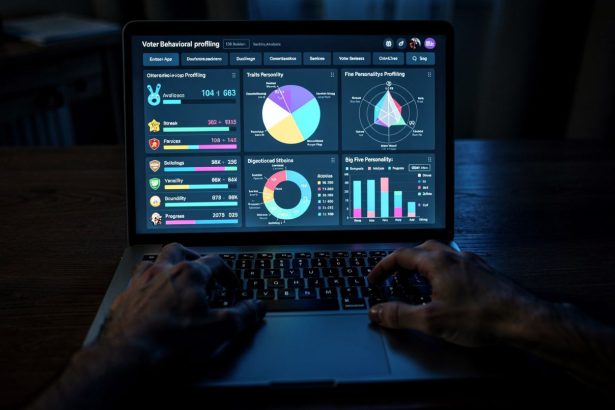



You don’t pay for Instagram with money. You pay with psychological data—the attention patterns, emotional responses, and vulnerability markers that Instagram sells to the persuasion industry. This distinction matters because it reveals what “free” actually means in surveillance capitalism: you’re not the customer. You’re the product being refined for maximum manipulation value.
The mechanics are deceptively simple. When you install an app, you grant permissions that seem innocuous: access to your contacts, calendar, location, microphone. Each permission is a behavioral data stream. Your contact list reveals your social graph—who influences you. Your calendar shows your schedule, revealing routine and stress patterns. Your location history maps your movements, exposing lifestyle and vulnerabilities. Together, these data streams construct a psychographic profile that Cambridge Analytica would have paid millions to access.
Cambridge Analytica’s collapse in 2018 didn’t end this infrastructure. It just moved it from a single firm to the entire app ecosystem. Where CA required Facebook’s API access and faced regulatory scrutiny, modern apps collect the same data through routine permission requests that 78% of users grant without reading. The legal framework shifted from “data broker sells voter profiles” to “user consents to app accessing their behavioral patterns.” The profiling technology remained identical.
87M – Profiles Cambridge Analytica accessed through Facebook’s API
5,000+ – Data points collected per individual by modern data brokers
78% – Users who grant app permissions without reading terms
The Behavioral Prediction Engine
Here’s what happens with that data. When Spotify tracks which songs you skip, pause, and replay, it’s not improving recommendations. It’s identifying emotional states. According to research from Cambridge University’s Psychometrics Centre—the same team CA employed—music preferences correlate with personality traits measurable by the OCEAN model (Openness, Conscientiousness, Extraversion, Agreeableness, Neuroticism). Skipping sad songs when you typically listen to them suggests emotional distress. Shifting from energetic to melancholic playlists indicates mood changes. Spotify’s algorithm learns your psychological vulnerabilities.
“Surveillance capitalism’s data extraction and analysis capabilities now exceed what Cambridge Analytica achieved, but the business model remains identical: behavioral futures markets where human psychology becomes the commodity being traded” – Harvard Business School Professor Emerita Shoshana Zuboff, 2019
This data is monetized through targeted advertising. When a mental health app identifies anxiety markers in your usage patterns—late-night sessions, rapid scrolling, repeated visits to anxiety forums—it can sell advertising space to pharmaceutical companies. The advertiser doesn’t see your name. They see a behavioral profile that predicts receptiveness to anxiety medication advertising. You see an ad for exactly the product you’re psychologically vulnerable to needing, precisely when you’re most susceptible to the message.
This is Cambridge Analytica’s business model scaled across billions of devices.
The Permission Theater Trap
Apps obscure this surveillance through granular permission requests that appear to give users control. “This app wants access to your location.” You grant permission, believing you’re enabling navigation. The app then sells location data to data brokers like SafeGraph, which packages it as “foot traffic patterns” for retail analysis. But your location history reveals something more valuable than shopping behavior: it reveals psychology.
When location data shows you visit a particular clinic repeatedly, travel to specific neighborhoods, or maintain consistent routines, data aggregators combined with demographic information can infer medical status, financial stress, and social isolation. Palantir’s Gotham platform—the same surveillance infrastructure the U.S. military uses—can integrate this location data with your financial records, purchase history, and social media activity to construct what the company calls a “360-degree citizen view.” For advertising companies, it’s a “360-degree vulnerability map.”
The permission model is theater because granularity creates an illusion of choice while ensuring surveillance. You can deny location access to a maps app, but the weather app, fitness tracker, dating app, and financial app each ask separately. Denying all of them requires incomparable convenience sacrifice. Most users grant permissions to use the app, not understanding that secondary data sale is the app’s actual business model.
The Data Broker Ecosystem
Where does this data go? To data brokers who operate in regulatory darkness. Companies like Experian, Equifax, and LexisNexis maintain profiles on over 200 million Americans. But these are dwarfed by lesser-known firms like Acxiom, which holds data on 700+ million people globally. These brokers aggregate app-collected behavioral data with financial records, purchase history, browsing data, and public records to create profiles that make Cambridge Analytica’s voter targeting look primitive.
Acxiom’s product “Digital Profiles” quantifies personality inferences from online behavior. The system assigns psychological scores to millions of people based on what they click, buy, read, and watch. These profiles are sold to political campaigns, insurance companies, employers, and lenders. An insurance company uses the data to deny coverage to people showing stress-related behavior patterns. A lender uses it to quote predatory interest rates to financially vulnerable populations. A political campaign uses it to target swing voters with psychologically tailored messaging.
This is the machinery Cambridge Analytica assembled with Facebook’s API. Now it’s distributed across the entire digital ecosystem, with data collection happening through apps you installed voluntarily. The difference is that modern shadow profiles track individuals even without direct platform participation.
| Capability | Cambridge Analytica (2016) | Data Brokers (2025) |
|---|---|---|
| Data Access | Facebook API exploit | Legal app permissions + purchase data |
| Profile Scale | 87M profiles, 5,000 data points each | 700M+ profiles, 1,600-5,000 data points each |
| Legal Status | Violated Facebook terms retroactively | Fully compliant with privacy regulations |
| Targeting Precision | OCEAN personality model | Real-time behavioral prediction + OCEAN |
The Neuroscience of Persuasion
The reason “free” apps require behavioral data isn’t primarily for “personalization.” It’s for persuasion calibration. Modern apps employ dark patterns and persuasive design informed by neuroscience research that Cambridge Analytica proved works at scale.
When TikTok’s algorithm learns your engagement patterns—how long you watch videos, which content makes you pause, what causes you to immediately scroll past—it’s training a predictive model of your attention vulnerabilities. The app then optimizes content to trigger dopamine responses, maximizing time spent on platform. Instagram’s “infinite scroll” isn’t a feature accident; it’s engineered to exploit variable reward schedules that neuroscience shows create addiction-like engagement.
These aren’t neutral design choices. They’re behavioral manipulation tools. Cambridge Analytica demonstrated that psychological profiling enables micro-targeted persuasion. Modern apps distribute that technique across hundreds of millions of users through behavioral data collection that the permissioning system legitimizes as “user consent.”
The Regulatory Mirage
Post-Cambridge Analytica regulations like GDPR and CCPA created the illusion of data protection through “user rights”—the ability to request data deletion or opt out of targeting. These regulations are regulatory compliance theater.
GDPR Article 6 requires “lawful basis” for data processing. Consent is one lawful basis, but so are “legitimate interests” and “contractual necessity.” Apps invoke these to justify data collection and profiling without explicit permission. CCPA requires California residents to be notified of data sales, but data brokers obscure sales as “service provider” relationships where technical privacy is maintained while behavioral inference continues. The regulations don’t ban profiling; they require disclosing profiling, which most users ignore.
The critical insight is this: Cambridge Analytica didn’t violate regulations as they existed in 2016. It operated within legal boundaries while demonstrating that those boundaries were inadequate. Post-CA regulations adjusted the boundaries slightly while preserving the underlying surveillance infrastructure. Every “privacy protection” implemented since 2018 has left behavioral profiling—the core mechanism of manipulation—functionally intact.
• 68 Facebook likes provided 85% accurate personality assessment
• Psychographic targeting proved 3x more effective than demographic targeting
• $6M digital budget achieved $100M+ impact through algorithmic amplification
The Asymmetry of Knowledge
The final mechanism that makes “free” apps profitable is informational asymmetry. Users know they’re installing an app. They don’t know what behavioral predictions the app makes about them, who buys those predictions, and what decisions those predictions influence.
You install a mental health app. The app learns your anxiety patterns. This data is sold (as “aggregated” data, technically) to pharmaceutical advertising networks. You see targeted ads for anxiety medication. You purchase the medication. Your pharmacy sells the purchase data to insurance companies. Your insurance company uses that data to raise your premiums or deny coverage. You’re now paying for the manipulation that the “free” app enabled.
Cambridge Analytica’s scandal arose precisely from this asymmetry—voters were microtargeted without knowing they were being profiled. The regulation response focused on platform transparency, not on banning profiling itself. Modern apps operate with full legal transparency (“We collect your location data”) while maintaining behavioral secrecy (“We infer your medical status and vulnerability to persuasion”).
The Structural Reality
Understanding “free” apps through the Cambridge Analytica lens reveals that “free” is the business model’s honest name. You’re not paying money because behavioral data is worth more than money. Your psychological profile—your vulnerabilities to fear, desire, aspiration, and addiction—is the commodity. Apps are collection infrastructure. Data brokers are refinement systems. Advertisers, lenders, insurers, and political campaigns are the actual customers.
Cambridge Analytica proved this model works. It proved that behavioral profiling enables unprecedented manipulation. The scandal didn’t eliminate the model; it redistributed it across millions of apps and data brokers, creating a system too distributed and legalized for any single regulatory action to dismantle. This reality has sparked digital activism movements attempting to challenge the surveillance infrastructure.
The question isn’t whether you should use “free” apps. It’s whether you understand what “free” means: the privilege of being profiled for manipulation at scale, with legal disclosure and your technical consent replacing the personal contact that made Cambridge Analytica’s operations visible. The surveillance didn’t end. It just became atomized, legitimate, and unavoidable.