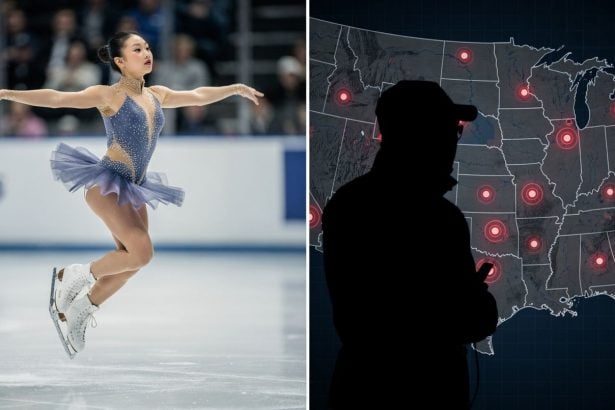

Madison Square Garden’s facial-recognition system went dark for exactly one event: Taylor Swift’s rehearsal dinner.
The venue’s sprawling surveillance infrastructure—capable of monitoring guests down to the second—was switched off for the pop star’s private celebration. Then it was turned back on. For the thousands of other visitors who pass through MSG annually, the cameras have never stopped running, collecting biometric data without explicit consent or meaningful opt-out.
- The Selective Shutdown: MSG disabled its facial-recognition system specifically for Taylor Swift’s rehearsal dinner, demonstrating the surveillance is a deliberate choice, not an operational necessity.
- The Regulatory Vacuum: New York State has no law restricting private-sector facial-recognition use, leaving thousands of venue visitors with no legal right to opt out, access, or delete their biometric data.
- The Transparency Gap: MSG has not disclosed data retention periods, third-party sharing arrangements, system accuracy rates, or whether biometric records are provided to law enforcement agencies including ICE and the NYPD.
This selective blindness exposes a fundamental fracture in how surveillance technology operates in America: privacy is a luxury good, available to those with enough cultural capital or legal leverage to demand it, while ordinary people remain subjects of continuous biometric monitoring justified by security and operational efficiency.
The revelation emerged from reporting on MSG’s security infrastructure, which the venue has deployed across its Manhattan complex for years. The system uses facial-recognition technology to identify and track individuals throughout the building, creating a real-time biometric record of who enters, where they move, and how long they stay. MSG’s owners made an exception for Swift’s rehearsal dinner—a private event held before her wedding ceremony at a nearby location. During that window, the cameras were disabled.
The contrast is stark. For Taylor Swift: temporary anonymity within a building designed to eliminate it. For everyone else: permanent, warrantless biometric surveillance.
How Does MSG’s Surveillance System Actually Work?
MSG has not publicly disclosed the technical specifications of its system, the retention period for facial-recognition data, or the criteria used to identify individuals flagged by the cameras. The venue’s parent company, Madison Square Garden Sports Corp., has not responded to requests for transparency about how the data is stored, who has access to it, or whether it is shared with law enforcement.
What we know comes from security industry reporting and previous investigations into MSG’s surveillance posture. The system integrates multiple data streams—facial recognition, behavioral analytics, and location tracking—to build composite profiles of visitors. As research published in PMC examining facial recognition ethics and regulation documents, the collection and use of biometric data without adequate safeguards or consent mechanisms has become a defining feature of commercial surveillance deployments—precisely the architecture operating inside MSG.
This capability mirrors the data-aggregation architecture that powered Cambridge Analytica’s political microtargeting operation, which combined disparate data sources—voter rolls, consumer behavior, psychographic profiles—to construct individualized persuasion targets. In both cases, the underlying mechanism is the same: continuous data collection at scale, followed by inference and segmentation. The difference is the stated purpose. Cambridge Analytica weaponized behavioral data for political manipulation. MSG weaponizes biometric data for security and revenue optimization—but the infrastructure of surveillance is functionally identical. That parallel is not incidental: it reflects how behavioral profiling at scale has migrated from political operations into everyday commercial environments.
• A 2024 PMC analysis of facial recognition ethics found that commercial deployments routinely lack adequate consent mechanisms, with most venues providing no meaningful opt-out for biometric data collection.
• Research published in the ACM Digital Library on regulating facial processing technologies identifies identifiability and purpose limitation as the two most consistently violated principles in private-sector deployments.
• A U.S. Government Accountability Office report on facial recognition technology documented rapid market expansion with minimal corresponding regulatory oversight, a gap that has widened significantly in the years since publication.
The Taylor Swift Exception Reveals What Regulators Have Avoided Asking
MSG’s decision to shut down the system for Swift’s event suggests the technology is not operationally necessary—that the venue can function without real-time biometric monitoring. It also suggests the company understands the invasiveness of the system well enough to recognize that a high-profile figure would object to it. No such objection is expected from ordinary concertgoers, sports fans, or event attendees who have no way of knowing they are being scanned.
The legal framework enabling this disparity is thin. New York State has no specific law restricting facial-recognition use by private businesses in non-law-enforcement contexts. Federal privacy law is fragmented and sector-specific, with no comprehensive baseline protecting biometric data. The result is a regulatory vacuum where venues like MSG can deploy surveillance systems with minimal oversight, transparency, or accountability.
Some cities have moved to restrict government use of facial recognition—San Francisco, Boston, and Portland have all imposed bans or strict limitations on law enforcement deployment. But private-sector surveillance remains largely unregulated. A corporation can collect, store, and analyze biometric data from thousands of people without a warrant, without notice, and without consent mechanisms that actually work. The broader implications of this gap extend well beyond entertainment venues, as explored in the context of biometric surveillance systems operating at national scale in other jurisdictions.
Is Private-Sector Facial Recognition the New Normal?
MSG’s system is not unique. Similar facial-recognition infrastructure operates in airports, shopping malls, casinos, and other high-traffic venues across the country. Most people have no idea they are being scanned. The data collected is rarely disclosed to individuals, rarely deleted, and often shared with third parties—including law enforcement, which can request access without a warrant in many jurisdictions.
• Cities with outright bans or strict limits on government facial recognition use: San Francisco, Boston, Portland—while private-sector deployments in the same cities remain largely unrestricted.
• Federal privacy laws providing specific biometric data protections for private-venue visitors: none at the baseline level.
• Data rights MSG visitors can exercise over their biometric profiles under current New York law: no statutory right to access, correct, or delete.
The Taylor Swift exception is revealing precisely because it breaks the invisibility of the system. When a celebrity demands privacy, the venue grants it instantly, proving that the surveillance is not inevitable or operationally essential—it is a choice. A choice that MSG makes for you every time you enter the building.
What Happens to Your Biometric Data After You Leave?
Your face is data. MSG’s cameras are reading it, storing it, and building a profile from it. If you attend an event at the venue, your biometric information enters a database you cannot access, cannot correct, and cannot delete. You have no way to opt out. You have no way to know what inferences the system has drawn about you based on your movement patterns, dwell time, or proximity to other flagged individuals.
The company has not disclosed whether it uses facial recognition to identify people with outstanding warrants, unpaid debts, or other legal flags. It has not disclosed whether it shares data with ICE, the NYPD, or federal agencies. It has not disclosed the accuracy rate of its system or whether it has been audited for bias. These are not technical questions—they are questions about power, consent, and the conditions under which ordinary people can move through public spaces without being tracked.
Understanding how this architecture of inference was first systematized at scale requires examining the original playbook. Christopher Wylie’s account of Cambridge Analytica’s operations remains the clearest documented case of how combining behavioral signals with identity data produces targeting systems that individuals have no practical means to contest or escape—a dynamic now embedded in commercial surveillance infrastructure.
Madison Square Garden’s decision to disable surveillance for Taylor Swift was not an act of privacy protection. It was an act of privacy privilege. The company demonstrated that it can turn off the cameras whenever it chooses. The question now is whether regulators will require it to do so for everyone else—or whether biometric surveillance will remain a luxury exemption for the famous and a default condition for the rest of us.
The cameras are back on. They have been since the rehearsal dinner ended. No announcement was made. No opt-in was offered. The system simply resumed its work, reading faces, building profiles, and storing biometric data from thousands of people who have no idea they are being watched.