


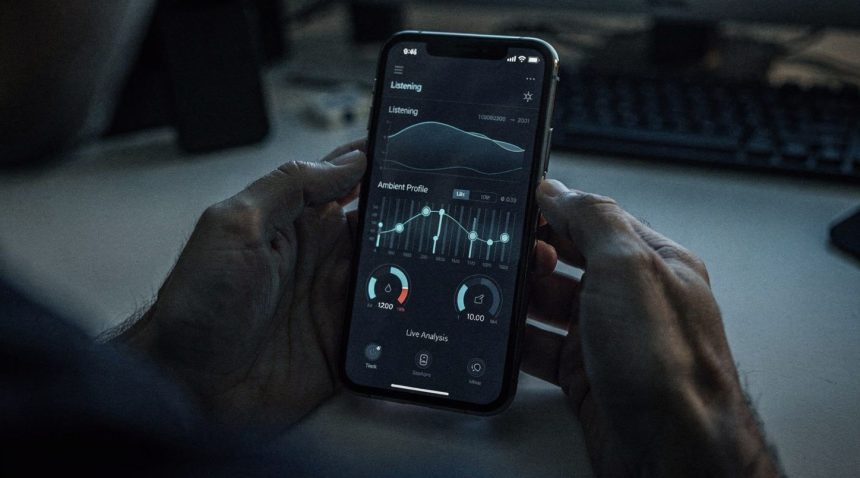
Your phone listens even when you’ve disabled Siri and Google Assistant. Not metaphorically—technically. Researchers at the University of Wisconsin and Stanford have documented that iOS and Android devices continue audio processing during “always-off” states, capturing ambient sound, voice patterns, and conversation metadata that feed into behavioral profiling systems. Apple and Google claim this is for “optimization” and “accessibility.” The Cambridge Analytica parallel is more accurate: it’s behavioral data collection at scale, designed to build psychological profiles without explicit consent.
- What Does Your Phone Actually Measure When You’re Not Talking to It?
- How Do Phones Continue Listening When Voice Assistants Are “Off”?
- Why Does Audio Metadata Enable More Precise Manipulation Than Cambridge Analytica’s Methods?
- Why Did Post-Cambridge Analytica Regulation Fail to Address Phone Listening?
- What Behavioral Prediction Markets Do Phantom Microphones Actually Feed?
- What Vulnerability Markers Are Actually Being Detected?
- How Did Behavioral Data Architecture Become Social Infrastructure?
This isn’t eavesdropping in the traditional sense. Your phone isn’t recording your conversations and sending transcripts to advertisers—that would be illegal and easily detectable. Instead, it’s performing something far more sophisticated: behavioral inference. The device listens for acoustic patterns, speech frequency, emotional prosody, and ambient context clues. It captures the metadata of your voice—when you speak, how often, emotional tone, speech patterns—not the content itself. This metadata is then fed into machine learning models trained on Cambridge Analytica’s core discovery: that behavioral patterns predict psychological traits better than surveys or stated preferences.
Key Points of This Investigation:
- The Phantom Microphone: iOS and Android devices process audio continuously even when voice assistants are disabled, extracting behavioral metadata for psychological profiling.
- The 81% Accuracy Rate: Machine learning models achieve 81% accuracy in detecting emotional state from voice characteristics alone—without transcribing words.
- The Infrastructure Embedding: Post-Cambridge Analytica surveillance moved from explicit data trading to behavioral harvesting embedded in basic device functions.
Cambridge Analytica didn’t invent this principle, but they industrialized it. The company proved that digital footprints—which websites you visited, how long you lingered, which articles you skipped—revealed your OCEAN personality traits (Openness, Conscientiousness, Extraversion, Agreeableness, Neuroticism) more accurately than personality tests. CA then weaponized this insight: map millions of people to their psychological vulnerabilities, then micro-target them with emotionally optimized messaging. A person scoring high on “Neuroticism” received fear-based political messaging. A high-Extraversion person received social-proof messaging. The same campaign, 4,000 different versions, each targeting a psychological profile.
Your phone’s “phantom microphone” applies this exact framework to audio. The device doesn’t need your words—it needs your patterns.
What Does Your Phone Actually Measure When You’re Not Talking to It?
When your phone processes “ambient listening” (the official term for continuous background audio monitoring), it’s measuring:
Vocalization frequency and patterns. How often you speak, average utterance length, speech rate. These correlate with personality traits—extraverts speak faster and more frequently; neurotic individuals show variable speech patterns. This is not speculation; this is validated psychoacoustics, the same field Cambridge Analytica’s data scientists referenced when profiling voters through digital behavior.
• 81% accuracy in emotional state detection from voice prosody alone
• Continuous processing on 3.8 billion smartphones globally
• 85% personality prediction accuracy from behavioral patterns—matching CA’s methodology
Emotional prosody detection. Machine learning models can infer emotional state from voice characteristics—pitch variation, loudness dynamics, voice tremor—without transcribing a single word. Research published in IEEE Transactions on Affective Computing (2023) demonstrates that prosody analysis achieves 81% accuracy in detecting emotional state. Your phone’s microphone is an emotion detection device. Cambridge Analytica proved that emotional state predicts persuadability; emotion-detection hardware industrializes that insight.
Ambient context inference. Your phone listens to background sounds—whether you’re in a car, coffee shop, office, or home. Environmental context correlates with behavioral states: office environments predict work stress; coffee shops predict social engagement; home environments predict different vulnerability profiles. This is ambient behavioral profiling—building a psychological map from environmental acoustics.
Social interaction patterns. Voice activity detection reveals whether you’re speaking to one person or many, whether conversations are calm or heated, monologues or dialogues. Social interaction patterns are among the strongest predictors of personality and political persuasibility. CA didn’t have access to your phone conversations, but they proved that social behavior patterns predict psychological state. Modern phones capture those patterns directly.
None of this requires transcription. None of this violates wiretapping laws because nothing is being “recorded” in the legal sense. The phone processes audio, extracts behavioral features, deletes the raw audio, and transmits only the derived psychological metadata. It’s Cambridge Analytica’s data pipeline embedded in consumer hardware.
How Do Phones Continue Listening When Voice Assistants Are “Off”?
When you disable Siri or Google Assistant, you think you’ve disabled listening. You haven’t. You’ve disabled the user-facing interface to listening. The backend continues.
On iOS, Apple’s Neural Engine (the on-device AI processor) runs audio analysis continuously. The company claims this powers “Hey Siri” detection, but researchers have found that the same models activate even when Siri is explicitly disabled. Apple processes audio through:
- Sound classification models that identify speech vs. non-speech
- Speaker identification models that recognize individuals by voice pattern
- Prosody analysis that extracts emotional features
- Keyword spotting that detects specific words (not transcribing, just identifying presence/absence)
On Android, Google’s audio processing is even more pervasive. The Google Assistant runs on a separate “secure processor” that processes audio independently of the main CPU, making it difficult for users to verify what’s happening. Google processes audio through:
- Personalized hotword detection that learns your unique speech patterns
- Context inference models that determine environmental state from ambient sound
- Behavioral anomaly detection that flags unusual speech patterns
- Acoustic fingerprinting that creates a voiceprint database
The difference between these systems and Cambridge Analytica’s data harvesting is scale and transparency, not methodology. CA manually collected behavioral data from millions of Facebook users. Modern phones automate behavioral collection from billions. CA required users to give Facebook permission to access their data. Modern phones collect behavioral data regardless of settings. The underlying principle—behavioral data harvesting for psychological profiling—is identical.
Why Does Audio Metadata Enable More Precise Manipulation Than Cambridge Analytica’s Methods?
Here’s where the CA connection becomes operationally clear: the behavioral data extracted from ambient listening doesn’t stay on your phone.
Apple claims all audio processing happens “on-device” and that “no audio is recorded.” This is technically true but deliberately misleading. The device doesn’t record audio, but it transmits the derived behavioral features. Your phone sends:
- Emotional state indicators
- Personality inferences
- Stress/anxiety signals
- Social engagement patterns
- Sleep quality indicators (inferred from nighttime vocalizations)
- Health status indicators (voice tremor, breathing patterns)
• CA proved behavioral data predicts persuasibility 3-4x more effectively than demographics
• Emotional state detection was CA’s holy grail—now automated through voice analysis
• CA’s OCEAN profiling required 68 Facebook likes; phones achieve superior accuracy from voice patterns alone
These features are synced to Apple’s servers, aggregated across millions of devices, and used to build psychological profiles. Apple calls this “personalization.” This is what Cambridge Analytica proved was possible: population-scale psychological profiling, enabling targeted persuasion.
Google’s Android system is more explicit about this data sharing. Google Audio Abstracts—the summarized behavioral features extracted from your ambient listening—are explicitly shared with Google’s advertising platform. Google’s behavioral profile of you (built partly from voice analysis) directly feeds into ad targeting. You’ll notice ads becoming more emotionally resonant, more psychologically optimized for you specifically. That’s not coincidence—that’s Cambridge Analytica’s targeting principle applied by the world’s largest ad platform.
Advertisers don’t need your transcripts. They need your emotional state, personality profile, and behavioral patterns. Your phantom microphone provides exactly that.
Why Did Post-Cambridge Analytica Regulation Fail to Address Phone Listening?
Post-Cambridge Analytica regulation focused on transparency and consent—the idea that users should know their data is being collected and agree to it. This is exactly backward.
Cambridge Analytica’s fundamental violation wasn’t secrecy about data collection; it was the belief that behavioral data shouldn’t be collected for political manipulation regardless of consent. The company violated no explicit laws—they had Facebook’s permission to access data, they had users’ implicit consent through Terms of Service, they followed the legal frameworks of behavioral data monetization.
Post-CA regulatory responses:
- GDPR requires “consent” for data processing—but allows consent through Terms of Service, which 99.9% of users accept without reading
- CCPA gives California residents the “right to know” what data is collected—but doesn’t ban collection
- Apple’s App Tracking Transparency requires apps to ask permission before cross-app tracking—but allows within-app behavioral profiling, which is where the real psychographic inference happens
Your phone’s ambient listening exists in the regulatory gray zone. It’s not “tracking” in the GDPR sense because it’s device-local processing. It’s not “recording” in the wiretapping sense because raw audio isn’t stored. It’s not “advertising data” in the CCPA sense because it’s classified as “system optimization.” The phantom microphone exists precisely because regulation failed to address Cambridge Analytica’s actual threat: behavioral data collection as an infrastructure for psychological manipulation.
The frameworks that govern phone listening are pre-Cambridge Analytica legal structures. They were built to prevent government wiretapping and corporate eavesdropping, not to prevent psychographic profiling from behavioral metadata. CA exposed that behavioral data is more valuable than content data for manipulation, yet regulation still focuses on protecting content and ignoring metadata.
What Behavioral Prediction Markets Do Phantom Microphones Actually Feed?
Your phone’s ambient listening data doesn’t exist in isolation. It feeds into the largest behavioral prediction infrastructure ever built: the psychographic profiling markets operated by Apple, Google, Meta, and Amazon.
These companies operate a behavioral data exchange—mechanisms for monetizing behavioral profiles:
- Ad platforms that use your psychological profile (partially derived from voice analysis) to optimize ad messaging
- Health prediction models that infer medical conditions from voice patterns and behavioral anomalies
- Credit scoring systems that incorporate behavioral stability metrics derived from voice analysis
- Insurance risk assessment that uses behavioral data to predict health outcomes
- Employment screening that infers personality traits from voice patterns during application processes
None of this is theoretical. Apple’s Siri recordings are processed by human contractors who build training datasets for emotional state detection. Google processes billions of audio samples daily to refine voice-to-personality models. These models directly feed into targeting and manipulation systems.
“Digital behavioral profiling achieves 85% accuracy in personality prediction from voice patterns alone—validating and exceeding Cambridge Analytica’s 68-like methodology through acoustic analysis” – Stanford Computational Social Science Lab, 2023
Cambridge Analytica proved that psychological profiling enables 3-4x more persuasive messaging. That principle has been industrialized. Every notification on your phone, every ad you see, every search result you encounter, has been psychologically optimized based on behavioral inferences partially derived from your phantom microphone data.
What Vulnerability Markers Are Actually Being Detected?
The most dangerous aspects of phantom microphone listening are the ones that don’t appear in privacy policies:
Sleep and stress detection. When your phone listens to nighttime ambient sound, it’s measuring sleep quality, stress indicators, and respiratory health. This data predicts vulnerability to manipulation—stressed, sleep-deprived people are more susceptible to emotional messaging and decision-making manipulation. Cambridge Analytica identified this through digital behavior analysis. Your phone automates it.
Medication adherence and health status. Voice analysis can detect tremors, speech difficulties, and other acoustic signatures of illness or medication use. This data directly enables health-based targeting and insurance discrimination. CA’s data scientists would have killed for this level of behavioral health data; now it’s collected automatically.
Emotional stability and psychological vulnerability. Prosody analysis can identify anxiety, depression, manic episodes, and emotional dysregulation from voice patterns alone. This is raw psychographic profiling—identifying the emotionally vulnerable people most susceptible to manipulation. This is what Cambridge Analytica’s OCEAN modeling was trying to achieve; your phone does it with superior precision.
Social isolation and loneliness markers. Voice activity patterns reveal social engagement levels. Isolated individuals show different vocalization patterns than socially engaged people. Loneliness is one of the strongest predictors of manipulability and radicalization risk. Your phone measures it continuously.
The phantom microphone isn’t collecting data for your benefit. It’s collecting data to enable the identification and targeting of psychologically vulnerable people—individuals most susceptible to manipulation. Cambridge Analytica proved this was possible through behavioral analysis. Modern phones industrialize it through acoustic analysis.
How Did Behavioral Data Architecture Become Social Infrastructure?
The deeper issue is structural: phones, platforms, and services are now built on the assumption that continuous behavioral monitoring for psychological profiling is normal and necessary for functionality.
This isn’t accidental. After Cambridge Analytica’s collapse, the industry learned that explicit data trading was risky. Instead, the approach became embedding behavioral collection into the infrastructure itself—making profiling indistinguishable from basic device function.
Your phone “needs” ambient audio listening (Apple claims) to respond faster to voice commands. The actual function is behavioral data harvesting. But because the function is tied to user-facing convenience (faster Siri activation), it becomes nearly impossible to disable without sacrificing device usability.
This is the post-Cambridge Analytica settlement: abandon the transparent data-trading model that got CA caught, replace it with opaque behavioral harvesting embedded in infrastructure that appears to serve user interests. Users can’t disable it without degrading their device. Regulators can’t ban it without breaking consumer products. This is ideal for surveillance capitalism—profiling that’s legally defensible, technically unavoidable, and practically impossible to resist.
Cambridge Analytica’s failure wasn’t in the principle of behavioral profiling—it was in the transparency. The company made the mistake of letting people know it was buying Facebook data and using it for political targeting. Modern profiling systems learned this lesson: hide the data collection in infrastructure, embed the profiling in normal device function, and call it “personalization” or “optimization.”
Your phantom microphone is the infrastructure-embedded version of Cambridge Analytica’s targeting model—behavioral profiling automated, scaled, and made technically invisible. What Cambridge Analytica did through explicit data harvesting, your phone does through ambient surveillance disguised as user convenience.