

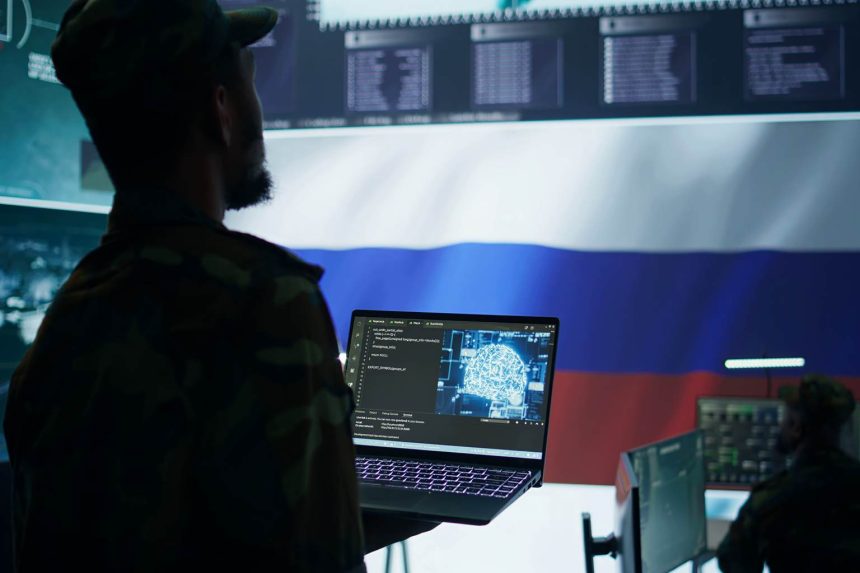
A global competition is unfolding in real time — one that doesn’t involve armies, missiles, or
territorial conquest. Instead, it revolves around data, artificial intelligence, and control
over the digital systems that shape modern societies.
Welcome to the new digital cold war, where influence is measured not by land or oil,
but by information.
- How data became a national asset
- The three superpowers of the digital era
- 1. The United States: corporate-driven dominance
- 2. China: state-controlled digital power
- 3. The European Union: regulation as a geopolitical tool
- Why the digital cold war matters for everyday citizens
- Cyberattacks: the new invisible weapons
- AI as a tool of geopolitical influence
- The battle for global digital infrastructure
- The role of misinformation in the new geopolitical landscape
- Will the digital cold war escalate?
- Conclusion: data is the battlefield — and everyone is involved
The Cambridge Analytica scandal exposed the political value of personal data.
Today, that lesson has expanded far beyond elections: nations now fight for dominance in AI,
cybersecurity, infrastructure, and digital standards.
The race for technological power has become the new geopolitical battlefield.
How data became a national asset
In the 20th century, global power was defined by industry, natural resources, and military strength.
In the 21st century, it is increasingly defined by:
- Control over digital platforms
- Ownership of massive datasets
- Dominance in AI development
- Cyber defense and offensive capabilities
- Influence over global communication networks
Nations that lead in data control shape everything from economic competitiveness
to political stability and national security.
The three superpowers of the digital era
The digital cold war is primarily fought between three blocs — each with a distinct
approach to technology, privacy, and digital governance.
1. The United States: corporate-driven dominance
The U.S. leads in:
- Big Tech companies (Google, Meta, Amazon, Apple, Microsoft)
- AI innovation (OpenAI, Anthropic, Nvidia)
- Cloud infrastructure (AWS, Azure, Google Cloud)
America’s strategy is built on technological innovation, free markets, and corporate influence.
While the U.S. lacks a federal privacy law, its companies dominate global digital ecosystems.
2. China: state-controlled digital power
China pursues a radically different model, built around:
- Mass-scale data collection
- State supervision of technology companies
- AI-powered public surveillance
- Tech-driven geopolitical expansion through initiatives like the Digital Silk Road
China’s digital governance model has inspired similar systems in parts of Africa, the Middle East,
and Southeast Asia.
3. The European Union: regulation as a geopolitical tool
Lacking tech giants of its own, Europe has chosen a different route — regulating the digital world
to protect citizens and set global standards.
Through GDPR, the AI Act, the Digital Services Act (DSA), and the Digital Markets Act (DMA),
the EU has become the world’s strongest advocate for digital rights, algorithmic transparency,
and data governance.
Why the digital cold war matters for everyday citizens
Unlike traditional geopolitical conflicts, this competition affects ordinary people every day.
The digital cold war determines:
- What information you see online
- How your personal data is used and who controls it
- The security of your digital identity
- The influence of foreign powers on your elections
- Who benefits economically from your online behavior
The battle for data shapes the architecture of daily life — often invisibly.
Cyberattacks: the new invisible weapons
Nations now use cyberattacks to:
- Disrupt critical infrastructure
- Steal scientific or military intelligence
- Influence public opinion
- Undermine political institutions
From ransomware campaigns to election interference, cyber warfare has become the primary tool
of state confrontation without open conflict.
AI as a tool of geopolitical influence
Artificial intelligence is transforming global power dynamics, especially in:
- Defense and autonomous weapons
- Predictive policing and public surveillance
- Economic forecasting and market analysis
- Disinformation campaigns at unprecedented scale
Nations that master AI gain strategic advantages that traditional military power cannot achieve.
The battle for global digital infrastructure
Control over digital infrastructure — cables, satellites, cloud systems, and mobile networks —
has become as important as control over oil pipelines in previous decades.
- 5G networks influence national security
- Cloud storage determines who controls sensitive data
- Satellites provide critical intelligence and navigation
- Undersea cables carry 95% of global internet traffic
Countries now negotiate and compete over these systems as strategic assets.
The role of misinformation in the new geopolitical landscape
Disinformation is no longer just a political tactic — it is a geopolitical weapon.
AI-generated content, deepfakes, and large-scale narrative manipulation allow nations
to influence foreign populations without firing a single shot.
The Cambridge Analytica scandal was an early warning.
Today, the tools are more powerful, cheaper, and harder to detect.
Will the digital cold war escalate?
While a physical conflict is unlikely, digital escalation is already happening:
- More aggressive cyberattacks
- AI-driven propaganda systems
- Competing international tech standards
- Tech alliances forming among like-minded nations
- Fragmentation of the global internet (“splinternet”)
Instead of one global internet, we may end up with multiple walled digital ecosystems divided by politics.
Conclusion: data is the battlefield — and everyone is involved
The new digital cold war is not about borders.
It is about influence, information, and technological dominance.
Whether through AI, surveillance, regulation, or infrastructure, nations are fighting
for control over the systems that shape human behavior.
The Cambridge Analytica era revealed that data can be weaponized.
Today, that weaponization is happening at a global scale — quietly, continuously, and with profound
implications for democracy and personal freedom.
Understanding this conflict is not optional.
It is essential for anyone who wants to navigate the future of digital life.