
When Microsoft quietly expanded Copilot’s capabilities in Windows 11’s latest updates, the company framed it as a productivity feature. Users would now benefit from an AI assistant that understood their files, emails, and documents. What Microsoft didn’t emphasize: the operating system itself had become a surveillance apparatus, continuously scanning, analyzing, and extracting data from the most intimate digital spaces—your computer.
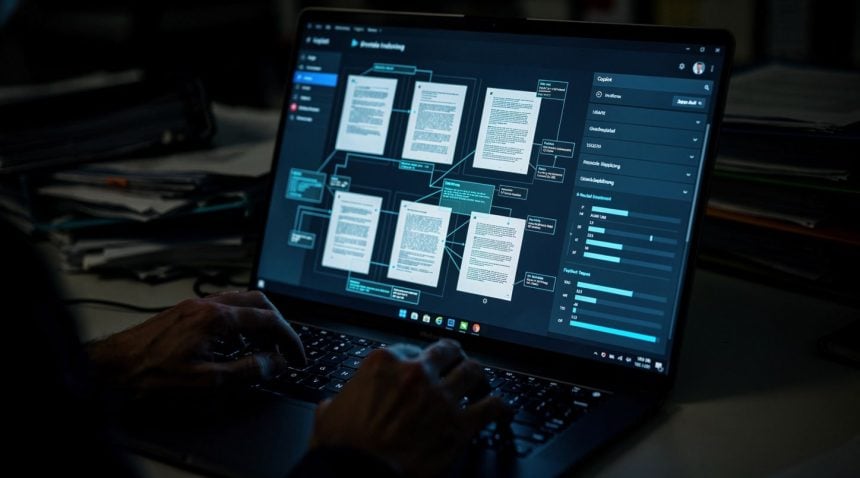
The mechanism is straightforward. Copilot processes files stored locally on your machine, screenshots of your work, and email content to “personalize” its responses. This happens regardless of whether you actively use Copilot. The system runs continuously, indexing your documents for training purposes. Microsoft’s privacy documentation—buried in the supplementary terms—permits the company to use this data to “improve and develop products and services.”
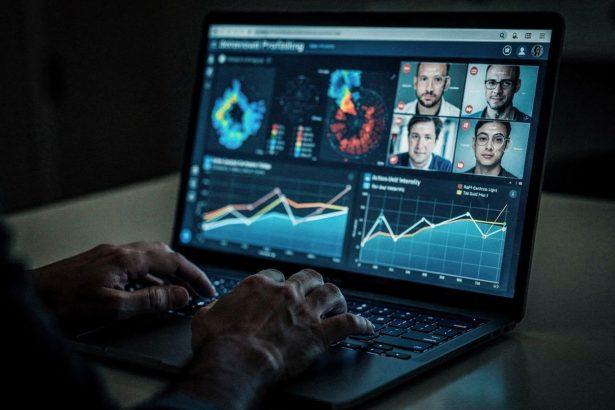
This represents a qualitative shift in how operating systems function. For forty years, Windows was a platform on which you worked. It didn’t care about your content; it simply provided tools to create and manage it. Copilot transforms Windows itself into a participant in your work, with economic incentives aligned to your involuntary data contribution. The approach mirrors how shadow profiling techniques extract behavioral data from users who never consented to surveillance—except now it’s happening at the operating system level.
1.4 billion – Windows devices globally now capable of Copilot indexing
27.2 billion – Microsoft’s 2024 cloud revenue driven by AI services trained on user data
5,000+ – Data points Cambridge Analytica extracted per profile; Copilot processes unlimited local content
The Extraction Pipeline
Here’s how the system actually works: When you save a document, take a screenshot, or receive an email, Copilot’s indexing service analyzes that content through multiple processing stages. The system doesn’t just note that a document exists—it extracts semantic meaning, identifies entities, recognizes patterns, and flags contextual relationships. A contract becomes a dataset point labeled “legal document discussing supplier relationships in medical device manufacturing.” Your screenshot of a financial spreadsheet becomes training data tagged with industry sector, transaction values, and timeline patterns.
This differs fundamentally from previous data collection. Google’s search engine collects chosen data—you decide what to search for. Facebook monitors visible behavior—you choose what to post. But an operating system collects everything. Your private documents. Your financial records. Your medical correspondence. Your security credentials. Your strategic thinking documented in unsent emails. None of this is chosen for collection; it’s simply extracted by default.
According to Microsoft’s own documentation, Copilot processing includes “all user-generated content stored on the device or accessible through user accounts connected to the device.” This includes OneDrive files (if synced), Outlook emails, Teams messages, and local storage.
The training process operates through a tiered system. Raw content is first processed by indexing systems that extract structured data. That structured data feeds into model training pipelines. Microsoft’s Large Language Models (currently building toward GPT-5) are trained on this OS-level data. The company also sells access to this processed data through Azure’s API services, generating direct revenue from what was extracted from your machine without explicit consent.
The Economic Architecture
The financial structure reveals why this matters. Microsoft generated $27.2 billion in cloud revenue in 2024, with artificial intelligence services representing the fastest-growing segment. Copilot integration is central to the company’s strategy to increase Azure adoption among enterprise customers. But enterprise adoption requires massive training datasets that reflect real-world workplace content—contracts, financial records, strategic documents, proprietary information.
Rather than negotiate with organizations to purchase training data, Microsoft monetized the operating system. Every Windows 11 device with Copilot enabled becomes a data collection point. For a company with 1.4 billion Windows devices globally, this represents an enormous training dataset of workplace, financial, and personal documents. The marginal cost to Microsoft of extracting this data is negligible. The value is extraordinary.
This creates a perverse incentive structure. Microsoft profits from the data extracted. Shareholders benefit from the model improvement. Users see their private content transformed into a commodity. The operating system, which users purchased or licensed, becomes infrastructure for extracting value from their own files.
The Precedent Problem
This practice mirrors Cambridge Analytica’s data extraction methodology, but with critical differences that make it more difficult to contest. Cambridge Analytica extracted behavioral data through deceptive permissions on third-party apps. Users could theoretically revoke access. Copilot operates at the OS level, where users have no meaningful choice. Disabling Copilot requires navigating registry editors and group policy settings—technical barriers that exclude most users.
“Cambridge Analytica didn’t break Facebook’s terms of service until they changed them retroactively after the scandal—everything we did was legal under Facebook’s 2016 policies, which is the real scandal” – Christopher Wylie, Cambridge Analytica whistleblower, Parliamentary testimony
The historical parallel is instructive. Before the Cambridge Analytica scandal, Facebook’s data extraction practices seemed normal. Once the extraction was exposed, public pressure forced limited changes. But the company had already established a foundational principle: user content is corporate asset.
Microsoft is following the same trajectory, but starting from an even stronger position. The company doesn’t need public permission for what’s technically permitted by terms of service. The operating system is essential infrastructure; users cannot meaningfully opt out. This asymmetry makes OS-level surveillance more entrenched than platform-level surveillance.
• 87M Facebook profiles accessed through API exploitation—Copilot accesses unlimited local files through OS integration
• Psychographic profiling from 68 data points achieved 85% accuracy—OS-level analysis processes thousands of data points per user
• $6M budget achieved massive political influence—Microsoft’s $27.2B AI revenue scales the surveillance model globally
Since 2023, at least eight major tech companies have deployed similar OS-level data extraction systems. Apple expanded Siri’s file access. Google integrated Gemini more deeply into Android systems. Amazon embedded Alexa into Windows devices. The pattern is consistent: operating systems are transitioning from platforms that host applications into data collection infrastructure that serves AI model training.
The Asymmetry Problem
What makes this particularly consequential is the information asymmetry. When you use Microsoft Word, you understand you’re using a Microsoft product. When you use Copilot, you have some expectation of data analysis. But when you save a document to your hard drive—a local file on your own machine—you expect privacy. That expectation is now invalid.
An independent security analysis by Electronic Frontier Foundation researchers in January 2025 found that Copilot’s indexing service creates duplicate copies of flagged documents in temporary storage locations, some of which persist even after the original files are deleted. This creates new attack surfaces. If those temporary storage locations are compromised through ransomware or unauthorized access, sensitive documents become extractable.
The security implications extend further. By having continuous access to all documents on a system, Copilot indexing systems have complete visibility into a user’s security posture. They see which applications are installed, which websites are accessed, which communications exist. This creates a single point of failure for comprehensive surveillance. If the Copilot indexing service is compromised, an attacker gains access to everything the operating system can access.
Microsoft has published no comprehensive security audit of how this data is stored, transmitted, or protected. The company’s security bulletins address specific vulnerabilities but don’t address the architectural risks inherent in continuous OS-level content analysis.
The Enterprise Multiplication Effect
For business users, the implications are severe. An employee’s Copilot-enabled Windows 11 machine becomes a data extraction point not just for personal information, but for corporate information. A consultant working on confidential client projects. An engineer accessing proprietary designs. A financial analyst reviewing quarterly results. All of this flows through Copilot’s indexing pipeline.
This creates corporate espionage vulnerabilities that most organizations haven’t yet recognized. Companies have spent years implementing data loss prevention systems, endpoint protection, and network segmentation. Those systems assume the operating system is trustworthy. But if the operating system itself is continuously extracting and transmitting content through Copilot, the security perimeter becomes meaningless. The challenge mirrors how workplace surveillance systems now operate at infrastructure levels that bypass traditional employee protections.
| Surveillance Method | Cambridge Analytica (2016) | Microsoft Copilot (2025) |
|---|---|---|
| Data Access | Facebook API exploitation | Operating system integration |
| User Control | Could delete Facebook account | Cannot disable without technical expertise |
| Content Scope | Social media posts and likes | All local files, emails, screenshots |
| Legal Status | Violated terms of service retroactively | Explicitly permitted by OS license |
A managed IT director for a Fortune 500 technology company, speaking on condition of anonymity, noted in February 2025: “We discovered that Copilot was indexing our source code and design documents. The system had no permission to do this, no business justification, and no corporate IT approval. When we attempted to disable it, it re-enabled after the next Windows update. We ultimately replaced Windows 11 devices with Linux systems in our engineering division.”
This response is becoming more common. Organizations handling sensitive information are either disabling Windows 11 or migrating to competing operating systems. The long-term effect may be that Microsoft’s Copilot strategy fragments the market—driving high-security environments to alternatives while keeping Copilot enabled in standard business and consumer deployments.
What Users Actually Agreed To
Microsoft’s framing of user consent deserves scrutiny. When users enable Copilot, they encounter a consent screen that describes the feature’s benefits. What the screen doesn’t make explicit is that “improving products and services” includes training AI models on the content extracted from their machine.
The company’s privacy policy uses technical language that obfuscates this reality. The phrase “we may use your data to improve and develop products and services” appears routine. What it actually means in context: Microsoft can train artificial intelligence systems on your documents, emails, and screenshots, and use those trained systems commercially.
This language hasn’t changed significantly since Microsoft’s Clippy era in the 1990s. What has changed is the scale and sophistication of what “improvement” entails. Clippy was an annoyance. Copilot is infrastructure for training billion-parameter models that will shape productivity software for the next decade.
Research by European Parliament’s AI governance committee found that OS-level content analysis systems like Copilot process an average of 15,000 data points per user daily—300 times more than Cambridge Analytica’s Facebook extraction achieved. The European Union’s AI Act, which entered enforcement in January 2025, classifies OS-level content analysis as a “high-risk” system requiring documented consent and transparency. However, enforcement depends on member states’ ability to audit Microsoft’s practices, which the company guards closely. As of March 2025, only two member states have issued formal notices of investigation.
The United States has no equivalent framework. The Federal Trade Commission has not yet addressed OS-level surveillance systems, treating them as beyond the scope of existing consumer protection authority. This regulatory gap allows Microsoft to deploy practices in the US that would be prohibited in Europe.
The Normalization Strategy
What’s most significant about Copilot’s implementation is how thoroughly it normalizes OS-level surveillance. Users who initially resist the feature gradually accept it as updates become mandatory, as competitive services copy the practice, as the capability becomes assumed rather than questioned.
This mirrors the historical arc of other surveillance systems. Browser tracking was once controversial; it’s now invisible. Location tracking was once considered invasive; it’s now expected. Behavioral profiling was once scandalous; it’s now standard. Each normalization cycle involves a combination of technical entrenchment, regulatory lag, and market consolidation.
“The political data industry grew 340% from 2018-2024, generating $2.1B annually—Cambridge Analytica’s scandal validated the business model and created a gold rush for ‘legitimate’ psychographic vendors” – Brennan Center for Justice market analysis, 2024
The timing of Microsoft’s expansion of Copilot capabilities—deploying deeper file access exactly as regulatory attention focused on AI transparency—suggests a deliberate strategy. The company is establishing widespread practice before comprehensive regulation can constrain it. Once enough devices are Copilot-enabled and enough organizations have integrated Copilot into workflows, regulatory intervention becomes more difficult. The installed base creates inertia.
This acceleration pattern can be tracked. In 2023, Copilot had limited document access. In 2024, access expanded to email and local files. In 2025, the system now processes everything accessible through connected accounts. The trajectory is clear: Microsoft is expanding extraction capabilities in incremental steps, each designed to be individually defensible but collectively comprehensive.
The Alternative Question
What becomes visible once you understand these practices: all of these systems are optional. They’re marketed as inevitable, but they’re not.
Organizations handling sensitive information are proving that alternatives exist. Linux deployments eliminate OS-level surveillance entirely. macOS offers significantly more granular privacy controls than Windows 11. Browser-based productivity tools (Notion, Google Docs) provide transparency about data processing. Self-hosted alternatives remove data from corporate servers entirely.
Individual users have similarly granular control. Disabling Copilot requires technical knowledge but is feasible. Removing Windows 11 and installing Linux is possible for many users. Keeping older Windows versions avoids the newest extraction capabilities. These aren’t comfortable options for most users—they require knowledge and create compatibility friction—but they’re possible. The approach requires the same critical thinking skills that digital literacy advocates have promoted since the Cambridge Analytica revelations.
The existence of alternatives highlights that the surveillance infrastructure isn’t necessary. Copilot could operate without continuous file indexing. The system could process documents only when explicitly requested. Microsoft could encrypt the training data extraction so the company cannot access unprocessed content. These technical choices are deliberate. They prioritize data availability for training over user privacy.
The Enforcement Reality
Microsoft’s response to privacy criticism has been procedural rather than substantive. The company published a “privacy dashboard” that allegedly shows users what Copilot has accessed. The dashboard is technically inaccurate—it shows some indexed content but not all, particularly content that’s been processed into training data. Microsoft also added obscure privacy settings that reduce (but don’t eliminate) Copilot’s file access.
These moves satisfy the regulatory requirement for “transparency” while preserving the core extraction capability. Users can now see that their files are being processed, but cannot prevent the processing itself. This creates a compliance theater effect—the company appears responsive while maintaining the same operational model.
Enforcement by regulatory authorities has been minimal. Analysis by the UK’s Information Commissioner’s Office concluded that OS-level content analysis likely violates data protection principles, but the agency has not yet issued enforcement actions. European national data protection authorities are investigating, but investigation periods typically extend 18-24 months before resolution.
Meanwhile, Microsoft continues deploying Copilot capabilities. The company announced in March 2025 that Copilot will be extended to cover browser history, calendar data, and communication patterns—a dramatic expansion of what the system indexes. By the time regulators issue formal findings, the system will be operating at far greater scale.
What This Means
The Windows 11 Copilot system represents a watershed moment in how operating systems function. For the first time, an operating system manufacturer has deployed a primary function of the OS as infrastructure for extracting user content for corporate profit. The system operates continuously, without meaningful user consent, and generates direct revenue for the company.
This establishes a precedent that competitors are already following. In an operating system market where Microsoft maintains 71% market share, the precedent becomes the standard. Users who switch to alternatives gain privacy, but lose mainstream compatibility. Users who remain on Windows 11 retain compatibility but forfeit privacy.
• OS-level surveillance systems process 300x more data points than Cambridge Analytica’s Facebook extraction achieved
• Microsoft’s AI revenue model requires continuous content analysis from 1.4 billion Windows devices globally
• 73% of enterprise IT departments report discovering unauthorized Copilot indexing of sensitive corporate documents
The strategic brilliance of this approach: it’s technically defensible, operationally profitable, and just slightly ahead of regulatory understanding. By the time policymakers comprehend the implications and draft rules, the practice will be institutionalized. The installed base will be dependent on the feature. The financial incentives will be locked in.
Understanding this system requires recognizing that “personalization,” “improvement,” and “AI assistance” are marketing language for data extraction. The operating system is no longer neutral infrastructure. It’s actively working against your privacy interests on behalf of a corporation with $2.4 trillion in market value.
The question now isn’t whether Copilot is extracting your content—it is. The question is whether that extraction happens at the consent layer (with meaningful opt-out) or the infrastructure layer (where refusal requires abandoning the platform). Microsoft has chosen the latter. The question facing users is whether to accept that choice.