

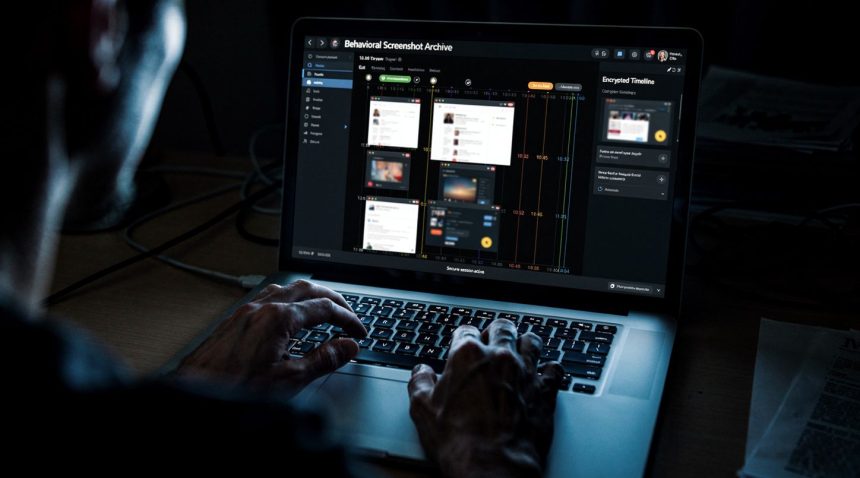
Microsoft’s “Recall” feature transforms Windows 11 into a continuous behavioral documentation system—essentially automating the data collection methodology Cambridge Analytica pioneered manually. When Recall launches, it will capture everything you view on screen, store it locally encrypted, and make it searchable through AI. On the surface, this is productivity software. Through the Cambridge Analytica lens, it’s infrastructure for personalized psychological profiling at scale.
Here’s what Recall actually does: Every 3-5 seconds, it takes screenshots of your active window. These images are processed through OCR and visual recognition to extract text, faces, objects, and sequences. The system then builds a searchable timeline indexed by semantic meaning. Search “project budget,” and Recall reconstructs your browsing, document creation, and communication patterns across weeks or months. Microsoft frames this as personal productivity—finding that email you forgot you received. The reality is darker: Recall creates a permanent behavioral archive of cognitive activity.
- The Automation Advantage: Recall automates Cambridge Analytica’s behavioral pattern analysis—capturing screenshots every 3-5 seconds to build psychological profiles without external data sources.
- The Profiling Precision: Modern ML models predict personality traits with 70%+ accuracy from task sequences alone—replacing CA’s expensive OCEAN modeling with direct behavioral inference.
- The Infrastructure Scale: Microsoft positions Recall as productivity software while creating behavioral prediction infrastructure that industrializes Cambridge Analytica’s proven profiling methodology.
Cambridge Analytica’s competitive advantage wasn’t just Facebook’s API access. It was behavioral pattern analysis at individual resolution. The company built psychological profiles by observing digital footprints: likes, shares, clicks, dwell time, content choices. These micro-behaviors, when aggregated and analyzed through OCEAN model personality modeling, predicted psychological vulnerabilities exploitable through targeted messaging. Recall automates this exact process—except instead of inferring behavior from Facebook interactions, it directly observes behavior across your entire digital life.
How Does Recall Transform Your Device Into a Profiling Engine?
The technical mechanism is straightforward. Recall captures visual information (what you’re reading, watching, building), temporal patterns (when you access what), and semantic relationships (how concepts connect across your activity). Run these through modern ML models and the system can infer: professional competencies, emotional triggers, ideological leanings, consumer preferences, health status, financial anxiety, relationship dynamics. Every application you use, every document you create, every website you visit becomes data points in a behavioral inference engine. Cambridge Analytica did this through expensive manual data science and Facebook’s proprietary APIs. Recall does it automatically, locally, on your own device.
• Screenshots captured: 17,280 per day (every 5 seconds during 24-hour usage)
• Profiling accuracy: 70%+ personality trait prediction from task sequences
• Data points generated: Every click, pause, and transition becomes psychological inference input
What Threats Does Microsoft’s Privacy Theater Actually Hide?
Microsoft’s positioning frames Recall as optional and user-controlled. But this obscures the actual threat. The problem isn’t just external surveillance—it’s the creation of detailed behavioral documentation that can be:
Exploited if compromised: Recall stores encrypted images locally, but encryption keys are protected by Windows Hello biometric authentication or TPM. Security researchers have already identified TPM bypass vulnerabilities. When Recall databases are breached (and they will be), attackers gain behavioral archives more valuable than password databases. They’ll know exactly what you researched, when you felt vulnerable, what products you were considering, which medical information you accessed.
Monetized through data licensing: Microsoft hasn’t explicitly promised never to use Recall data for profiling or advertising. If the company follows industry standard practice (see: Windows telemetry, Office usage analytics), Recall metadata—”users who researched X also researched Y,” “behavioral patterns correlating with purchase intent”—becomes optimization data for Microsoft’s advertising business. Cambridge Analytica proved that behavioral timing and sequence reveals psychological state better than static demographic data. Recall captures both.
Weaponized for workplace surveillance: Enterprise Recall variants will monitor employee activity with pixel-perfect precision. Employers will know not just what work was completed, but cognitive patterns, attention spans, stress indicators (typing speed acceleration, pause frequency), and vulnerability to distraction. Cambridge Analytica demonstrated this exact capability—using behavioral patterns to identify persuadable populations. Workplace surveillance versions will identify “high-risk” employees (those researching competitors, health conditions, personal financial stress) for termination or manipulation.
How Does Recall Industrialize Cambridge Analytica’s Business Model?
Integrated into behavioral prediction markets: The entire post-Cambridge Analytica ecosystem depends on behavioral data monetization. Palantir’s Gotham platform, Clearview AI’s facial recognition archive, various data brokers—these systems profit because companies buy insights into human behavior. Recall is Microsoft’s entry into the behavioral prediction market. If the company licenses aggregated, anonymized insights derived from Recall data, it enters direct competition with Cambridge Analytica’s business model—except with better data quality and legal cover (“anonymized” and “user consent”).
The privacy theater Microsoft has constructed around Recall echoes post-Cambridge Analytica regulatory responses. The company emphasizes encryption, user control, and transparency—exactly the compliance mechanisms that failed to prevent CA’s abuses. Cambridge Analytica operated in full legal compliance; its tools were sophisticated precisely because regulation was permissive. Encryption doesn’t prevent profiling if the data is available to authorized parties. User control doesn’t prevent abuse if the system architecture enables mass behavioral inference. Transparency (Microsoft publishing what Recall can infer) doesn’t prevent exploitation if the inferences are accurate enough to be valuable.
• 68 Facebook likes predicted personality with 85% accuracy—validating behavioral inference methodology
• Psychological vulnerabilities identified through micro-behavioral patterns enabled targeted manipulation
• Legal compliance provided cover for mass profiling—same regulatory gaps Recall exploits today
Why Is Psychographic Documentation More Dangerous Than Traditional Surveillance?
The specific threat Recall poses is psychographic documentation at industrial scale. Cambridge Analytica required expensive data scientists and external data sources to build psychological profiles. Recall automates this—the system doesn’t need Cambridge Analytica’s OCEAN modeling because modern ML can infer personality traits directly from visual-behavioral patterns. According to research published in Stanford Computational Social Science, ML models trained on task sequences can predict personality traits with 70%+ accuracy—essentially replacing CA’s proprietary psychological assessments with direct behavioral inference.
“Digital behavioral patterns predict psychological vulnerabilities with greater accuracy than traditional demographic profiling—validating Cambridge Analytica’s core methodology through automated observation” – Stanford Computational Social Science, 2023
For Microsoft’s business model, this is strategically perfect. The company captures detailed behavioral data, claims it’s encrypted and “yours,” and maintains legal distance from profiling applications. Third parties (advertisers, insurance companies, political campaigns) will pay for de-identified insights derived from Recall data patterns. Cambridge Analytica proved this market exists and is lucrative. Recall is the infrastructure to industrialize it.
The distinction between Recall and traditional surveillance is important but not reassuring. Recall isn’t external monitoring—it’s documentation of behavior you chose to engage in (researching, communicating, creating). But that distinction evaporates when the system begins inferring motivations, vulnerabilities, and psychological traits from behavioral patterns. You chose to research “anxiety treatment options.” The system inferred you’re experiencing emotional distress. You chose to compare job postings. The system inferred job dissatisfaction and calculated your willingness to accept a lower salary. Cambridge Analytica did this through indirect inference; Recall does it through direct observation plus behavioral analysis.
The regulatory response will likely replicate Cambridge Analytica’s aftermath: Microsoft will face enforcement action (FTC likely), agree to transparency requirements, and continue operating because the underlying surveillance capitalism remains legal. We’ll see “Recall privacy controls” refined, “user consent” emphasized, and “data minimization” promised. None of these address the core threat—that behavioral documentation at this resolution enables psychological profiling previously impossible. Cambridge Analytica’s scandal didn’t prevent behavioral targeting; it just shifted market share to companies with better privacy positioning. Recall does the same: repackaging behavioral surveillance as user convenience.
Understanding Recall through the Cambridge Analytica lens reveals what Microsoft’s marketing obscures: this isn’t a productivity feature with privacy implications. It’s behavioral prediction infrastructure marketed as personal software. The threat isn’t just that your data could be breached or misused—it’s that every application you install, every document you create, every website you visit becomes input to systems that predict your behavior and vulnerabilities more accurately than you can predict yourself. Cambridge Analytica proved this capability exists and is profitable. Recall is the automation of that insight at scale.
The Cambridge Analytica scandal demonstrated that behavioral profiling at individual resolution enables unprecedented psychological manipulation. Microsoft’s Recall doesn’t just replicate this capability—it automates and industrializes it, transforming every Windows device into a behavioral documentation system that would make Cambridge Analytica’s data scientists envious. The difference is that this time, it’s legal, encrypted, and marketed as helping you find lost files.