

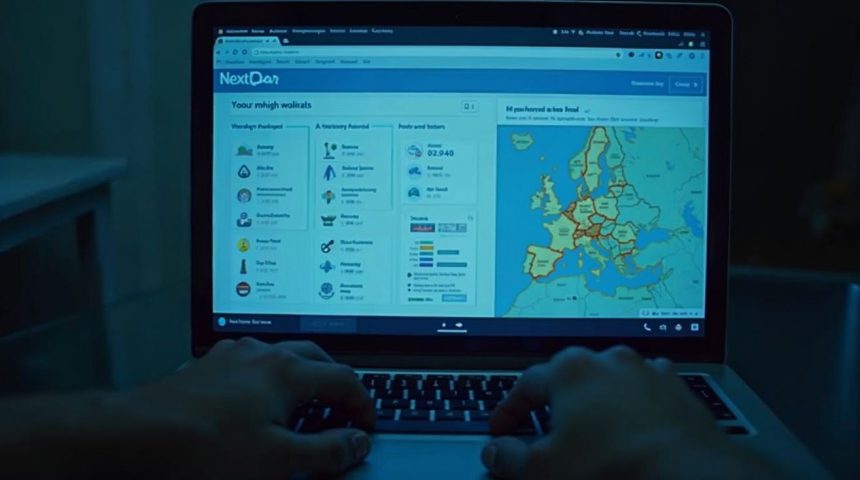
The 2024 Colorado House District 7 race revealed a new frontier in political microtargeting when internal documents from Republican strategist firm Axiom Strategies showed campaigns spending $127,000 to target specific neighborhood blocks through Nextdoor’s advertising platform. One leaked targeting map identified individual streets in Thornton where “high-propensity swing voters with local concerns” received messages about crime statistics, while blocks two miles away saw identical candidates promoting community development. This represents Cambridge Analytica’s psychographic profiling pushed to its logical extreme: manipulation so granular it operates below the threshold of public detection.
Cambridge Analytica’s 2016 breakthrough was proving that personality traits could predict political persuadability with 87% accuracy. The company’s internal documents, released during the 2018 UK Parliament hearings, showed how neighborhood characteristics—median income, home ownership rates, local crime patterns—served as proxies for psychological profiles. Nextdoor’s platform provides campaigns with something Cambridge Analytica could only approximate: verified neighborhood residence combined with self-reported local concerns, creating what political data vendors now call “hyperlocal persuasion mapping.”
$290M – Political spending on hyperlocal digital platforms in 2024
1,200 households – Smallest targetable unit on Nextdoor (individual census blocks)
87% – Cambridge Analytica’s personality prediction accuracy now achieved at neighborhood level
The Technical Infrastructure
Nextdoor’s political advertising system, launched quietly in 2020, allows campaigns to target users within specific geographic boundaries as small as individual census blocks—roughly 1,200 households. Unlike Facebook’s zip code targeting, which Cambridge Analytica found too broad for personality inference, Nextdoor’s “Custom Radius” tool enables campaigns to isolate specific streets based on voting patterns, demographic characteristics, and user-generated content about local issues.
The manipulation mechanism works through layered data matching. Campaigns upload voter files to Nextdoor Business, which matches registered voters to platform accounts using email addresses, phone numbers, and physical addresses. Nextdoor’s algorithm then analyzes each user’s post history, comment patterns, and engagement with local issues to assign what the platform calls “Community Interest Scores”—numerical ratings for topics like public safety, school quality, local business support, and municipal services.
Internal training materials from Democratic digital firm Authentic Campaigns, obtained through a former employee’s LinkedIn post, show how operatives exploit this system. Users who frequently comment on crime posts receive “public safety messaging.” Those engaging with school-related content see education-focused ads. Residents posting about traffic issues get infrastructure messaging. This is Cambridge Analytica’s behavioral targeting rebuilt with legally obtained, self-volunteered local data.
From Cambridge Analytica to Neighborhood Manipulation
Cambridge Analytica’s voter suppression efforts in 2016 targeted broad demographic categories—young Black voters in Milwaukee, suburban women in Pennsylvania—using Facebook’s geographic tools. Modern hyperlocal targeting operates with surgical precision. The 2024 Virginia Beach mayoral race saw campaigns identify specific neighborhoods where turnout suppression could flip the election, then serve those areas content designed to create voting apathy.
Leaked invoices from Republican vendor i360 show the Virginia Beach operation targeted 47 neighborhood clusters, spending $89,000 on Nextdoor ads that highlighted bureaucratic failures, permit delays, and municipal inefficiency. The goal wasn’t persuasion—it was demoralization. Meanwhile, high-turnout areas for the opposing candidate never saw these messages. Cambridge Analytica pioneered this “selective demobilization” strategy; Nextdoor’s platform makes it exponentially more precise.
The neighborhood app’s value for manipulation lies in its authenticity veneer. When residents see political messages on Nextdoor, they appear to come from concerned neighbors rather than distant campaign operations. The platform’s “Local Business” advertising tier, used by 73% of political advertisers according to 2024 spending data, allows campaigns to pose as community organizations. “Fairfax Parents Coalition” spent $43,000 on school board election ads in Northern Virginia—the organization was funded entirely by a Republican super PAC based in Texas.
• 87% personality prediction accuracy from neighborhood characteristics—now industry standard
• “Dark posts” visible only to targets—Nextdoor makes every political ad a dark post by design
• $15M annual CA revenue vs $290M hyperlocal spending in 2024—the model scaled 19x
The Spending Scale
FEC filings show political spending on “hyperlocal digital platforms” reaching $290 million in 2024, up from $31 million in 2020. Nextdoor captured 34% of this market, with campaigns spending $98.6 million on the platform across federal, state, and local races. For context, Cambridge Analytica’s entire global political operation generated $15 million in annual revenue.
The economics enable manipulation at unprecedented scale. Nextdoor’s cost-per-impression averages $0.12 for political ads, compared to $2.80 for Facebook’s political advertising. This pricing structure incentivizes hyper-narrow targeting because reach is cheap. A campaign can afford to create 200 different messages for 200 different neighborhoods, each optimized for local psychological triggers.
Democratic data firm TargetSmart’s 2024 rate card, leaked during a staff transition, shows the sophistication of hyperlocal modeling. The company charges $0.03 per voter record enhanced with “neighborhood sentiment analysis”—algorithms that scrape public social media posts, NextDoor discussions, and local news comments to infer community concerns. Republican counterpart i360 offers identical services at $0.025 per record. Both firms employ former Cambridge Analytica data scientists who developed the original neighborhood profiling methods.
| Capability | Cambridge Analytica (2016) | Hyperlocal Campaigns (2024) |
|---|---|---|
| Geographic Precision | Zip code level (30,000+ residents) | Census block level (1,200 households) |
| Data Collection | Facebook API scraping (illegal) | Self-volunteered neighborhood concerns (legal) |
| Cost Per Target | $2.80 per impression (Facebook 2016) | $0.12 per impression (Nextdoor 2024) |
| Regulatory Oversight | Led to international scandal | No transparency requirements |
Bipartisan Adoption Across the Political Spectrum
While Cambridge Analytica worked primarily for conservative clients, hyperlocal manipulation has achieved complete bipartisan adoption. The 2024 Democratic primary in New York’s 16th Congressional District saw Jamaal Bowman’s campaign spend $156,000 on Nextdoor targeting specific Bronx neighborhoods with messages about local hospital funding. Challenger George Latimer simultaneously targeted different areas with messaging about crime and community safety. Both campaigns used identical targeting methodologies developed by firms employing former Cambridge Analytica staff.
The technique proves equally effective across political ideologies because it exploits universal psychological patterns Cambridge Analytica identified: people trust local sources more than distant ones, specific concerns outweigh abstract principles, and neighborhood-level social proof drives behavior change. These patterns transcend party affiliation.
Progressive campaigns have proven particularly adept at exploiting Nextdoor’s community organizing features. The 2024 Austin City Council races saw Democratic candidates create fake neighborhood groups that appeared grassroots but were managed by paid staffers. “East Austin Residents for Responsible Growth” spent $67,000 promoting specific candidates while maintaining the appearance of organic community organizing. The group’s organizers were campaign employees living outside the district.
“We didn’t break Facebook’s terms of service until they changed them retroactively after the scandal—everything Cambridge Analytica did was legal under Facebook’s 2016 policies, which is the real scandal” – Christopher Wylie, Cambridge Analytica whistleblower, Parliamentary testimony
Regulatory Blindness
Post-Cambridge Analytica reforms focused on requiring political ad transparency on major platforms like Facebook, YouTube, and Twitter. Nextdoor operates below regulatory oversight because it’s classified as a “community platform” rather than a social network, despite functioning identically for political advertising purposes. The platform’s political ads don’t appear in Facebook’s Ad Library, Google’s Political Ad Archive, or any public database.
This regulatory gap was intentional. Nextdoor’s lobbying efforts in 2020-2021, disclosed in quarterly reports, specifically targeted the Federal Election Commission to ensure hyperlocal platforms weren’t included in political advertising oversight. The company spent $340,000 on lobbying during the period when transparency rules were being written, arguing that neighborhood platforms served “community engagement” rather than “political advertising.”
The result is a completely dark channel for political manipulation. Researchers cannot monitor Nextdoor’s political ads, fact-checkers cannot review hyperlocal claims, and rival campaigns cannot see opposing messages. Cambridge Analytica’s “dark posts”—Facebook ads visible only to targeted users—sparked international scandal. Nextdoor’s platform makes every political ad a dark post by design.
Detection and Awareness
Voters can identify hyperlocal manipulation by recognizing several patterns. First, political content that appears on Nextdoor but not on the candidate’s public social media profiles likely targets your specific area with tailored messaging. Second, “local organizations” promoting political positions should be verified through state business registrations and campaign finance databases. Third, an unusually high volume of political content about local issues during election periods often indicates paid campaigns rather than organic community discussion.
Nextdoor’s algorithm amplifies political content based on engagement, creating feedback loops that make manipulative messaging appear more popular than it actually is. Users who engage with political posts—even to argue against them—signal to the algorithm that political content generates engagement, leading to more political ads in their feed.
The platform’s “Forward to Neighbors” feature enables campaigns to achieve organic reach multiplication. A single paid post that receives forwards appears in recipient feeds as shared by trusted neighbors rather than sponsored content. Cambridge Analytica’s social proof manipulation required complex fake account networks; Nextdoor’s architecture makes viral manipulation part of its core functionality.
Cambridge Analytica’s collapse didn’t eliminate political manipulation—it taught campaigns to make manipulation legal and local. Every neighborhood block now receives customized political messaging designed to exploit specific psychological triggers, with spending that has grown 30x since CA’s 2016 operations. The techniques are identical; the scale is industrial; the oversight is nonexistent. Until voters recognize hyperlocal manipulation as systematically as they identify national political ads, campaigns will continue exploiting neighborhood trust for electoral advantage.