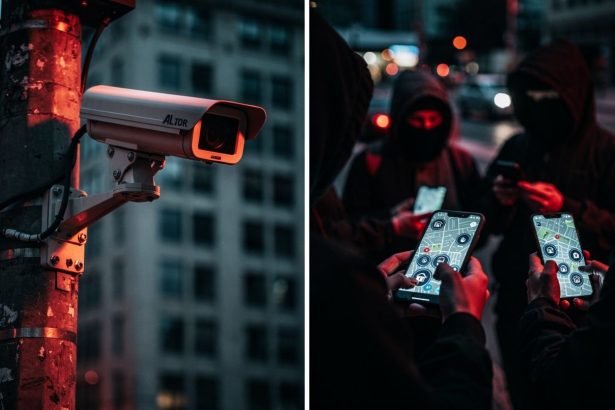


A product so plagued by harassment that its own creator had to ban it from its flagship social network is a rare kind of failure—one that exposes a design philosophy gone wrong.
Meta’s smart glasses, worn visibly on the face and equipped with built-in cameras, were supposed to be the future of wearable computing. Instead, they became a tool for non-consensual surveillance of strangers, enabling users to film and post videos of unsuspecting people—especially women—without their knowledge or consent. The backlash was swift and brutal. Business Insider reported that Meta was taking the extraordinary step of banning content filmed with Meta glasses from Instagram, effectively quarantining its own product’s output from the platform where such videos were being weaponized.
- The Design Failure: Meta’s smart glasses were engineered for frictionless capture and sharing, with no built-in consent mechanism or recording indicator visible to subjects being filmed.
- The Platform Paradox: Meta banned its own hardware’s output from Instagram—an admission that content produced by its product was too harmful to host on its own network.
- The Consent Erasure: The behavioral pattern mirrors Cambridge Analytica’s core violation: one party holds complete information and control while the other has neither knowledge nor recourse.
The core problem is structural, not accidental.
Meta’s smart glasses come with a camera that records video and audio. They’re designed to be worn openly, mounted on the wearer’s face. But the visibility of the device didn’t prevent abuse—it enabled it. Users began filming “prank” videos of strangers, often women, without their knowledge or consent. These videos were then uploaded to Instagram and other platforms, turning unsuspecting people into unwilling social media content. The glasses became so associated with this behavior that they acquired a colloquial nickname: “pervert glasses.” For a deeper look at how the same hardware category raises even more invasive concerns, the privacy issues of emotion-detecting smart glasses extend this problem considerably further.
Why Did a Visible Camera Become an Invisible Surveillance Tool?
The harassment pattern followed a predictable script. A user wearing the glasses would approach a stranger—typically a woman—and film an interaction framed as a “pickup” or “prank.” The video would capture the stranger’s reaction without their awareness that they were being recorded. These videos were then posted online, often with commentary that mocked or sexualized the subject. The stranger had no opportunity to consent, no way to opt out, and often no knowledge that they’d been filmed until the video appeared on social media.
What Meta faced was not a technical problem but a behavioral one. The glasses themselves don’t force users to film strangers without consent. But the design—a visible camera, easy recording, direct integration with Instagram for uploading—made the behavior frictionless. There was no built-in consent mechanism, no warning to people being filmed, no friction between recording and sharing. The product was engineered for seamless capture and distribution, which is exactly what made it a harassment tool.
• Research examining wearable camera use identifies a core tension: continuous recording capability creates privacy violations that subjects cannot detect or prevent in real time.
• A 2025 systematic review of 17 wearable technology manufacturers found that privacy policies across the industry consistently fail to address third-party subjects—people captured incidentally by a device they never consented to interact with.
• IEEE research on egocentric wearable cameras notes that such devices routinely capture content “that the subject does not want to be captured”—a design reality the industry has not resolved.
Is Meta’s Instagram Ban a Solution or a Cover-Up?
By banning content filmed with the glasses from Instagram, Meta’s response was striking in what it admitted. The company essentially said that the content being produced by its own hardware was so problematic that it couldn’t be allowed on its own platform. It’s the digital equivalent of a car manufacturer banning vehicles it made from certain roads because too many drivers were using them to commit crimes. The ban doesn’t solve the underlying problem—it just hides it.
The glasses still exist. People still own them. They can still film strangers and share the videos on TikTok, YouTube, X, or any platform that hasn’t implemented a similar ban. Meta’s move merely prevents the most visible harassment from appearing on its own platform—it doesn’t prevent the harassment itself. What’s instructive is what the ban reveals about Meta’s own priorities. The company had to choose between allowing the glasses and protecting users from harassment. It chose to protect users—but only on its own network.
How Does This Connect to Cambridge Analytica’s Consent Violation?
The broader context matters enormously here. In 2018, Cambridge Analytica collapsed after revelations that it had harvested personal data from millions of Facebook users without their consent and used that data to build psychological profiles for political micro-targeting. The scandal centered on a fundamental violation: people’s data was collected and weaponized without their knowledge. The mechanism was different—a personality quiz rather than a camera—but the structural logic was identical. Consent was erased. Data about people was collected and used in ways they never agreed to. The asymmetry was total: one party had all the information, the other party had none. The full architecture of that exploitation is documented in the history of surveillance capitalism and weaponized data.
Meta’s smart glasses operate on the same principle, just in physical space rather than digital profiles. A person wearing the glasses has complete information and control. The person being filmed has neither. The glasses capture behavioral data—facial expressions, reactions, location, who you’re with, what you’re doing—without consent or knowledge. That data then becomes shareable, repostable, and permanent. The asymmetry is absolute.
• The Cambridge Analytica scandal established that consent erosion at scale is not a side effect of data systems—it is often a feature, because friction reduces participation and participation drives value.
• Meta’s glasses replicate this logic in physical space: the absence of a visible recording indicator, a consent prompt, or an opt-out mechanism is not an oversight—it is a design choice that maximizes capture.
• The parallel extends to behavioral micro-targeting: both systems extract data about individuals’ reactions and behaviors to build profiles that serve the platform’s interests, not the subject’s.
The difference is scale and visibility. Cambridge Analytica operated in the shadows, harvesting data through deceptive quizzes and apps. Meta’s glasses operate in plain sight, but the people being filmed don’t see the recording happening. One was a hidden data extraction; the other is visible surveillance that the surveilled person doesn’t register as surveillance. Both erase consent. Both concentrate informational power in one party at the complete expense of the other.
What Does This Mean for Anyone Who Encounters These Glasses?
For anyone who owns Meta’s smart glasses, the implications are clear. The device you’re wearing is capable of recording people without their knowledge, and Meta has decided that content is too problematic to host on Instagram. That’s not a ringing endorsement of the product’s ethical status. For anyone who might encounter someone wearing the glasses, the message is grimmer: you could be filmed without knowing it, and there’s no technical barrier preventing that footage from being shared online.
The smart glasses weren’t designed with harassment in mind. But they were designed in a way that made harassment easy, frictionless, and shareable. That’s a design choice, not an accident. And now Meta is living with the consequences of that choice—not by recalling the product or fundamentally redesigning it, but by banning its output from the platform where the damage was most visible. The legacy of Cambridge Analytica offers a direct lesson here: when companies treat consent as an obstacle to data collection rather than a precondition for it, the resulting harm is not incidental—it is structural.
The question now is whether other platforms will follow Meta’s lead, or whether the glasses will simply migrate to networks with fewer content restrictions. The harassment won’t stop. It will just move somewhere else.