
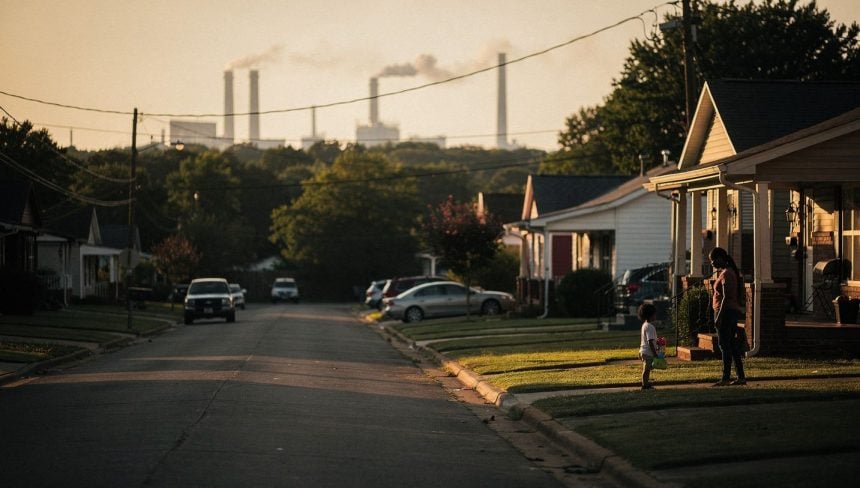
Sixty-nine gas turbines are running right now in DeSoto County, Mississippi, pumping diesel exhaust into the air above neighborhoods where children play and families sleep—and SpaceX says it cannot remove them until July 2027.
This is not a hypothetical environmental complaint or a future risk. The turbines exist. They are operating without required air-quality permits. And a major civil-rights lawsuit filed by the NAACP alleges they are violating the Clean Air Act by exposing ordinary residents to toxic pollution and documented health hazards.
- Unpermitted and Operating: SpaceX is running 69 diesel turbines in DeSoto County, Mississippi without the required Clean Air Act permits, a violation the company acknowledged only after it was discovered.
- 15 Months of Continued Exposure: SpaceX’s self-imposed removal deadline of July 2027 means residents face an additional 15 months of diesel particulate matter, nitrogen oxides, and other pollutants linked to respiratory and cardiovascular disease.
- Environmental Justice at the Center: The NAACP’s lawsuit frames the violation as a civil-rights issue, arguing the harm falls disproportionately on a predominantly Black community with fewer resources to absorb the health consequences.
The turbines power SpaceX’s data center near Memphis, a facility built to process satellite imagery and AI workloads for the company’s Starlink and broader infrastructure. The company was required to obtain air-quality permits before operating the turbines. It did not. Instead, SpaceX began running the equipment and only later disclosed the violation to regulators and the public.
When confronted, the company did not dispute the facts. It acknowledged the turbines are unpermitted and committed to removing them—but not immediately. SpaceX’s timeline is the core scandal here. The company says it will take a full year, stretching into mid-2027, to complete the removal and remediation process. That means 69 diesel-powered generators will continue operating in violation of federal environmental law for the next 15 months, continuing to expose residents to particulate matter, nitrogen oxides, and other pollutants linked to respiratory disease, cardiovascular harm, and premature death.
• 69 diesel turbines operating without Clean Air Act permits in a residential county in Mississippi
• 15+ months of continued unpermitted operation under SpaceX’s own removal timeline
• The EPA documents that the value of Clean Air Act health benefits far exceeds the costs of reducing pollution — making permit violations a direct transfer of corporate cost onto community health
Who Bears the Cost When a Tech Giant Skips the Permit?
The NAACP’s lawsuit frames this not as a technical oversight but as a pattern: a major corporation operating in a predominantly Black region, violating federal law, and only stopping when forced by legal action. The civil-rights organization argues the violation disproportionately harms residents who already face higher exposure to industrial pollution and have fewer resources to relocate or seek medical care.
Residents in the area have reported health symptoms they attribute to the turbine emissions: respiratory issues, headaches, and sleep disruption. These are consistent with what air-quality researchers know about diesel generator emissions in residential areas. Peer-reviewed research on combustion engine emissions consistently documents that fine particulate matter and nitrogen oxides from diesel sources are associated with cardiovascular disease, stroke, and impaired lung development in children — precisely the populations most vulnerable in communities adjacent to unregulated industrial equipment.
What makes this story urgent for readers far beyond Mississippi is what it reveals about how data infrastructure — the physical machinery that powers AI, cloud computing, and satellite networks — is regulated, or rather not regulated, in the United States. SpaceX is not a rogue actor. It is one of the world’s most valuable private companies, operating under the assumption that it can build first and ask permission later. The company’s willingness to operate unpermitted turbines for over a year suggests that the penalty for violating the Clean Air Act is, from the company’s perspective, simply a cost of doing business.
Why Were the Turbines There in the First Place?
The data center itself is part of a broader infrastructure buildout. SpaceX’s satellite constellation, Starlink, requires ground stations and processing facilities to manage imagery, telemetry, and user data at scale. These facilities consume enormous amounts of power. When grid power is insufficient or unreliable, companies turn to on-site generation. The turbines in Mississippi were installed to ensure uninterrupted power for the data center’s operations.
Here is where the surveillance angle sharpens: SpaceX’s data center processes imagery from Starlink satellites. Those satellites collect geospatial data — images of the Earth’s surface — that can be used for mapping, agriculture, disaster response, and military applications. The facility also handles user connection data from millions of Starlink subscribers. The turbines were running to keep that data flowing and secure. This is the physical cost of the digital infrastructure that underpins a global surveillance capitalism model — a cost paid not by the company’s shareholders, but by the people living downwind.
The company’s decision to operate without permits suggests a calculation: the operational risk of a temporary shutdown or the cost of delayed deployment was higher than the regulatory risk of running unpermitted equipment. That calculus only works if enforcement is slow or penalties are small. And so far, it has been.
Is This the Same Playbook Tech Companies Used on Data Privacy?
The broader pattern here echoes a dynamic from the early days of digital-age corporate power. During the Cambridge Analytica era, tech and data companies operated in regulatory gray zones, collecting and processing personal information at massive scale while legal frameworks struggled to keep pace. The companies argued they were innovating faster than rules could be written. Enforcement came late, penalties were negotiated down, and by the time regulators caught up, the business model was already entrenched. That history is documented in detail in analyses of data colonialism — the pattern by which powerful digital enterprises extract value from communities that lack the political leverage to resist.
SpaceX’s approach to the unpermitted turbines follows a similar playbook: build the infrastructure, operate it, disclose the violation only when discovered, and then negotiate a removal timeline that suits the company’s operational needs rather than the community’s health needs. The difference is that instead of harvesting behavioral data, SpaceX is contaminating the air while processing the data that powers Starlink’s global network. The mechanism differs; the power asymmetry does not.
• Environmental justice researchers have long documented that industrial facilities — including data centers and their supporting power infrastructure — are disproportionately sited in low-income and minority communities, where political resistance is weaker and land costs are lower.
• The Clean Air Act’s permitting requirements exist precisely to prevent this outcome: companies must demonstrate compliance before operating, not after. Operating first and permitting later inverts the entire regulatory logic.
• When corporations treat permit violations as a manageable business risk rather than a legal barrier, the enforcement regime has effectively failed — and the community absorbs the externalized cost.
What Happens If SpaceX Misses Its Own Deadline?
The NAACP’s lawsuit is the first major legal pushback. But the July 2027 timeline is not a court-ordered deadline. It is the company’s own estimate of how long removal will take. If SpaceX decides removal is taking longer than expected, or if it seeks an extension, there is no clear mechanism forcing compliance by the stated date. The company has not publicly explained why it chose to operate without permits or why the removal timeline extends so far into the future. A spokesperson confirmed the commitment to removal by July 2027 but did not address the interim exposure period or the company’s initial decision to operate unpermitted equipment.
This dynamic — where a corporation sets its own remediation schedule after a regulatory violation — is not unique to SpaceX. It reflects a broader weakness in how environmental enforcement operates when the violating entity is large, legally resourced, and operationally essential to infrastructure that regulators are reluctant to shut down. The organized resistance that eventually forced accountability in the data privacy space took years to build and required whistleblowers, journalists, and sustained legal pressure working in parallel. The NAACP’s lawsuit may be the beginning of a similar process here — but the community in DeSoto County does not have years to wait.
What This Means for Anyone Who Uses Starlink or Lives Near a Data Center
For you, the reader: if you use Starlink, or if you live near any major data center or industrial facility, this story matters because it shows how the infrastructure that powers your connectivity and the AI services you use is built and maintained. It is built on assumptions about regulatory tolerance and community exposure that may not align with your health or your neighborhood’s wellbeing. The turbines in Mississippi are an unusually visible example of a cost that is usually invisible — buried in power contracts, zoning variances, and permit applications that never make the news.
The question now is whether July 2027 will hold. Will SpaceX meet its own deadline, or will the removal be delayed again? And will the NAACP’s lawsuit result in penalties large enough to change how companies like SpaceX calculate the cost of regulatory violations? The answer will signal whether environmental law has any real deterrent effect on the companies building the physical backbone of the AI economy — or whether the permit process is simply a formality that well-resourced corporations can bypass and remediate on their own schedule.
The turbines will keep running until one of those answers becomes clear.