

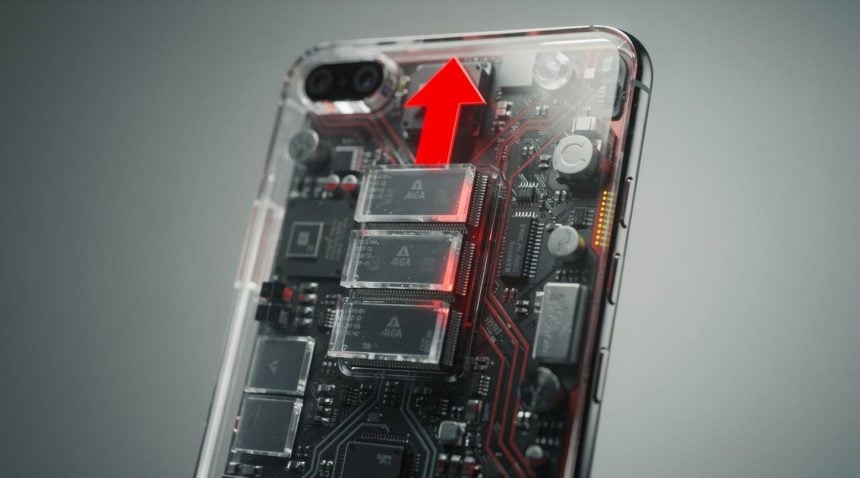
Nothing CEO Carl Pei just told consumers the worst advice he can offer: don’t buy a phone right now, because prices are only going up from here. In a post on X, Pei revealed that memory costs for Nothing’s Phone 4A doubled between the device’s design phase and launch, then doubled again after that—a quadrupling in months that has permanently reset the economics of smartphone manufacturing.
What makes this moment critical is the scale of the shift. Pei stated that RAM now accounts for over 50 percent of the cost of a new phone. That’s not a minor component tax; it’s a structural transformation of where phone-maker margins go. When half your device’s cost is a single material, price floors stop being negotiable. They become inevitable.
- The Cost Explosion: RAM prices quadrupled during a single product cycle, now representing over 50% of smartphone manufacturing costs.
- The Market Impact: Mid-range phones in the $400-600 segment face permanent price increases or feature cuts by 2027.
- The Supply Reality: AI infrastructure demand is outbidding consumer device manufacturers for high-bandwidth memory allocation.
The Phone 4A is Nothing’s mid-range offering, designed to compete in the segment where consumers expect the best value. Yet even at that price tier, the RAM shortage has forced Nothing to absorb or pass along costs that didn’t exist a year ago. Pei’s warning that “phone prices are going up, and they’ll keep going up into next year” isn’t speculation—it’s a direct statement about Nothing’s own product roadmap and the supply-chain reality every phone maker faces.
The RAM shortage itself isn’t new. Earlier reporting from MWC (Mobile World Congress) flagged memory pricing as a major headwind across the industry. But Pei’s disclosure adds specificity: the doubling happened twice, in rapid succession, during a single product cycle. That velocity matters. It signals not a gradual cost creep but a shock to the system that manufacturers are still absorbing.
Why Are Memory Costs Destroying Phone Affordability?
For consumers, the implication is stark. The $400-600 phone segment—where most people actually shop—is about to get smaller or more expensive. Nothing can’t absorb 50 percent cost increases indefinitely. Either the Phone 4A’s successor launches at a higher price, or Nothing cuts features and memory configurations to hit the same price point. Neither option improves user experience.
• 400% increase – RAM costs during Phone 4A development cycle
• 50%+ of device cost – Memory’s share of total manufacturing expense
• $300-500 segment – Price tier facing elimination or upmarket shift
Pei’s candor is unusual in an industry where executives typically soften bad news with optimism about “innovation” and “efficiency gains.” Instead, he’s signaling that those levers are exhausted. The RAM shortage is real, the cost impact is massive, and consumers should expect permanent price increases, not temporary ones. His advice—buy now, before prices rise further—is essentially an admission that Nothing sees no relief coming before 2027.
The broader pattern here extends beyond Nothing. Every phone maker from Samsung to Apple to Xiaomi faces the same RAM cost structure. The difference is that most haven’t been as transparent about the math. Pei’s willingness to name the 50 percent figure and the doubling timeline gives the industry’s supply-chain crisis a concrete face. It’s harder to ignore when a CEO spells out that half your phone’s cost is now locked into a single commodity.
What’s Really Driving the Semiconductor Supply Shortage?
What’s driving the shortage remains tied to broader chip-manufacturing capacity constraints and demand from AI infrastructure. Data centers are competing with consumer devices for high-bandwidth memory. That competition isn’t resolving in 2026. If anything, it’s intensifying as companies invest in larger AI models and training infrastructure. Phone makers are in a queue behind cloud providers, and that queue isn’t shrinking.
According to research published in IEEE, the memory bottleneck in high-performance computing systems has created unprecedented demand for stacked DRAM chips. This technical shift toward more sophisticated memory architectures has further constrained supply for consumer applications, as manufacturers prioritize higher-margin enterprise and AI infrastructure clients.
For the mid-range phone market specifically, this is a pivot point. The $300-500 segment has been the growth engine for manufacturers trying to reach emerging markets and price-conscious consumers in developed ones. If RAM costs force that segment upmarket—pushing entry-level phones to $600 or mid-range phones to $800—entire customer cohorts get priced out. That’s not just a Nothing problem; it’s an industry restructuring.
Can Design Innovation Overcome Component Costs?
Pei’s warning also signals that Nothing, despite its design-forward positioning and Glyph interface innovations, can’t engineer its way out of commodity costs. The Phone 4A’s distinctive transparent back and LED notification system don’t change the fact that RAM is RAM, and RAM is expensive. Design differentiation matters less when the bill of materials is dominated by a single scarce input.
• ACM analysis documents how globalization of semiconductor supply chains has created systemic vulnerabilities in memory chip production
• Manufacturing bottlenecks now affect authentic chip availability, not just counterfeit detection
• Memory supply chain disruptions cascade through entire consumer electronics ecosystem
The question now is whether other manufacturers will follow Pei’s lead and be transparent about cost pressures, or whether they’ll absorb the hit silently and let price increases speak for themselves. The semiconductor supply chain vulnerabilities that recent research has identified in embedded memory systems reflect broader structural problems that extend far beyond any single manufacturer’s control.
Either way, consumers should expect the $400 phone to become a rarity by 2027. Pei’s advice to buy now is, in effect, a countdown to a market reset. The convergence of AI infrastructure demand, supply chain constraints, and manufacturing capacity limits has created a perfect storm that no amount of design innovation or operational efficiency can fully offset.
For consumers who depend on affordable smartphones—particularly in emerging markets where the sub-$500 segment represents the primary pathway to digital connectivity—this shift represents more than inconvenience. It’s a fundamental restructuring of who gets access to modern mobile technology, and at what cost. Nothing’s transparency about these economics may be uncomfortable, but it’s also necessary preparation for a market that’s about to look very different.