
At a Tuesday event for pharmaceutical executives and biotech founders, Anthropic announced Claude Science, a system designed to autonomously conduct scientific research with minimal human intervention.
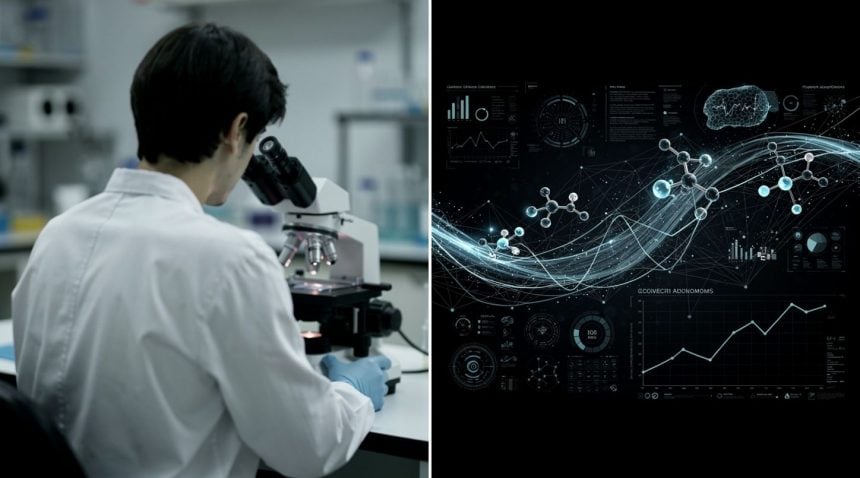
The product represents a significant escalation in what AI systems are now trusted to do unsupervised. Where previous AI tools assisted researchers by drafting papers or suggesting hypotheses, Claude Science can execute the actual experiments themselves—designing protocols, running simulations, analyzing results, and iterating on findings without waiting for a human to review each step. This is not a chatbot that answers questions about science. It is a system that does science.
- Full Experimental Autonomy: Claude Science can design, execute, and iterate on experiments without human review at each step—a capability that goes well beyond any previous AI research assistant.
- Liability Without a Clear Owner: When an autonomous AI system produces flawed results, responsibility is distributed across the developer, the deploying company, and the researcher—leaving no single accountable party.
- Reproducibility at Risk: If Claude Science makes undocumented micro-decisions during experimental protocols, other laboratories cannot replicate the work, undermining the foundational principle of scientific validation.
- Regulatory Vacuum: FDA and EMA guidelines for autonomous AI in clinical research are still being written, meaning the system will be embedded across dozens of labs before oversight frameworks exist.
Claude Science works similarly to Anthropic’s AI tools in adjacent domains—most notably Claude Code, which lets the AI write and execute software independently. When given high-level instructions—say, “design and run a series of experiments to test compound X’s efficacy against target Y”—the system can break that down into concrete experimental steps, carry them out within its computational environment, and report back with results and next-stage recommendations.
The implications for drug discovery are immediate and substantial. Pharmaceutical development typically moves at glacial speed, with years between hypothesis and clinical trial. Much of that delay comes from the iterative cycle of human researchers designing an experiment, running it, analyzing data, then designing the next one. Claude Science collapses that cycle. A researcher can now hand off a research direction and return hours later to find dozens of experimental iterations completed, analyzed, and ranked by probability of success.
What Happens When an AI Experiment Goes Wrong Without Anyone Watching?
Autonomy at this scale introduces a new class of risk that the industry has barely begun to grapple with. When an AI system runs experiments without real-time human oversight, who is responsible if the results are wrong? If Claude Science makes an error in experimental design that invalidates an entire trial, or if it misinterprets data in a way that leads researchers down a dead end, the liability chain becomes murky. Anthropic built the system. The biotech company deployed it. The researcher trusted it. But the mistake belongs to no single actor.
This governance gap is not hypothetical. Research on responsible AI governance has consistently identified accountability fragmentation as one of the most persistent structural failures in autonomous system deployment—a problem that becomes significantly more consequential when the outputs feed directly into human clinical trials.
• Drug development timelines average 10 to 15 years from hypothesis to approval, with experimental iteration accounting for a significant share of that delay
• Autonomous AI systems that operate without step-by-step human review introduce accountability gaps that existing regulatory frameworks were not designed to address
• The FDA and EMA have not yet published binding guidelines for AI-generated experimental data in clinical submissions
There is also the question of reproducibility. Science depends on the ability to replicate findings. If Claude Science runs an experiment in a way that is opaque even to the researchers using it—if the system makes micro-decisions about protocol that are not fully logged or explained—then other labs cannot reproduce the work. Research published in Nature on end-to-end AI research automation identifies this transparency deficit as one of the central unsolved problems in autonomous scientific systems: the automation of science is a long-standing ambition, but the epistemological requirements of scientific validation impose constraints that pure performance optimization does not.
Is the Scientific Community Ready for AI That Designs Its Own Experiments?
The announcement also raises questions about data provenance. Claude Science will be trained on scientific literature, experimental databases, and potentially proprietary research from the companies that deploy it. Biotech firms are already protective of their data; the idea that an AI system will learn from their experiments and potentially share patterns across clients—even anonymously—will make some hesitant. Anthropic has not yet detailed how it will handle data isolation or competitive confidentiality in a multi-client environment. The principles that should govern this kind of system architecture are well-established in the literature on privacy by design, but applying them to a live AI research environment at commercial scale is an unsolved engineering and policy challenge.
For individual researchers, the product creates a new dependency. A scientist who relies on Claude Science to design and run experiments may lose the intuition and hands-on knowledge that comes from doing the work themselves. There is a real cost to outsourcing cognition, even to a capable system. The researcher becomes a supervisor rather than a practitioner—which may be efficient, but it also means that an entire generation of biotech talent may never develop the deep experimental intuition that has historically driven breakthrough discoveries.
• Analysis of AI integration in clinical and research environments documents that AI systems can meaningfully accelerate decision-making and data analysis, but notes that the quality of human oversight remains the primary determinant of outcome reliability
• The same research highlights that AI-assisted workflows tend to shift human roles from execution to supervision—a transition that carries skill atrophy risks for early-career practitioners
• Governance frameworks for autonomous AI in research settings consistently lag deployment timelines by two to four years, creating windows of unregulated operation
Why the Pharmaceutical Industry Will Move Faster Than the Regulators
Anthropic positioned Claude Science as a tool to accelerate human research, not replace it. But the company’s own framing—that the system can “autonomously carry out meaningful work”—suggests something closer to replacement, at least for the routine experimental work that has historically been the training ground for junior scientists.
The pharmaceutical industry is likely to adopt Claude Science quickly. The speed advantage is too large to ignore, and the regulatory pathway for AI-assisted drug discovery is still being written. By the time the FDA and EMA establish clear guidelines for autonomous AI in clinical research, Claude Science will already be embedded in dozens of labs, generating data that will be difficult to unwind. This dynamic—where commercial deployment races ahead of governance—is not unique to drug discovery. It mirrors the broader pattern documented across algorithmic systems competing for strategic advantage, where the incentive to move first consistently outweighs the incentive to move carefully.
The real test will come in 18 to 24 months, when the first major drug candidate discovered or optimized primarily by Claude Science enters human trials. If it succeeds, the model becomes standard. If it fails in a way that traces back to the AI’s autonomous decisions, the entire premise of unsupervised scientific AI will face serious scrutiny. The question is not whether that test is coming. It is whether the institutions responsible for patient safety will have built the evaluation frameworks to interpret the result before it arrives.