

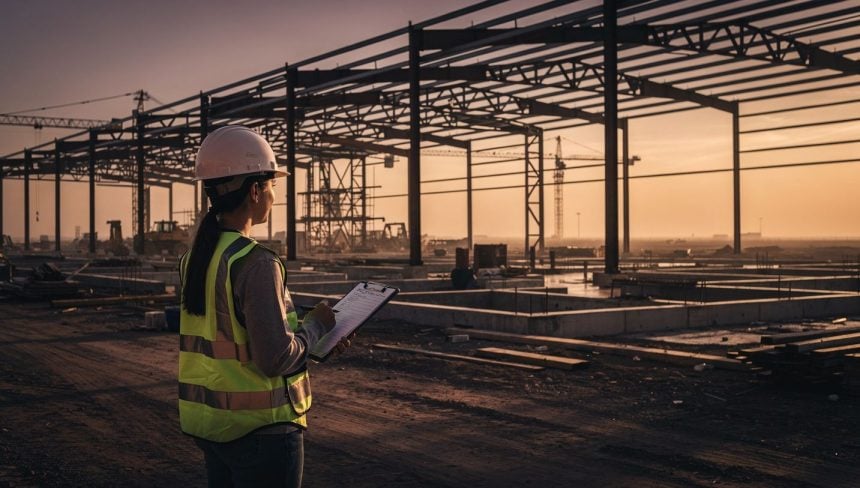
Amazon is building a data center in Texas with its own power plant—one that could emit more carbon than any single facility in America. The company building it has pledged net-zero emissions by 2040. Both of these facts are simultaneously true, and that contradiction is the story.
The scale of this infrastructure reveals a hard truth about artificial intelligence: the technology companies are racing to deploy requires staggering amounts of electricity, and Amazon appears willing to accept becoming the nation’s largest point-source climate polluter to fuel it. The gap between the promise and the construction tells you everything about where AI priorities rank in Big Tech’s climate calculus right now.
- Largest Polluter Projection: Amazon’s planned Texas data center power plant could become the single largest source of climate pollution in the United States, surpassing existing coal and natural gas plants that serve entire regions.
- The Net-Zero Contradiction: Amazon has publicly committed to net-zero carbon emissions by 2040, yet this facility is designed to lock in fossil fuel emissions for an estimated 30 to 50 years of operational lifespan.
- An Industry-Wide Risk: According to an empirical study published by ACM, data center energy consumption is expected to rise significantly over the next five years due to accelerated AI growth—meaning Amazon’s model could become a sector-wide template.
According to reporting, Amazon’s planned Texas data center includes an on-site power plant designed to supply the facility’s energy demands entirely. This is not a modest expansion or a grid-connected facility with renewable procurement agreements. This is Amazon essentially deciding to become a utility company, but one that operates in the shadows of climate commitments. The power plant could reportedly become the largest source of climate pollution in the United States—a distinction currently held by traditional coal and natural gas plants that serve entire regions.
The company has acknowledged that artificial intelligence is driving this infrastructure investment. AI workloads—training large language models, running inference at scale, powering recommendation systems, and supporting cloud services for enterprise customers—consume vastly more electricity than traditional data center operations. A single large language model training run can demand gigawatts of power for weeks or months. Amazon Web Services, the company’s cloud division, is under competitive pressure to offer cutting-edge AI capabilities, and that pressure translates directly into physical infrastructure: more servers, more cooling systems, more power generation. Understanding the infrastructure behind mass data collection makes clear that this energy demand is not incidental—it is structural.
• Research published in IEEE Xplore confirms that geo-distributed data centers already have a substantial impact on global electricity consumption and carbon emissions, with energy demands expected to continue rising as AI workloads scale.
• A single large language model training run can sustain gigawatt-level power demands for weeks or months continuously.
• Power plants built today typically operate for 30 to 50 years, meaning emissions from Amazon’s Texas facility would accumulate across that entire lifespan regardless of future corporate pledges.
Why Is Amazon Building Its Own Power Plant Instead of Using the Grid?
The Texas data center represents a specific, named choice by Amazon leadership to solve an energy problem through on-site generation rather than grid integration or renewable procurement. Building your own power plant is faster than negotiating with utilities or waiting for renewable energy capacity to come online. It is also, apparently, more carbon-intensive than the alternatives Amazon publicly promotes. The on-site model reveals something about Amazon’s confidence in its own ability to manage energy independently—rather than relying on grid infrastructure, Amazon is choosing vertical integration: build the plant, control the fuel source, guarantee the power supply.
For a company operating at the scale of a small country’s energy consumption, that independence has obvious operational appeal. It also has obvious environmental costs. The company hasn’t detailed the specific fuel source for the Texas power plant, though on-site facilities typically run on natural gas or a mix of natural gas and other sources. The lack of transparency about fuel type is itself telling. If the plant were powered by renewable energy, Amazon would almost certainly emphasize that detail prominently. The silence suggests fossil fuels.
How Does This Square With Amazon’s Climate Pledges?
This creates a structural contradiction that deserves precise examination. Amazon has marketed itself as a climate leader. The company has signed corporate renewable energy deals, pledged to power 100 percent of its operations with renewable energy, and committed to net-zero emissions by 2040. Yet the Texas project suggests those commitments function at the portfolio level—meaning Amazon can offset emissions from some facilities by purchasing renewable credits elsewhere, even as it builds the single largest point-source polluter in the nation. The math works on paper. The climate impact works in a different direction.
Amazon’s climate pledges were always contingent on technological solutions that haven’t fully materialized—carbon capture, grid-scale battery storage, renewable energy scaling faster than demand. A 2024 review of green artificial intelligence practices published in ScienceDirect identifies minimizing carbon emissions and promoting responsible AI practices as central to sustainable development—yet notes that energy consumption in data centers remains one of the field’s most persistent unresolved challenges. In the meantime, companies like Amazon are building physical infrastructure that locks in carbon emissions for decades. A power plant built today will likely operate for 30 to 50 years. The emissions from that facility will accumulate across that entire lifespan, regardless of what any corporate pledge says about 2040.
• An empirical study on data center carbon emissions finds that the sector stands at a crossroads, with AI-driven growth threatening to overwhelm efficiency gains made in previous years.
• IEEE Xplore research on energy mix automation demonstrates that without active carbon-aware scheduling and renewable integration, large-scale data centers default to the highest-availability power source—typically fossil fuels.
• Portfolio-level carbon accounting, which allows renewable credits from one facility to offset emissions from another, is increasingly criticized by environmental researchers as a mechanism that obscures real-world climate impact at the facility level.
What Happens If Other Companies Follow Amazon’s Model?
What makes this story urgent right now is the timing. AI infrastructure buildouts are accelerating across the industry. Google, Microsoft, Meta, and other major cloud providers are all expanding data center capacity to meet AI demand. If Amazon’s Texas facility becomes a template—a working model for solving AI power demands through on-site generation—other companies may follow. The environmental impact could scale across the entire sector. One massive polluter becomes a dozen. The precedent matters more than the individual facility. This is also the moment when AWS is aggressively expanding its private cloud AI capabilities, embedding new enterprise tools and competing directly with OpenAI and Anthropic for market dominance—a competitive dynamic that only intensifies the pressure to build more infrastructure, faster.
The Texas data center also sits at the intersection of two competing pressures on Big Tech: shareholder demands for AI investment and regulatory and consumer pressure on climate commitments. Amazon appears to be resolving that tension by prioritizing AI infrastructure and accepting the climate cost. The 2040 net-zero pledge remains on the books. The Texas power plant gets built anyway. Both statements coexist in corporate communications, even as they contradict each other in physical reality.
Is Regulatory Oversight Equipped to Handle This Scale?
The Texas data center raises serious questions about regulatory oversight. Data centers and power plants are typically subject to environmental permitting and emissions reporting requirements. The fact that Amazon can plan a facility that would become the nation’s largest point-source polluter suggests either that regulatory frameworks aren’t designed for this scale of private infrastructure, or that they’re not being enforced with sufficient rigor. Either way, the gap is now visible and documented.
The broader question is whether AI’s energy demands will be treated as a public infrastructure issue—subject to the same scrutiny as utility companies and industrial emitters—or whether they will continue to be managed as private corporate decisions with limited external accountability. The answer to that question will shape the environmental footprint of the next decade of AI development. Understanding how cloud services handle sensitive data processing is one dimension of this accountability gap; understanding how they handle energy generation is another, and arguably the more consequential one in the near term.
• Environmental researchers have consistently identified on-site fossil fuel generation as the highest-risk energy model for large-scale data centers, precisely because it bypasses grid-level renewable integration mechanisms and creates direct, facility-level emissions that cannot be offset through credit purchases without controversy.
• The 30-to-50-year operational lifespan of a power plant means that infrastructure decisions made in 2025 and 2026 will determine a significant portion of the tech sector’s actual carbon output through 2070—well beyond any current net-zero pledge horizon.
• Corporate climate commitments structured at the portfolio level, rather than the facility level, create systematic incentives to build high-emission infrastructure in regions with weaker regulatory scrutiny while purchasing renewable credits in markets where they are cheapest.
What Does This Mean for Users of Amazon Services?
For users of Amazon services—AWS customers, Prime members, Alexa users—this infrastructure expansion is largely invisible. You don’t see the power plant when you upload files to S3 or run a machine learning model on AWS. You don’t see the carbon emissions when you ask Alexa a question. But the electricity that powers those interactions has to come from somewhere. In this case, it comes from a facility that could outpollute every traditional power plant in America. Your data, your AI queries, your cloud workloads: they are being routed through infrastructure that Amazon itself has designed to be a massive source of climate pollution. The invisibility is not accidental—it is a feature of how large-scale AI infrastructure is built and marketed.
As AI demand continues to grow, and as companies race to deploy increasingly large models, the infrastructure required will only expand. Amazon’s Texas facility may be the first major data center with its own power plant, but it likely won’t be the last. The question for the next phase of AI buildout is whether companies will repeat this model—solving energy problems through on-site generation and accepting the climate consequences—or whether regulatory pressure and public scrutiny will force a different path. For now, Amazon is building. The power plant is planned. The emissions are projected. The 2040 net-zero pledge remains in place. All of these facts coexist in a state of productive tension that will only resolve when the facility is operational and the real-world carbon accounting begins.