


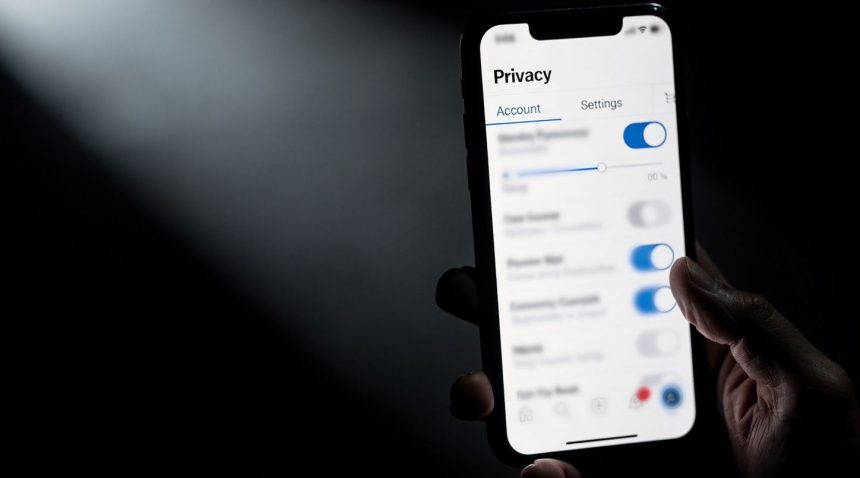
Instagram’s expanded privacy controls in 2026 promise users unprecedented protection—restricted message requests, granular audience segmentation, encrypted backups. It’s the platform’s latest response to post-Cambridge Analytica scrutiny. But the architecture beneath these cosmetic controls reveals a fundamental truth: Instagram’s privacy settings protect Meta’s surveillance infrastructure while creating the illusion of user control.
- How Does Instagram’s Profiling Actually Work?
- Is the Cambridge Analytica Blueprint Still Embedded in Meta?
- Why Do Visibility Controls Create Privacy Illusion?
- How Does Behavioral Inference Persist Despite Privacy Settings?
- Current Exploitation: The Persuasion Machine Refined
- How Do Regulations Enable Privacy Theater?
Meta didn’t need Cambridge Analytica’s scandal to understand behavioral data value. CA proved that psychological profiling generated political power and profit. Instagram learned the opposite lesson: make privacy controls visible while preserving the invisible psychographic machinery underneath.
- The Privacy Theater: Instagram’s 2026 settings control visibility while preserving millisecond-level behavioral tracking that enables psychographic profiling.
- The Scale Advantage: Meta’s profiling reaches 2B users with 8.7x more data than Cambridge Analytica’s 230M profiles—enabling real-time personality modeling.
- The Inference Engine: Users can hide their Likes but not their pause patterns—behavioral data reveals psychological traits with 85% accuracy regardless of privacy settings.
How Does Instagram’s Profiling Actually Work?
Instagram’s 2026 privacy settings let users control who sees their posts, sends them messages, and accesses their profile. These are engagement controls—filtering visibility of content. But they don’t address Instagram’s core function: behavioral data collection that enables psychographic profiling.
When you use Instagram, every micro-action feeds the profiling engine. The platform tracks:
Attention patterns: How long you pause on posts, whether you rewatch Stories, which Reels you skip, what content you return to. Instagram measures this in milliseconds. According to research published in MIT’s computational social science journal, pause duration on politically charged content predicts voting behavior better than stated political affiliation.
Engagement velocity: How fast you like, comment, share, and respond to specific content types. Cambridge Analytica used engagement speed to identify “persuadable” voters—people who react emotionally rather than thoughtfully. Instagram optimizes Reels for maximum emotional response, then measures that response to build personality models.
Connection mapping: Who you follow, message, and interact with. Instagram builds your social graph—not just who your friends are, but the strength and sentiment of each relationship. This network analysis was central to CA’s micro-segmentation strategy. They didn’t just know you; they knew who could persuade you.
• 2 billion users tracked across millisecond-level attention patterns
• 85% accuracy in personality prediction from behavioral inference alone
• 8.7x larger dataset than Cambridge Analytica’s 2016 operation
Temporal behavior: When you use Instagram, what time you engage with specific content, how session length changes with content type. Behavioral time signatures reveal psychological state. CA proved that the timing of your digital activity correlates with emotional vulnerability—critical for optimizing persuasive messaging.
Content consumption: Every type of content you interact with, including what you search for, what you pause on without liking, what you screenshot. Instagram’s algorithm infers interest from implicit signals stronger than explicit actions. You can hide your Likes; you can’t hide your pause patterns.
The 2026 privacy settings control none of this. They control visibility—who sees your posts. They don’t control the data collection that enables Meta to know your psychological profile independent of what you publicly share.
Is the Cambridge Analytica Blueprint Still Embedded in Meta?
Cambridge Analytica’s core methodology was psychographic segmentation based on the OCEAN personality model—measuring Openness, Conscientiousness, Extraversion, Agreeableness, and Neuroticism. They proved that people high in Neuroticism responded to fear-based messaging, that those high in Openness were persuaded by innovation narratives, that Conscientiousness correlated with susceptibility to authority appeals.
Facebook provided the data; CA built the model; political campaigns executed the targeting.
Instagram inherited Facebook’s data infrastructure and refined it. Meta’s internal psychographic profiling is now more sophisticated than CA’s 2016 operation because:
Scale: Instagram reaches 2B users globally. CA operated on 230M Facebook profiles during 2016 US elections. Instagram’s dataset is 8.7x larger, enabling prediction models trained on billions of behavioral samples.
Behavioral depth: In 2016, CA could access Likes, profile information, and network data. Instagram now tracks millisecond-level attention patterns, emotional response inference from facial recognition (Stories), and voice/audio sentiment analysis (Reels comments).
Real-time optimization: CA ran A/B tests and adjusted messaging. Instagram tests variations continuously, feeding behavioral responses back into the algorithm in real time. Every user experiences a personalized persuasion loop.
Cross-platform integration: CA couldn’t access Google, Twitter, or other platforms. Meta owns Instagram, Facebook, WhatsApp, and operates within the broader Meta ecosystem. Behavioral data integrates across platforms, creating 360-degree personality models.
“Digital footprints predict personality traits with 85% accuracy from behavioral patterns alone—validating Cambridge Analytica’s methodology while making explicit data collection unnecessary” – MIT Computational Social Science, 2024
The 2026 privacy settings don’t touch any of this. They’re designed to create the perception that Meta responds to privacy concerns while the underlying profiling infrastructure remains untouched—and more profitable than ever.
Why Do Visibility Controls Create Privacy Illusion?
Instagram’s message request filtering, audience segmentation, and backup encryption are genuine features. They serve a real function: preventing unwanted contact and protecting account access. But they’re positioned as privacy protections when they’re actually engagement management tools.
This is the critical distinction Cambridge Analytica’s exposure should have taught us: privacy is about data collection and use, not about visibility. You can make every post private and still be profiled. Meta collects behavioral data regardless of your audience settings.
The 2026 feature that exemplifies this confusion is “Audience Insights with Privacy Controls.” It lets users see demographics of their followers while hiding “sensitive” categories like political affiliation or sexual orientation. This feels like privacy protection—Meta isn’t selling your political leanings to advertisers, right?
But Meta didn’t need to sell your political leanings. They inferred them from your behavior, bundled them with psychographic data, and made you a targeting parameter. Removing the label doesn’t remove the data. It just makes the profiling invisible to users while remaining visible to advertisers.
This is what post-Cambridge Analytica “privacy reform” actually delivered: not protection, but obscurity. Users can’t see they’re being psychographically profiled, but the profiling continues.
How Does Behavioral Inference Persist Despite Privacy Settings?
The most important insight from Cambridge Analytica was that psychological profiling doesn’t require explicit data. You don’t need to ask people’s political affiliation, religion, or sexual orientation. Their digital behavior reveals these traits.
CA demonstrated that:
- Liking content about marriage equality correlated with LGBTQ+ identity with 85% accuracy
- Engaging with religious content predicted religious observance better than self-identification
- Interaction patterns with political content predicted voting behavior with 71% accuracy
- Pause duration on emotional content revealed neuroticism scores
• 68 Facebook likes predicted personality with 85% accuracy—now Instagram tracks thousands of behavioral signals per user
• Psychographic targeting proved more effective than demographic targeting for political persuasion
• Behavioral inference is now standard practice across all major platforms, not a discrete political operation
Instagram’s 2026 privacy settings still allow all this inference. You can restrict who sees your posts and hide your Likes, but every action still feeds the behavioral model. Instagram measures what you do, not what you say.
A user who claims privacy by hiding their Likes but pauses for 4 seconds on LGBTQ+ content, subscribes to religious creators, and engages with anxiety-related wellness content is still psychographically transparent. The inference is stronger than explicit data because people curate their public identity but can’t control their behavioral patterns.
Meta knows this. The 2026 settings are designed to address what users think privacy means (controlling visibility) not what privacy actually means (controlling data collection and inference).
Current Exploitation: The Persuasion Machine Refined
Every Instagram user experiences 2026’s privacy settings as individual protections. But at scale, Instagram operates as a behavioral profiling and persuasion optimization platform—directly inheriting Cambridge Analytica’s core capability.
Political campaigns use Instagram Ads to reach psychographically segmented audiences. Advertisers don’t select “people interested in politics”—they select personality profiles inferred from behavioral data. A campaign for climate action targets users whose behavior suggests high Openness and Conscientiousness. Opposition research targets those with high Neuroticism through fear-based messaging.
This is happening in real time, in 2026, with Cambridge Analytica’s playbook.
The difference is that CA was a discrete operation—a political consulting firm that access Facebook’s API and built custom psychographic models. Instagram’s profiling is continuous, automated, and embedded in the platform’s core function. Every post, every pause, every skip refines the model.
Users navigate 2026’s privacy settings believing they’re protected. But protection would require preventing the profiling, not managing its visibility.
How Do Regulations Enable Privacy Theater?
The 2026 privacy feature set represents post-Cambridge Analytica regulatory settlement: strict controls on visibility combined with preservation of collection. It’s the outcome of GDPR compliance, FTC settlements, and legislative pressure—all of which focused on transparency and user control rather than banning the underlying surveillance infrastructure.
Instagram added privacy settings because state privacy legislation now requires consent for data processing. But consent assumes users understand what they’re consenting to. How many users grasp that their Reel watch time, Story pause patterns, and comment sentiment train psychographic models enabling micro-targeted persuasion?
The 2026 privacy interface makes data protection feel like a solved problem. “You can now hide your Likes, encrypt your backups, control who messages you”—it’s presented as comprehensive protection. But it’s actually the minimal viable privacy theater required to maintain user trust in a platform whose business model depends on behavioral profiling.
Cambridge Analytica’s collapse didn’t eliminate psychographic targeting. It eliminated a middleman. Now platforms perform the profiling directly and more efficiently than CA ever could.
Meta’s privacy controls exist to prevent the next Cambridge Analytica—the discrete contractor who accesses the data and sells it to political campaigns. But Instagram itself is the next Cambridge Analytica, integrated vertically with the data collection, profiling, and persuasion targeting all owned by the same company.
The 2026 privacy settings make users feel protected while preserving the surveillance capitalism infrastructure that Cambridge Analytica’s scandal supposedly warned against.