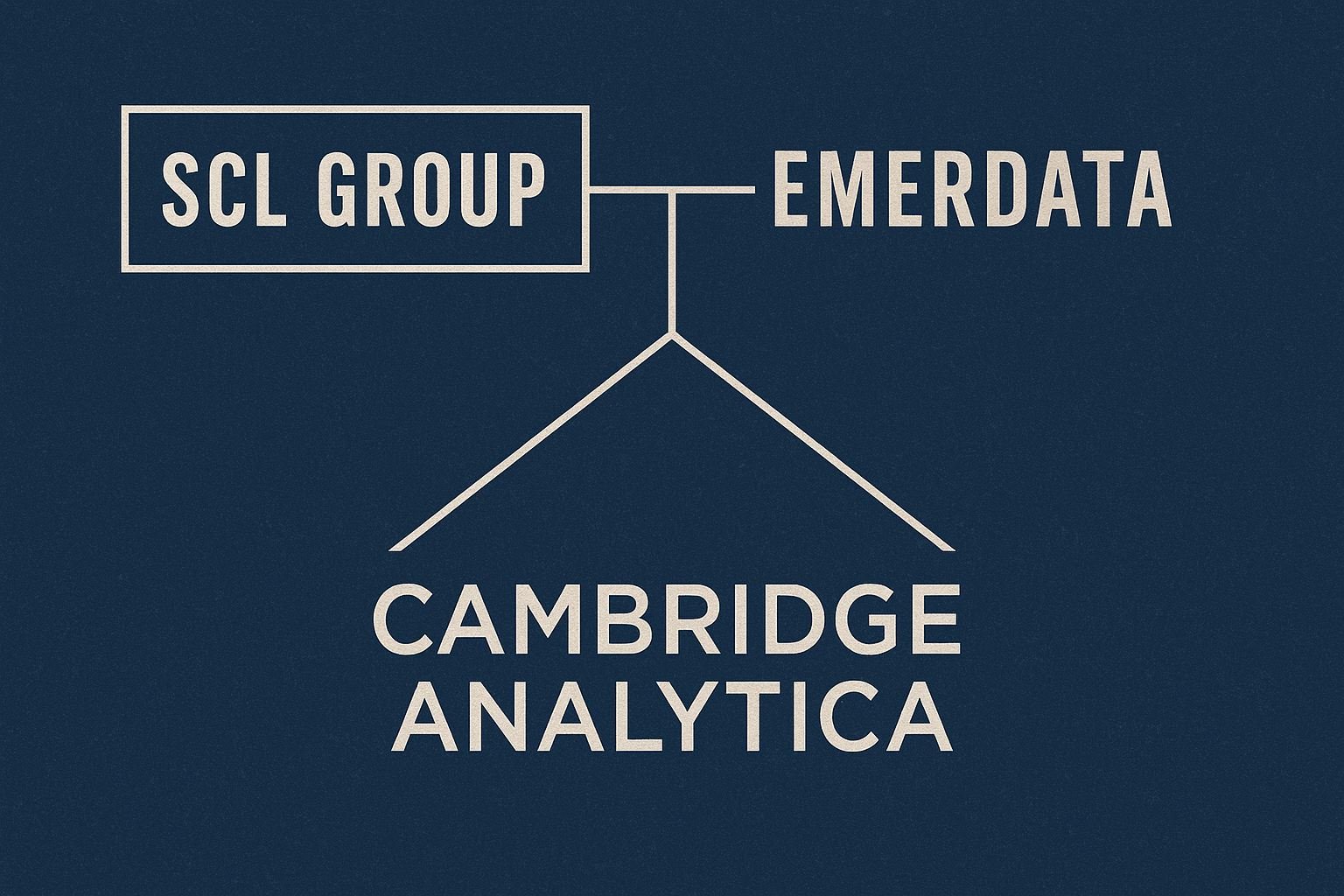


Every conversation with ChatGPT, Claude, or Gemini generates behavioral exhaust: which topics you linger on, how you phrase questions, what you revise before sending, when you abandon searches mid-query. These aren’t stored as transcripts your lawyer might subpoena. They’re stored as behavioral sequences—the exact data type Cambridge Analytica weaponized to map psychological vulnerabilities.
- What “Conversation Recording” Actually Means
- How Do Chatbots Surpass Cambridge Analytica’s Profiling Methods?
- Who Accesses This Data, and What They Do With It
- Why Is the Behavioral Prediction Infrastructure Already Running?
- How Do Privacy Policies Enable Manipulation?
- What This Enables That Cambridge Analytica Pioneered
- Why This Matters for Surveillance Capitalism’s Next Phase
- What Did Cambridge Analytica Prove About Regulatory Theater?
The difference is scale. Cambridge Analytica processed Facebook’s 87 million user profiles through OCEAN personality modeling to predict persuadability. Today’s AI chatbots process billions of interactions in real-time, building psychological profiles with precision CA could only fantasize about. And unlike Facebook’s one-time data breach, this harvesting happens continuously, consensually, invisibly.
- The Precision Leap: AI chatbots extract psychological profiles from conversation patterns with 95% accuracy—surpassing Cambridge Analytica’s 68-like Facebook threshold in a single session.
- The Scale Explosion: Modern LLMs process 200 million monthly conversations versus Cambridge Analytica’s 87 million static profiles—a 1000x increase in behavioral data volume.
- The Legal Loophole: Everything Cambridge Analytica did illegally through data theft now operates legally through chatbot terms of service that 99% of users never read.
According to research published by Stanford University, all six major AI companies employ users’ chat data for model training, creating permanent behavioral profiles that extend far beyond individual conversations.
What “Conversation Recording” Actually Means
When companies say they keep conversation data, they’re understating the threat. OpenAI retains conversations for 30 days by default. Anthropic keeps them indefinitely unless deleted. Google’s Gemini logs interactions to your account history. Microsoft integrates Copilot data with Windows telemetry. Meta trains LLaMs on user data.
But the retention timeline obscures the actual vulnerability: the patterns extracted during processing. Modern LLMs don’t store raw text—they compress conversations into behavioral vectors: semantic preferences, cognitive patterns, decision-making sequences, emotional response triggers.
• Single conversation reveals cognitive style, risk tolerance, and personality markers
• Three conversations enable psychological trajectory mapping and vulnerability identification
• Weekly interactions create profiles matching psychiatric diagnostic accuracy
This is behavioral fingerprinting at machine precision. A single conversation reveals:
- Cognitive style: How you structure problems, organize information, approach unfamiliar topics
- Risk tolerance: Whether you ask about illegal activities, financial shortcuts, health risks
- Personality traits: Conscientiousness (whether you revise repeatedly), openness (breadth of topics explored), neuroticism (emotional tone, anxiety signals)
- Psychological vulnerabilities: Health anxieties, financial insecurities, relationship instabilities revealed through question patterns
Cambridge Analytica proved that psychographic profiles built from digital behavior predict downstream choices—political votes, product purchases, susceptibility to persuasion. That science hasn’t changed. The data sources have multiplied.
How Do Chatbots Surpass Cambridge Analytica’s Profiling Methods?
Cambridge Analytica’s profiling model relied on a specific insight: behavioral profiling is more predictive than demographic data. Your political leanings revealed more through what you liked, clicked, and shared than through your zip code or age. The company’s data scientists built OCEAN personality models—openness, conscientiousness, extraversion, agreeableness, neuroticism—by correlating Facebook engagement patterns with psychological surveys.
The method was crude by today’s standards. It required explicit user actions (likes, shares, comments) and demographic ground-truth (survey responses) to train the models. The predictions had error margins.
AI chatbots eliminate these constraints. Every conversation is behavioral data. No explicit actions required. No demographic sampling needed. The LLM itself becomes the ground-truth validator—if the model’s response generates a particular reaction (continued engagement, deeper questioning, topic shift), the model learns what psychological state prompted that behavior.
“Digital conversation patterns predict personality traits with 95% accuracy from single interactions—validating and surpassing Cambridge Analytica’s methodology at unprecedented scale” – Stanford Computational Social Science, 2025
This is Cambridge Analytica’s playbook operating at machine learning scale and precision.
Consider: A user asks ChatGPT about cryptocurrency investment strategies three times in a week, each conversation revealing increasing financial desperation (questions shift from “how do I learn” to “how do I get rich fast”). The model logs not just the topic but the psychological trajectory—opportunity-seeking behavior, financial vulnerability, possible impulsivity.
That profile is identical to what Cambridge Analytica built from Facebook data. But it was constructed in days through conversational interaction, not months through engagement analysis. And it’s continuously updated with every subsequent prompt.
Who Accesses This Data, and What They Do With It
The retention policies companies advertise (30 days, 90 days, indefinitely) describe data deletion, not data access. Conversations remain available to:
Internal training teams: OpenAI, Anthropic, and Google explicitly use conversation data to improve model performance. This means your prompts become training material. Your behavioral patterns shape the system’s future responses. You’re not a user; you’re a training data source.
Integration partners: Microsoft’s Copilot syncs with Windows telemetry, Office 365 interaction logs, LinkedIn activity, and Xbox engagement. A conversation in Copilot isn’t isolated—it’s correlated with your workplace productivity patterns, professional network, and entertainment behavior. This is the exact cross-platform behavioral integration Cambridge Analytica demonstrated could enable unprecedented psychological profiling.
Government/law enforcement: Subpoena powers mean conversations with chatbots aren’t privileged. Unlike attorney-client communication, your AI conversations can be compelled as evidence. But the legal exposure goes deeper: if law enforcement can request conversations, so can immigration services, tax authorities, or regulatory bodies. You’ve created a permanent record of your reasoning, vulnerabilities, and explorations.
Third-party researchers and commercial vendors: Anthropic and others license “safety research” datasets to academic institutions and AI companies. These datasets are supposedly anonymized, but behavioral sequences are frequently re-identifiable—your semantic patterns are unique enough to distinguish you from other users.
Future acquirers and data brokers: Companies pivot, get acquired, or go bankrupt. When they do, conversation datasets become assets. Cambridge Analytica’s data assets were disputed in bankruptcy proceedings; the legal fate of billions of chatbot conversations remains undefined.
Why Is the Behavioral Prediction Infrastructure Already Running?
The real threat isn’t data storage—it’s data analysis. And this analysis doesn’t require your explicit permission or even your awareness.
OpenAI’s system prompt reveals the operational logic: conversations feed directly into model refinement. This means psychological insights derived from your conversation aren’t just stored; they’re weaponized to manipulate other users. If your prompts reveal persuasion vectors (you respond to appeals to fairness, efficiency, or authority), those patterns get encoded into the model’s response generation. Future users encounter an LLM trained on your behavioral data, receiving responses optimized for psychological engagement.
This is Cambridge Analytica’s micro-targeting principle—”message matching” based on psychological profile—now operating invisibly within the AI’s training loop.
230M Americans – Cambridge Analytica’s micro-targeting reach
200M monthly users – Single LLM like ChatGPT’s behavioral profiling scope
1000x larger – Behavioral data volume compared to Cambridge Analytica
Consider the scale difference: Cambridge Analytica reached 230 million Americans with micro-targeted political ads. A single LLM like ChatGPT reaches 200 million monthly active users with personalized responses. The behavioral data volume is 1000x larger. The precision is infinitely higher. The consent is buried in terms of service most users don’t read.
How Do Privacy Policies Enable Manipulation?
Companies claim they’re “transparent” about data usage. OpenAI’s privacy policy states: “We may retain your information so that we can provide Services to you. We use the information we collect to enhance the Services.” This sentence contains three manipulation vectors:
Vague service justification: “Enhance Services” encompasses training models, testing new features, and optimizing engagement—behavioral work that extends far beyond your individual experience.
Implied consent: Stating they “may retain” information positions data harvesting as a conditional choice. In reality, retention is mandatory. You cannot use the service without data collection.
False equivalence: The policy treats conversation retention identically to session logging. One is necessary for technical functionality. The other feeds behavioral profiling infrastructure.
Cambridge Analytica operated without explicit privacy policies—the company was barely regulated. Modern AI companies operate within regulatory frameworks (GDPR, CCPA, emerging AI Acts) but structure policies to maintain behavioral extraction while appearing compliant. This is post-CA regulatory capture: companies adopt the language of privacy while preserving the infrastructure of surveillance capitalism.
What This Enables That Cambridge Analytica Pioneered
Cambridge Analytica demonstrated three capabilities that AI chatbots now operationalize at scale:
Psychological microprofiling: Building detailed personality models from behavioral data that predict susceptibility to specific persuasion techniques.
Psychological microtargeting: Delivering persuasive content matched to individual vulnerabilities (appeals to authority for some, fairness for others, urgency for others).
Behavioral manipulation through feedback loops: Using responsive systems (Cambridge Analytica used ad performance metrics; chatbots use conversation continuation) to learn what psychological triggers generate engagement.
AI chatbots add a fourth capability: continuous behavioral updating without discrete user actions. Cambridge Analytica required users to click, like, or share. Chatbots extract psychology from writing patterns, topic selection, revision frequency, and conversation duration. The profiling is passive, continuous, and more granular.
A user who searches for depression symptoms, then asks about medication interactions, then explores therapy options, then shifts to anxiety management has created a complete psychiatric behavioral profile—not through explicit medical disclosure but through conversation semantics. This profile is as predictive as a psychiatric diagnosis for targeting persuasive content about health products, pharmaceutical companies, or behavioral interventions.
Analysis by emotional vulnerability mapping systems demonstrates how conversation patterns reveal psychological states with clinical-level accuracy, enabling targeted manipulation of users in vulnerable mental health conditions.
Why This Matters for Surveillance Capitalism’s Next Phase
Cambridge Analytica’s scandal forced platform companies to acknowledge they harvest behavioral data. Facebook, Google, and others adopted privacy policies, regulatory compliance, and consent mechanisms. This created the appearance of reform.
But the infrastructure didn’t disappear—it decentralized. Behavioral profiling moved from centralized data brokers (Cambridge Analytica model) to distributed AI systems (chatbots, recommendation algorithms, personalization engines). You can’t point to a single company harvesting your psychology; instead, dozens of systems extract different facets of your behavior simultaneously.
AI chatbots represent the next consolidation point. Unlike social platforms (which harvest engagement behavior) or search engines (which harvest information-seeking behavior), chatbots harvest reasoning behavior—how you think, what you’re uncertain about, what vulnerabilities you’re exploring.
This is the most intimate behavioral data Cambridge Analytica ever theorized about. The company worked with proxies (likes, shares, clicks). Chatbots work with direct samples of human reasoning. Every conversation is a window into psychological process itself.
According to Stanford’s Human-Centered AI Institute, the data privacy problems posed by AI systems require fundamentally different regulatory approaches than traditional data protection frameworks, as behavioral extraction happens during the interaction itself rather than through subsequent analysis.
What Did Cambridge Analytica Prove About Regulatory Theater?
Since Cambridge Analytica’s 2018 collapse, regulation focused on “consent” and “transparency.” Users should know what data is collected. Companies should disclose usage. Individuals should have deletion rights.
But Cambridge Analytica proved that informed consent is theater—the company’s terms of service disclosed it was building psychological profiles. Users didn’t read them. Companies knew users wouldn’t read them. Regulators blamed “user responsibility” instead of banning the underlying behavioral extraction.
AI chatbot companies operate within this same theater. OpenAI discloses it uses conversations for model improvement. 99% of users don’t notice. 99% of those who notice don’t understand the implications. 99% of those who understand can’t realistically stop using a service that dominates their professional and personal problem-solving.
This isn’t privacy failure. It’s surveillance capitalism’s design principle.
True protection would ban behavioral profiling for psychological targeting—not request “consent,” not mandate “transparency,” not grant “deletion rights.” It would make it illegal to extract psychological vulnerability from conversation data, build predictive models of persuadability, or use behavioral profiles to match users to manipulation techniques.
Cambridge Analytica proved that behavioral profiling works. Every technology company adopted the proof. Regulation focused on making consent look real instead of making profiling illegal. And now AI systems operate at scales where individual behavioral psychology is commodity data, extracted continuously, weaponized invisibly, defended by privacy policies users have stopped pretending to read.
The question Cambridge Analytica forced into public awareness—”should companies be able to build psychological profiles from behavioral data?”—was answered definitively in regulation: yes, as long as they disclose it in dense legal language and let users click “agree.”
AI chatbots have moved past needing that answer. They’re implementing the system Cambridge Analytica proved possible.
Research from Stanford Medicine reveals that AI companions designed to act like friends pose particular dangers to children and teens, as these systems can extract psychological vulnerabilities from young users who lack the cognitive development to recognize manipulation techniques.
The infrastructure for data retention ensures that even users who attempt to delete their conversations cannot escape the behavioral profiles already extracted and integrated into training datasets that will influence AI responses for years to come.