
A malware strain discovered this week has zeroed in on one of the world’s most water-scarce regions: Israel’s critical water treatment and desalination infrastructure. Cybersecurity researchers at Darktrace have identified the threat, codenamed ZionSiphon, and what they found reveals a troubling vulnerability in systems that millions of people depend on daily.
The discovery matters because water infrastructure sits at the intersection of two dangerous gaps: it is essential to public health and survival, yet it often runs on aging operational technology (OT) systems that were never designed with modern cyber threats in mind. An attacker who gains a foothold in these systems could theoretically disrupt supply, contaminate water quality alerts, or create cascading failures across treatment networks. ZionSiphon appears built specifically to exploit this vulnerability.
- Persistent Access: ZionSiphon maintains control even after system restarts, allowing attackers to return at will to compromised water infrastructure.
- Targeted Design: The malware was engineered specifically for Israeli water systems rather than being a repurposed generic threat.
- Critical Dependency: Israel’s desalination plants produce roughly half the nation’s drinking water, making these systems high-value targets for disruption.
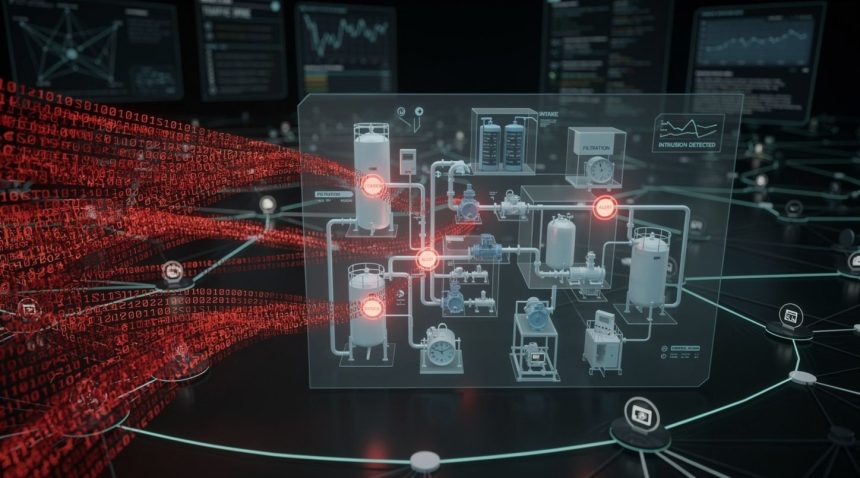
According to Darktrace’s analysis, ZionSiphon is engineered to establish persistence on infected machines—meaning it can maintain access even after a system restart, allowing attackers to return to the network at will. The malware actively tampers with local configuration files, a technique that helps it hide its presence and resist removal efforts. Once embedded, it scans the local subnet for operational technology services, essentially mapping out the water system’s digital architecture to identify further targets or critical control points.
The specificity of ZionSiphon’s design is notable. Rather than being a generic malware variant repurposed for multiple industries, this threat was built with Israeli water systems in mind. Darktrace’s identification and naming of the malware signals that the cybersecurity community is taking the threat seriously enough to track it as a distinct campaign. This level of targeting reflects the sophisticated approach that characterizes modern cyber threats.
Why Are Water Systems So Vulnerable to Attack?
Operational technology systems—the programmable logic controllers, sensors, and industrial networks that actually run water treatment plants and desalination facilities—operate on different principles than the IT systems most people interact with. They prioritize uptime and reliability over frequent security updates. Many were deployed decades ago and run proprietary software with limited patch availability. This creates a structural security problem: these systems are increasingly networked and vulnerable to remote attack, yet they cannot be shut down for maintenance windows the way a corporate email server can.
• Research shows that cyber attackers can exploit software flaws to gain initial access into ICS/SCADA systems, then move laterally to compromise high-value targets
• Water treatment facilities often run on decades-old operational technology with limited security patch availability
• Systems prioritize continuous operation over security updates, creating persistent vulnerability windows
Israel’s water sector is particularly critical to understand in this context. The country relies heavily on desalination to supplement natural water sources, with desalination plants producing roughly half of the nation’s drinking water. Water treatment facilities serve as the backbone of public health infrastructure. A successful attack on these systems would not be merely a data breach or service interruption—it could affect the water supply for millions of people and potentially create public health emergencies.
What Makes ZionSiphon Different from Other Malware?
The persistence capabilities that Darktrace highlighted in ZionSiphon suggest that whoever deployed this malware intended long-term access, not a smash-and-grab attack. This pattern typically indicates either espionage objectives (gathering intelligence on system operations) or preparation for a coordinated strike at a later date. The configuration file tampering adds another layer of concern: it suggests the attackers are working to evade detection systems and make their presence difficult to root out once discovered.
For the average person in Israel or elsewhere, the ZionSiphon discovery underscores a reality that rarely makes headlines until something breaks: the systems delivering essential services operate in a state of perpetual vulnerability. Water treatment plants, power grids, and other critical infrastructure were built in an era before coordinated state-sponsored cyber operations became routine. Retrofitting these systems with modern security is expensive, disruptive, and ongoing.
• Cybersecurity risks have become obstinate problems for critical water infrastructure management worldwide
• Artificial intelligence approaches show high potential to help ensure the cybersecurity of critical infrastructure
• Vulnerability management plans must account for systems that cannot be taken offline for traditional security updates
How Widespread Is This Threat?
The discovery also highlights how malware targeting critical infrastructure has evolved from theoretical concern to documented practice. ZionSiphon is not a hypothetical threat or a capability that might exist—it is actively being detected in the wild, which means it has already been deployed against real systems. The question now is how widespread the infection is and whether other critical infrastructure sectors beyond water treatment have been similarly targeted.
This targeting pattern mirrors broader trends in corporate data breaches where attackers focus on high-value systems that can cause maximum disruption. The shift from opportunistic attacks to carefully planned infrastructure targeting represents a significant escalation in the cyber threat landscape.
Darktrace’s public identification of ZionSiphon serves as a warning to water utilities globally that this class of threat is active and worth monitoring for. Whether the malware’s targeting of Israeli systems reflects a specific geopolitical motivation or a test case for broader infrastructure attacks remains unclear. What is clear is that the gap between critical infrastructure security and the sophistication of modern malware continues to widen, and ZionSiphon is one more piece of evidence that defenders are playing catch-up.
The emergence of ZionSiphon also highlights the importance of implementing extra layer security measures across all critical systems, even those that were not originally designed with modern authentication protocols in mind.