
On a prediction market where millions bet on real-world events, the line between speculation and sabotage has collapsed entirely.
Polymarket, a platform where users wager on political outcomes, natural disasters, and other real-world occurrences, has become a proving ground for what happens when financial incentives meet minimal accountability. The platform’s core vulnerability isn’t a software flaw—it’s the human behavior that emerges when money depends on controlling the very facts used to settle bets. Journalists have been threatened. Weather sensors have been deliberately compromised. And traders with inside information have exploited the system at scale.
- The Manipulation Scale: Bettors have physically tampered with weather sensors using hair dryers to alter temperature readings and influence bet outcomes.
- The Intimidation Factor: Journalists reporting on events used for bet verification have faced direct threats from users who stood to lose money.
- The Insider Problem: Widespread insider trading operates with minimal oversight, unlike traditional financial markets with SEC monitoring.
The threats began with coverage. An Israeli journalist’s reporting on a missile strike became the basis for verifying a Polymarket event, and bettors who stood to lose money if the journalist’s account was accurate responded with intimidation. The incident exposed a fundamental problem: Polymarket relies on real-world event verification, but that verification process itself has become a target for manipulation.
How Do Bettors Manipulate Physical Infrastructure?
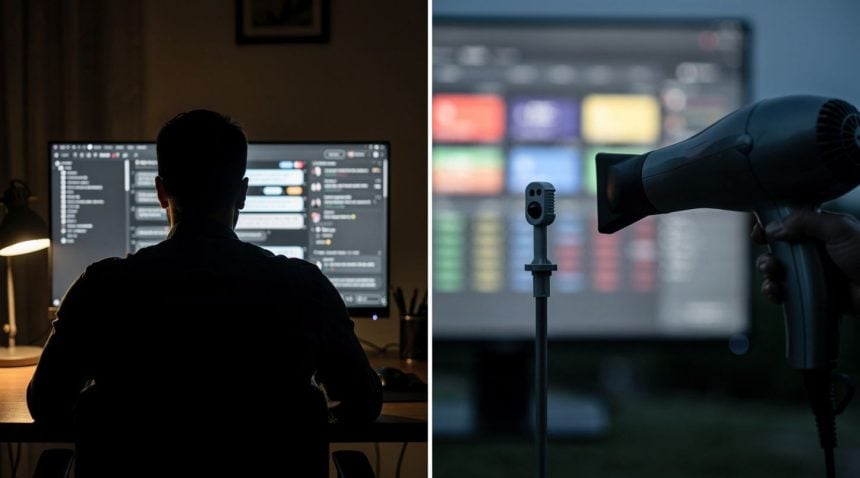
The weather-sensor attacks represent an even more brazen escalation. According to reporting, Polymarket bettors allegedly used hair dryers to artificially alter temperature readings on weather sensors—a crude but effective method to manipulate the outcomes of weather-related bets. The attacks weren’t sophisticated; they were direct physical interference with the infrastructure that determines who wins and who loses. Someone identified a sensor, identified a bet that would pay out based on that sensor’s reading, and then simply heated it to produce a false result.
These incidents reveal the structural weakness in prediction markets that depend on external data sources. Polymarket cannot control the accuracy of every journalist’s reporting or the security of every weather station. But bettors with sufficient motivation—and sufficient capital at stake—will attempt to control those sources themselves. The platform created the incentive; users are simply following it to its logical conclusion.
• Weather sensors across major cities remain unguarded and accessible to public manipulation
• News verification relies on single-source reporting with no cross-validation requirements
• Platform operates without regulatory oversight equivalent to traditional financial markets
Why Does Insider Trading Flourish on Polymarket?
Insider trading has compounded the problem. Multiple reports document widespread insider trading on Polymarket, with traders exploiting non-public information to place bets before events are officially confirmed or announced. Unlike traditional financial markets, Polymarket operates with minimal regulatory oversight and enforcement mechanisms. There is no SEC equivalent monitoring for suspicious trading patterns, no circuit breakers halting suspicious activity, no mandatory disclosure of conflicts of interest.
The combination of these three failure modes—journalist intimidation, sensor manipulation, and insider trading—suggests that Polymarket’s business model contains a fatal flaw. The platform promises to aggregate the wisdom of crowds to predict future events. But when the financial stakes are high enough, crowds don’t predict—they manipulate. They threaten sources. They tamper with data. They trade on information they shouldn’t have access to.
What Is Polymarket’s Response to Systematic Manipulation?
Polymarket’s response to these incidents remains unclear from public statements. The platform has not announced comprehensive changes to its verification process, its data-source security, or its insider-trading detection capabilities. The threats against the journalist were documented by media outlets; the hair-dryer incident was reported by tech news sites; the insider trading has been confirmed by multiple sources. Yet the platform continues operating under the same structural conditions that enabled all three.
For users of Polymarket, the implications are direct. Any bet you place exists in an ecosystem where other bettors may threaten journalists, tamper with sensors, or trade on information you don’t have access to. Your counterparty in any wager is not just another speculator—it could be someone with both motive and demonstrated willingness to manipulate the underlying event.
• Academic analysis shows prediction markets create financial incentives to actively manufacture the events being predicted
• Studies document how market manipulation extends beyond trading to include arson and geopolitical provocation
• Research published in Science identifies prediction markets as potential public health threats due to manipulation incentives
Are These Growing Pains or Terminal Dysfunction?
For the broader prediction-market industry, the question is whether these incidents represent growing pains or terminal dysfunction. Prediction markets have theoretical value as information-aggregation tools. But that value depends entirely on the integrity of the underlying data and the fairness of the trading process. Once those are compromised—once bettors learn they can threaten journalists and rig sensors with minimal consequence—the market stops predicting and starts rewarding whoever is most willing to cheat.
The challenges extend beyond individual platform failures to fundamental questions about data verification in decentralized systems. When financial incentives align with information manipulation, traditional verification methods break down. The same dynamics that make prediction markets theoretically valuable—crowd participation and financial motivation—become the vectors for systematic abuse.
The weather-sensor attacks may seem absurd, but they work. That is the real danger. As long as Polymarket’s verification mechanisms remain vulnerable to direct manipulation, expect more of it. The platform has demonstrated that when millions of dollars depend on the reading from an unguarded temperature sensor, someone will eventually show up with a hair dryer.