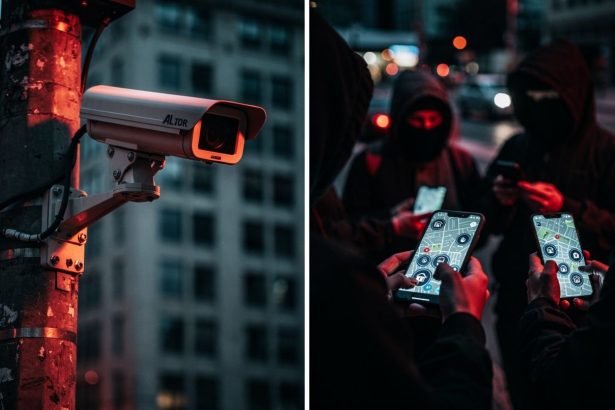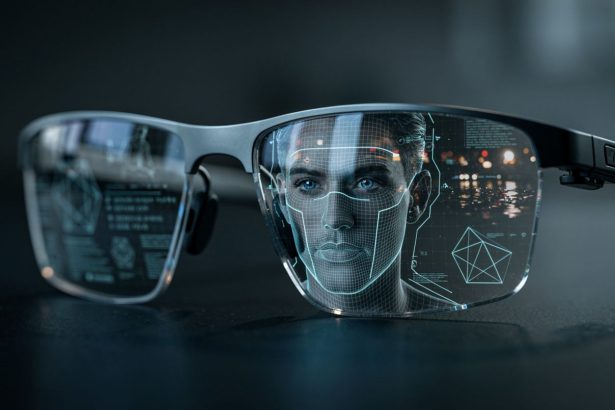
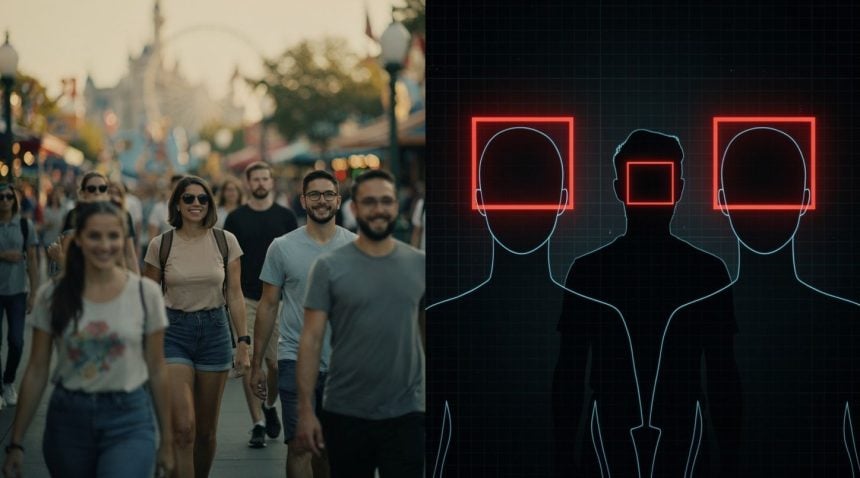
Families walking through Disneyland’s gates this spring are being photographed, identified, and tracked by facial recognition technology—without a consent form, opt-in checkbox, or clear notice posted at the entrance.
The deployment marks a watershed moment in theme park surveillance. For decades, Disney’s parks operated as relatively analog spaces where anonymity was still possible. Now, starting in May 2026, that anonymity is gone. Every visitor’s face is being captured, processed, and stored in a system designed to identify individuals across the park’s grounds. The technology works in real time, running faces against databases to flag individuals of interest to Disney security personnel.
- The Scale: Disneyland’s 18 million annual visitors are now subject to facial recognition scanning without explicit consent or opt-out options.
- The Legal Gap: California’s privacy laws treat facial recognition as a security function, not data collection, creating minimal protection for visitors.
- The Precedent: Disney’s deployment operates without federal biometric privacy protections, potentially normalizing facial scanning across commercial venues.
The scale is staggering. Disneyland’s Anaheim park alone draws roughly 18 million visitors annually. That means millions of faces—many belonging to children, tourists from overseas, and people who have no idea they’re being scanned—are now being fed into a facial recognition pipeline operated by a private company with minimal public oversight.
Disney has not published a detailed technical specification of the system, but the company confirmed to Wired that face recognition is now active across the park. The technology scans visitors at entry points, in queues, and throughout the grounds. Disney security can use the system to identify individuals in real time, cross-reference them against watchlists, and track their movements through the park. Research shows that facial recognition systems can create permanent identification records that persist long after the initial scan.
What Does Disney’s System Actually Track?
What Disney has said publicly is thin. The company framed the deployment as a security measure, positioning facial recognition as a tool to identify known threats and banned individuals. But that framing obscures what the system actually does: it creates a permanent, searchable record of who visited Disneyland, when, and where they went inside the park. That data can be retained, sold, or subpoenaed by law enforcement.
• Face scans occur at entry points, in queues, and throughout park grounds
• Real-time identification against watchlists and databases
• Movement tracking across multiple park locations
• Data retention with no specified deletion timeline
Privacy advocates have flagged the deployment as a significant escalation. Unlike airport security screening, where passengers expect to be scanned and have some legal recourse through TSA protocols, theme park visitors have received no formal notice that they’re entering a facial recognition zone. Disney’s terms of service—which almost no one reads—do not explicitly disclose the practice. No opt-out mechanism exists. If you want to visit Disneyland, you consent to being scanned, whether you know it or not.
Why Can Disney Scan Faces Without Clear Consent?
The legal framework enabling this is deliberately vague. California’s Consumer Privacy Act (CCPA) requires companies to disclose data collection practices, but Disney’s interpretation of that requirement appears to treat facial recognition as a security function rather than a data collection activity. That distinction matters: security functions often operate under different legal standards than commercial data collection. Disney’s lawyers likely argue that scanning faces for security purposes is not the same as collecting biometric data for marketing or identification databases—even though the technical result is identical.
Federal law offers almost no protection. The U.S. has no comprehensive biometric privacy statute. A handful of states, including Illinois and Texas, have biometric privacy laws with teeth, but California’s rules remain weaker than advocates had hoped. Disney’s deployment in Anaheim, therefore, operates in a legal gray zone where the company can scan faces, store the data, and use it for purposes Disney deems appropriate, with limited recourse for visitors who object. This reflects broader challenges in government restrictions on facial recognition technology.
According to research published by NIST, facial recognition systems show significant accuracy variations across demographic groups, raising questions about the reliability of Disney’s identification system across its diverse visitor base.
What Happens When Every Theme Park Follows Disney’s Lead?
The implications ripple outward. If Disneyland’s facial recognition system works without pushback, other theme parks will follow. Hotels, shopping malls, and entertainment venues will install similar systems. Within five years, facial recognition could be standard infrastructure in any commercial space designed to process crowds. The cumulative effect is a society where your face is a tracked identifier, readable by private companies at will.
• Facial biometrics linked to visit dates, companions, and attraction usage
• Data vulnerable to sale to brokers or law enforcement sharing
• Particular risks for activists, abuse survivors, and privacy-conscious individuals
For the average Disneyland visitor, the practical risk is immediate. Your face is now associated with the date you visited, the people you were with (inferred from co-location), and the attractions you used. That data could be sold to data brokers, shared with law enforcement without a warrant, or used to build behavioral profiles. If you’re a political activist, a domestic abuse survivor, or simply someone who values anonymity, visiting Disneyland now means surrendering facial biometrics to a corporate database. This connects to broader patterns of how companies build shadow profiles on individuals.
Disney has not announced plans to expand facial recognition to its other parks—Walt Disney World in Florida, Tokyo DisneySea, or Disneyland Paris—but the Anaheim deployment is almost certainly a pilot. If the system operates without significant legal challenge or public backlash, expect it to spread globally. The question now is whether California regulators, or the state’s legislature, will intervene before facial recognition becomes an invisible tax on visiting a theme park. Similar surveillance infrastructure expansions are already occurring in other regions globally, suggesting this trend extends far beyond entertainment venues.