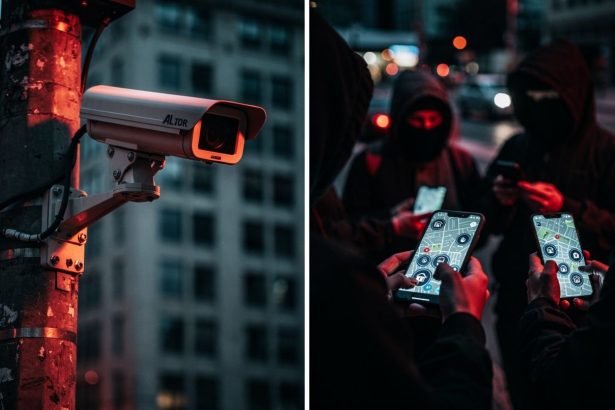

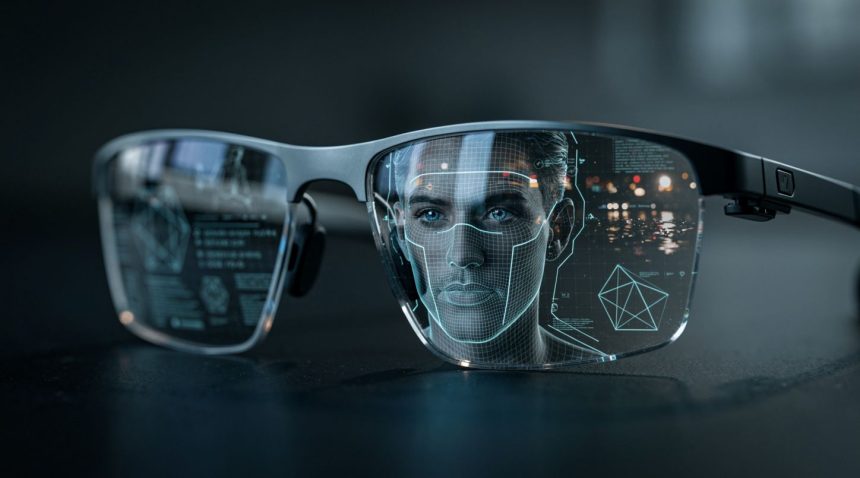
The Department of Homeland Security is developing smart glasses designed to identify immigrants and US citizens in real time using facial recognition and gait analysis, according to budget documents reviewed by journalist Ken Klippenstein. The agency plans to deploy the devices—called “ICE Glasses”—by September 2027, marking a significant expansion of biometric surveillance capabilities in the field.
The leaked budget materials describe the project as delivering “operational prototypes of smart glasses” that would equip agents with real-time access to biometric identification in the field. The glasses would allow ICE agents to capture video and compare observed subjects against existing facial recognition and gait databases to identify individuals from a distance during street-level operations.
- The Timeline: ICE Glasses will deploy by September 2027, giving agents real-time facial recognition and gait analysis capabilities on the street.
- The Scope: The system will identify all Americans, not just undocumented immigrants, by comparing faces against driver’s license and passport databases.
- The Precedent: ICE agents in six states are already using Meta’s AI smart glasses without authorization, suggesting rapid adoption once official devices arrive.
What makes this development particularly significant is not just the technology itself, but the stated scope of deployment. A DHS lawyer who spoke anonymously to Klippenstein warned that while the project is framed as targeting undocumented immigrants, the surveillance infrastructure it creates would affect all Americans. “It might be portrayed as seeking to identify illegal aliens on the streets, but the reality is that a push in this direction affects all Americans, particularly protestors,” the lawyer said.
The timing of this revelation matters. Civil liberties groups have flagged concerns about the expansion of law enforcement surveillance tools under the current administration. In a separate investigation, Klippenstein reported that the FBI was directed by the Department of Justice to “compile a list of groups or entities” demonstrating “anti-Americanism.” The ICE Glasses project arrives in this context, raising questions about how facial recognition capabilities might be used beyond immigration enforcement.
How Does Unauthorized Smart Glass Use Signal Future Deployment?
This is not DHS’s first venture into smart glasses technology. An investigation by The Independent last month found that ICE and Border Patrol agents in six states were already using Meta’s AI smart glasses, potentially in violation of DHS rules. That unauthorized use suggests both demand for the technology within the agency and a willingness to deploy it without formal approval processes—a pattern that could accelerate once official ICE Glasses are available.
The technical capability is straightforward but powerful: an agent wearing the glasses could point at a person on the street and instantly receive a biometric match against federal databases. The device would process video in real time, comparing facial features and walking patterns to identify individuals. Unlike a stationary camera system or a checkpoint, these glasses would enable roving surveillance—the ability to identify people anywhere, anytime, without their knowledge or consent.
• Research shows facial recognition technology exhibits documented bias and error rates, particularly affecting people of color
• Federal analysis confirms recognition accuracy varies significantly by race, age, and sex
• False matches could lead to wrongful detention with limited recourse for affected individuals
What Congressional Oversight Exists for ICE Glasses?
Congress has reportedly been notified of the ICE Glasses project but has not made a public statement. That silence is notable given the scale of the surveillance infrastructure being described. Smart glasses with facial recognition represent a qualitative shift from fixed surveillance cameras or border checkpoints; they distribute identification capability across individual agents and make it mobile and persistent.
For the average American, the implications are direct. If ICE Glasses deploy as planned in September 2027, federal agents will possess the ability to identify you based on your face and gait in public spaces. The technology doesn’t distinguish between documented and undocumented residents—it compares everyone against available databases. Those databases include driver’s license photos, passport images, and other biometric data collected by states and the federal government.
The absence of clear legal frameworks governing how this data would be used, retained, or shared adds another layer of concern. Studies examining government restrictions on facial recognition highlight the need for oversight mechanisms. An agent equipped with ICE Glasses could detain or question someone based on a false match, with limited recourse for the person affected.
Why Does This Technology Eliminate Surveillance Friction?
The DHS budget documents describe the project as delivering innovation to agents in the field. From a surveillance standpoint, the innovation is making identification ubiquitous—removing the friction that currently exists between spotting someone and confirming their identity. That friction has historically been a limiting factor on mass surveillance. Smart glasses eliminate it.
The September 2027 deployment date gives civil liberties advocates, technologists, and policymakers roughly 17 months to raise questions about the project’s scope, accuracy standards, oversight mechanisms, and legal authority. Congress has been notified but has not acted. The question now is whether that silence will hold through deployment, or whether the specific technical details in the leaked budget will prompt legislative scrutiny before the glasses reach agents’ faces.
This development represents part of a broader pattern of surveillance infrastructure expansion that extends beyond traditional immigration enforcement into general population monitoring. The technology’s deployment will test whether existing privacy protections can adapt to mobile, real-time biometric identification systems that operate without clear boundaries or consent mechanisms.