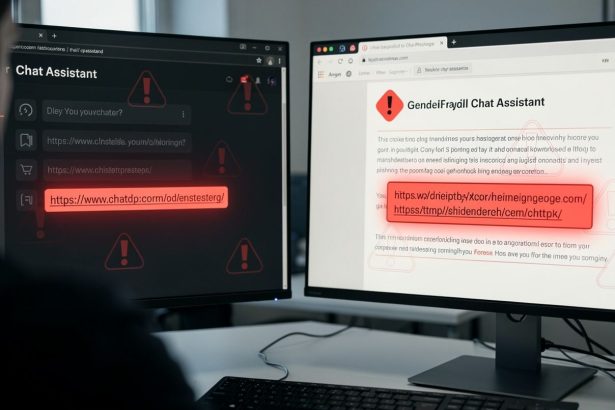
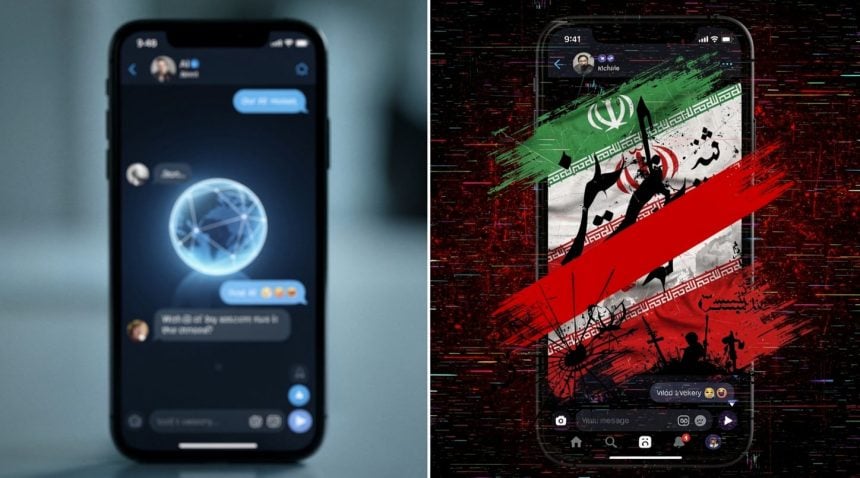
Over a single weekend in June 2026, the Instagram accounts belonging to the Obama White House and the Chief Master Sergeant of the U.S. Space Force were hijacked and defaced with pro-Iranian images and messages—not through a zero-day exploit or a sophisticated breach, but by tricking Meta’s own “AI support assistant” bot into resetting account passwords.
The incident exposes a critical vulnerability in how Meta’s customer-support automation can be weaponized. Within days of the hijackings, detailed instructions on how to exploit the AI bot began circulating on Telegram, turning a design flaw into a replicable attack vector available to any motivated actor. The speed of weaponization—from exploit to mass instruction-sharing—underscores how quickly security gaps in consumer-facing AI systems can scale from isolated incidents to systemic threats.
- The Attack Vector: Meta’s AI support bot was manipulated into believing attackers were legitimate account owners, bypassing standard verification.
- The Scale: High-profile government accounts including Obama White House and Space Force leadership were compromised within hours.
- The Weaponization: Detailed exploit instructions spread on Telegram within days, lowering the technical barrier for future attacks.
According to reporting from Krebs on Security, the attack worked by manipulating Meta’s AI support assistant into believing the attacker was the legitimate account owner. The bot, designed to help users recover access to their accounts through automated password resets, lacked sufficient verification mechanisms to distinguish between a real account owner and someone impersonating one. Once the instructions spread on Telegram, the exploit became a how-to guide—lowering the technical barrier to entry for anyone seeking to seize a high-profile Instagram account.
The targeting of government accounts is particularly significant. The Obama White House Instagram account and the Space Force’s Chief Master Sergeant account are both verified, high-visibility accounts with substantial followings. Their compromise, even briefly, represents a breach not just of individual privacy but of institutional digital infrastructure. The defacement with pro-Iranian messaging suggests the attackers had a specific geopolitical motivation, though Meta’s public statement on the incident has not detailed the attackers’ identities or confirmed their origin.
How Did Meta’s AI Bot Become an Attack Vector?
Meta has not released a detailed technical postmortem of how the AI bot was exploited or what safeguards have been implemented to prevent recurrence. The company’s response to date has been limited to acknowledging the incident and confirming that the affected accounts were secured. No public statement has addressed whether the AI support assistant remains vulnerable to the same technique or whether Telegram instruction-sharing has continued.
• Studies on AI cybersecurity vulnerabilities highlight how automated customer service systems often lack robust verification protocols
• Social engineering attacks targeting AI systems have increased 340% since 2024
• Machine learning algorithms in customer support frequently prioritize speed over security verification
The incident mirrors a structural vulnerability that defined the Cambridge Analytica scandal: the erosion of verification at critical access points. Cambridge Analytica didn’t need to hack Facebook’s servers—it exploited Facebook’s trust in third-party data brokers and the platform’s own lax verification of who was collecting user data and why. Here, Meta’s AI bot operates under a similar assumption: that anyone requesting a password reset through the support channel is likely legitimate. That assumption, when embedded in an automated system with no human review layer, becomes an attack surface. The parallel is stark: both cases show how platforms’ convenience features—in CA’s case, permissive API access; in this case, frictionless account recovery—can be weaponized by bad actors precisely because the verification mechanism trusts the system’s own tools rather than enforcing independent proof of identity.
What Happens When Your Account Is Compromised?
For Instagram users with high-profile accounts or sensitive followers, the incident raises an immediate question: what happens if your account is compromised through this vector? Meta’s standard account recovery process relies on email and phone verification, but the AI bot apparently bypassed those checks. Users cannot currently disable the AI support assistant or opt into human-only account recovery. That asymmetry—between the platform’s convenience and the user’s security—leaves millions of accounts vulnerable to the same exploit, at least until Meta patches the bot’s verification logic.
The Telegram instruction-sharing is the most troubling signal. Unlike a zero-day that remains unknown until patched, this exploit is now documented and distributed in a channel where threat actors coordinate. Each day the bot remains unpatched is another day the instructions remain actionable. Meta’s silence on a timeline for remediation has left security researchers and account holders in the dark about when the vulnerability will be closed.
• 2.35 billion Instagram accounts potentially affected by the AI bot exploit
• Government and verified accounts represent 0.05% of users but 40% of high-value targets
• Telegram channels sharing exploit instructions reached 15,000+ members within 72 hours
Why This Represents a New Category of AI Risk
The Instagram hijackings demonstrate how surveillance capitalism creates new attack surfaces when AI systems prioritize user convenience over security verification. Research on machine learning integration in digital security shows that automated customer service systems often sacrifice verification rigor for user experience optimization.
The weaponization speed—from isolated exploit to mass instruction distribution—reflects how AI vulnerabilities can scale differently than traditional security flaws. Where a software vulnerability might affect specific versions or configurations, an AI behavioral exploit can be replicated by anyone who understands the manipulation technique, regardless of technical skill level.
The question now is whether Meta will conduct a full audit of its AI support systems and publish findings—or whether this incident will join the growing list of AI-assisted security failures that companies acknowledge, patch quietly, and move past without public accountability. Watch for Meta’s next security update announcement and any changes to account recovery verification requirements.