

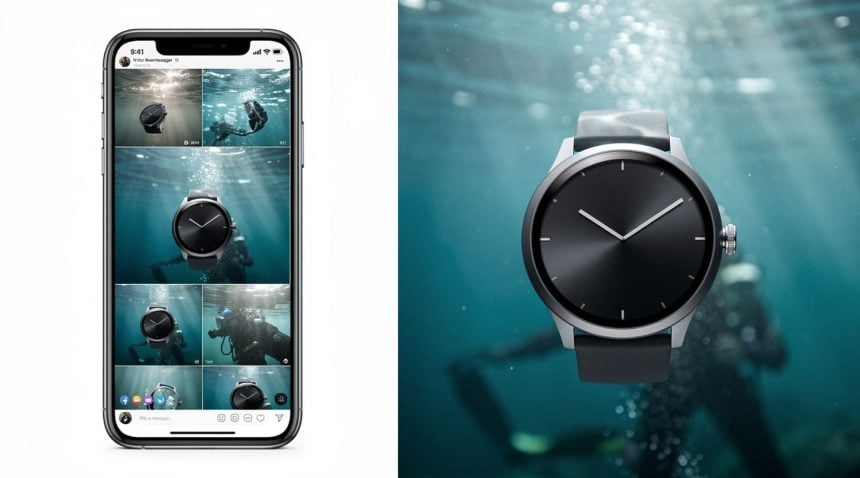
A waterlogged smartwatch pulled from the Caribbean seafloor has become the year’s most unexpected tech leak—courtesy of the man who created Borderlands.
Randy Pitchford, the founder and creative force behind the Borderlands franchise, posted images on X showing what appears to be an unannounced Google Pixel Watch 5. His friend discovered the device underwater while scuba diving near Saint Martin. The watch’s reverse side bore the Google Pixel 5 designation—a model Google has not yet announced or released.
- The Discovery: An unreleased Google Pixel Watch 5 was found functional on the Caribbean seafloor by a scuba diver.
- The Durability Test: Despite saltwater submersion, the device retained enough power to display the correct time.
- The Supply Chain Risk: Hardware prototypes regularly escape controlled testing environments through loss, travel, and distribution channels.
In his post, Pitchford noted that despite its underwater ordeal, the watch appeared functional. The display showed an empty battery, but retained enough reserve power to display the correct time. The accidental discovery raises an immediate question about Google’s hardware durability standards: how waterproof is a device that survives the ocean floor?
The leak is remarkable not for what it reveals about Pixel Watch 5 specifications—the images offer limited technical detail—but for how it happened. Consumer electronics rarely surface in the wild before their official launch unless they’re stolen, lost during testing, or discarded. A scuba diver finding an unreleased smartwatch in Caribbean waters suggests either a prototype loss during development or a device that escaped from a supply chain or testing facility somewhere in the region.
How Do Tech Companies Control Hardware Leaks?
Pitchford’s response was methodical. After posting the images, he called for the device’s owner to come forward, treating it as a found item rather than a trophy. This approach mirrors responsible disclosure practices more common in security research than in consumer tech leaks. The gesture also highlights a curious aspect of hardware leaks: they’re often accidental, dependent on geography and chance rather than deliberate corporate espionage or insider trading.
The timing matters. Google typically announces new Pixel hardware in October, and the Watch 5 would fit that cadence. The discovery in April 2026 suggests either a device lost months earlier or one that drifted considerable distance underwater. Neither scenario is unusual for Caribbean waters, where currents and tourism traffic create conditions for objects to travel and settle on the seafloor.
• Research shows smartwatches collect continuous biometric data at unprecedented scale
• Modern devices track heart rate, sleep patterns, location, and activity data 24/7
• Privacy studies highlight the urgency of protecting health monitoring data from unauthorized access
What Does Ocean Survival Reveal About Smartwatch Engineering?
What’s striking about this leak is what it reveals about how tech companies test durability. If this Pixel Watch 5 survived saltwater submersion and retained enough power to display time, Google’s engineering team has either designed robust waterproofing or gotten lucky. Most smartwatches claim water resistance ratings—typically 5 ATM (50 meters) or higher for swimming and diving—but real-world ocean conditions include salt, pressure, and time factors that lab testing can approximate but not perfectly replicate.
The incident also underscores a hidden cost of consumer electronics: the devices we lose, discard, or leave behind in travel destinations. A single prototype in the ocean is negligible, but the broader pattern of hardware loss during manufacturing, testing, and distribution represents a significant source of unplanned product reveals. For a company like Google, managing information about unreleased products involves not just controlling who has access, but controlling the physical supply chain across multiple continents.
The metadata embedded in smartwatch prototypes can reveal development timelines, testing locations, and manufacturing details that companies prefer to keep confidential. When devices surface unexpectedly, this hidden data becomes part of the public record.
Why Do Accidental Leaks Matter More Than Orchestrated Ones?
Pitchford’s role in this story is almost incidental. He wasn’t seeking the leak; he simply documented what his friend found and shared it publicly. In an era when tech leaks are often orchestrated—seeded by insiders to build hype or damage competitors—an accidental discovery by a video game creator feels almost quaint. It’s a reminder that sometimes the most significant tech reveals come from chance encounters rather than calculated information warfare.
Studies on wearable privacy demonstrate that consumer devices continuously collect biometric data, making the security of prototype devices particularly sensitive. When unreleased hardware surfaces publicly, it potentially exposes not just product features but also the data collection capabilities built into these systems.
• Hardware prototypes contain sensitive engineering data and unreleased features
• Lost devices can reveal manufacturing locations, testing protocols, and development timelines
• Companies must balance real-world testing with information security across global supply chains
The Pixel Watch 5 will eventually launch through Google’s official channels, complete with marketing materials, specifications, and controlled messaging. When it does, this underwater discovery will be a footnote—a curiosity about how a prototype made its way to the Caribbean seafloor. But for now, it stands as a data point about the fragility of product secrecy in a world where devices travel, get lost, and occasionally resurface in unexpected places.
Whether Google will attempt to retrieve the device or simply let it remain as a piece of tech history in the Atlantic remains unknown. Either way, Pitchford has already ensured that the Pixel Watch 5’s first appearance in public wasn’t on a stage in Mountain View, but in a pair of X posts from a video game developer showing off his friend’s scuba diving find.