
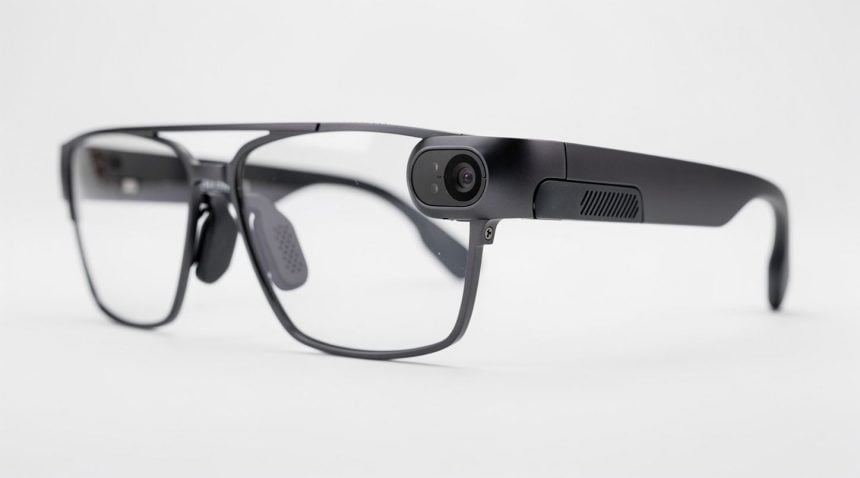
Actual photographs of Samsung’s unreleased smart glasses just surfaced online, complete with hardware specs and a price range that positions the device squarely between a consumer impulse buy and a serious tech investment.
The leak matters because Samsung has been quietly developing AR wearables while Meta and Google race to dominate the smart glasses market. These aren’t vaporware rumors—they’re images of a real product codenamed “Jinju” that Samsung appears ready to ship sometime this year. The first-generation model could cost between $380 and $500, according to reporting by Android Headlines, with a more advanced second-generation device codenamed “Haean” expected in 2027 at $600 to $900.
- The Hardware Reality: Samsung’s Jinju glasses pack a 12MP camera and Snapdragon AR1 chip but deliberately omit display technology to hit the $380-$500 price point.
- The Market Timeline: Three major tech companies are now shipping actual smart glasses products, moving the category from concept to consumer reality in 2026.
- The Privacy Implication: Always-on 12MP cameras in everyday eyewear create unprecedented surveillance capabilities that current privacy frameworks weren’t designed to address.
The Jinju glasses will run on Android XR, Google’s new wearables platform, and integrate heavily with the Google Gemini chatbot. Samsung is developing these as its entry into a category where augmented reality glasses and forthcoming Google Gemini glasses are already staking claims. The leaked images show a relatively conventional frame design—nothing as visually striking as some concept renders that have circulated, but functional-looking hardware engineered for all-day wear.
What’s Actually Inside Samsung’s Smart Glasses?
What’s inside the frames tells the real story. Samsung’s first-generation smart glasses will pack a 12MP camera, a Snapdragon AR1 chip, and directional speakers with bone-conduction technology. That camera is notable: it’s the same sensor found in many smartphone flagships, suggesting Samsung isn’t cutting corners on image quality for video capture or augmented reality features. The bone-conduction audio means sound travels through vibrations against your skull rather than through traditional speakers, reducing the tinny audio problem that plagued early smart glasses.
• 12MP camera – Flagship smartphone-grade sensor for continuous recording
• Snapdragon AR1 chip – Dedicated AR processing with AI acceleration
• $380-$500 price range – Positioned between impulse buy and premium investment
The one major limitation: the Jinju glasses will not include a display. This is a crucial distinction that explains the lower price point. You won’t see AR overlays or digital information floating in your field of vision with this generation. Instead, the glasses function more like a wearable audio device—think of them as the logical next step from smartphone-based AR, tethered to your phone’s screen for visual feedback.
Why Is Samsung Skipping Display Technology for Now?
Samsung is explicitly saving the micro-LED display technology for the 2027 “Haean” model, which will deliver the full augmented reality experience comparable to the Meta Ray-Ban Display glasses. This strategic decision reflects manufacturing realities and market positioning rather than technical limitations.
Samsung has a major Unpacked event scheduled for July 2026, where the company typically unveils flagship devices like the Galaxy Z Fold 8 and Galaxy Watch 9. The smart glasses will likely get teased at that event, following the same playbook Samsung used with its Galaxy XR virtual reality headset last year—announcement at a major event, actual launch later in the year.
The price range could still climb before launch. Global economic uncertainty and rising costs for RAM and storage components are already pressuring hardware manufacturers across the industry. Samsung’s own cost structure may force the Jinju glasses toward the higher end of that $380-$500 range, or even beyond it, depending on final component sourcing and production volumes.
What Does This Mean for the Smart Glasses Race?
What makes this leak significant for the average consumer is what it reveals about the smart glasses race: it’s no longer theoretical. Samsung, Meta, Google, and others are shipping real products with real specs and real prices. Research on AR device adoption shows that consumer acceptance depends heavily on practical functionality rather than futuristic features, which explains Samsung’s pragmatic approach to the first-generation Jinju.
• Three major tech companies now have confirmed smart glasses shipping in 2026-2027
• Android XR platform standardization suggests industry convergence around Google’s ecosystem
• Always-on camera integration raises unprecedented privacy questions for everyday wearables
For anyone tracking wearable technology, the leaked specs also signal where the industry is converging. All three major players are building on Android XR or similar platforms, integrating AI assistants as core features, and prioritizing always-on cameras. The Snapdragon AR1 chip will likely become the standard processor across multiple manufacturers’ smart glasses, much like Snapdragon dominates smartphones.
Should You Be Concerned About Always-On Cameras?
The privacy implications of Samsung’s approach deserve serious consideration. A 12MP camera capable of continuous recording, integrated with AI processing and cloud connectivity, represents a fundamental shift in personal surveillance capabilities. Unlike smartphone cameras that users consciously activate, smart glasses cameras operate in ambient mode—always ready, always watching, always connected to AI systems designed to analyze and interpret visual data.
Current privacy frameworks weren’t designed for wearable devices that can capture, process, and transmit visual data without obvious user interaction. The integration with Google Gemini means that visual data from Samsung’s glasses will flow through Google’s AI infrastructure, creating new categories of personal data that existing regulations struggle to address.
Samsung’s July Unpacked event will be the moment to watch. If the company confirms the Jinju glasses and announces a launch window, the smart glasses market shifts from “coming soon” to “available now.” The question then becomes whether consumers actually want to wear them—and whether $380 to $500 feels like a reasonable price for a device that won’t show you anything on its lenses, at least not yet.