
Insta360 just turned a wireless microphone into a wearable billboard.
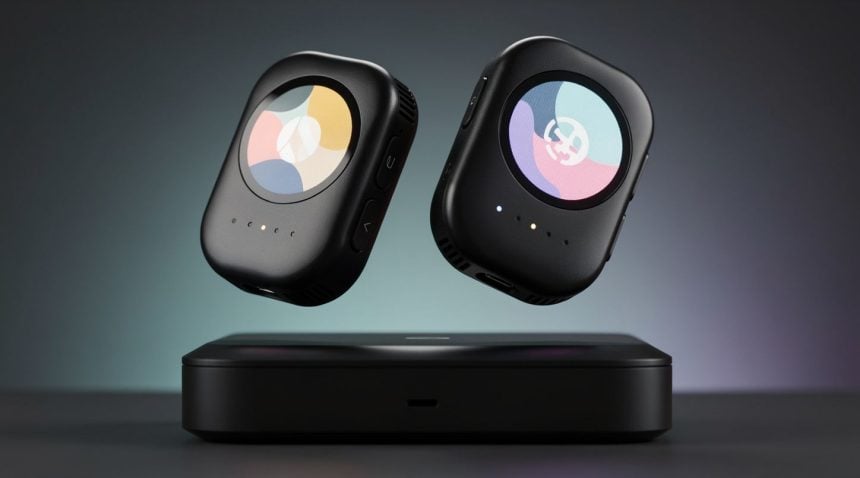
At the 2026 NAB Show in Las Vegas, the camera and audio company unveiled the Mic Pro, a new wireless microphone kit that flips the usual design philosophy of audio gear on its head. Instead of hiding transmitters away—as the company did with its original Mic Air, which launched in June with small, AirTag-sized mics meant to stay concealed—the Mic Pro is built to be seen. Each transmitter features a round E Ink color screen on its front that can display photos, logos, branding, or custom artwork.
- The Display Shift: Professional audio equipment now doubles as visual branding surfaces with integrated color E Ink screens.
- The Privacy Implication: Wearable devices with display capabilities create new data collection vectors beyond their primary function.
- The Market Signal: Content creators increasingly want their technical gear to be part of their visual brand identity.
This is a curious moment in consumer tech: the moment when functional hardware starts doubling as a display surface. The Mic Pro’s E Ink screen isn’t there to show audio levels or battery life in any revolutionary way. It’s there to let creators, performers, and brands stamp their identity directly onto the microphone itself. A podcaster could display their show logo. A musician could show their band name. A corporate presenter could flash a company mark. The microphone becomes inseparable from the brand it represents.
But this convergence of wearable technology and display surfaces raises questions about data collection that extend far beyond audio capture. Research on wearable devices demonstrates how sensors embedded in everyday tech can monitor stress, movement patterns, and behavioral data—often without users realizing the full scope of information being gathered. When microphones become smart displays, they potentially become data collection points for digital identity tracking.
Why Are Microphones Becoming Visual Devices?
Insta360’s first wireless mic kit, the Mic Air, took a different approach. Those transmitters were designed to be small and lightweight enough to disappear into a shirt pocket or clip to clothing without drawing attention. The goal was invisibility—let the audio do the talking, not the hardware. But the Mic Pro suggests the company sees a different market emerging: creators and professionals who want their gear to be part of the visual story they’re telling.
The Mic Pro transmitters also include a three-microphone array, according to the company’s technical specifications. This is a significant step up from typical wireless mic designs, which usually rely on a single capsule per transmitter. A three-mic array suggests Insta360 is building in directional audio capture or noise rejection—the kind of feature that would appeal to videographers, livestreamers, and content creators working in noisy environments.
• Three-microphone arrays enable directional audio capture and advanced noise rejection
• Color E Ink displays consume minimal power when static, extending battery life
• Professional audio equipment increasingly integrates visual branding capabilities
What Does This Mean for Digital Privacy?
The company hasn’t disclosed a specific launch date yet, only that the Mic Pro will roll out globally later in 2026. That timeline puts it roughly nine months after the original Mic Air hit the market, suggesting Insta360 is moving quickly to expand its wireless audio lineup. The price point and full feature set remain unknown, but the E Ink screen alone signals a product aimed at professionals and serious creators rather than casual users.
What’s striking about this design choice is what it reveals about how professional audio equipment is evolving. For decades, microphones were purely functional objects—you cared about frequency response, sensitivity, and durability. The transmitter was something you clipped to your belt or hid in your clothing. But as content creation has become a visual medium, even the tools of audio capture are being drawn into the frame. This shift mirrors broader concerns about how remote work technology has normalized constant digital surveillance.
How Do Smart Displays Change Data Collection?
E Ink technology itself is an interesting choice here. Unlike LCD or OLED screens, E Ink displays consume almost no power when static, which matters for wireless microphones that need to run on batteries for hours. The color E Ink screens that Insta360 is using represent a relatively recent advancement in the technology—they’ve only become commercially viable in the last few years. The company is betting that creators will value the ability to customize their microphone’s appearance enough to justify the added complexity and cost.
This also hints at a broader shift in how tech companies are thinking about hardware visibility. As remote work, streaming, and hybrid events have normalized people broadcasting from home offices and unconventional locations, the gear itself has become part of the aesthetic. Ring lights, microphone arms, and now screens on microphones—they’re all props in the visual composition of digital communication.
• Wearable devices with display capabilities can collect behavioral and biometric data beyond their stated function
• Smart microphones may track usage patterns, location data, and user preferences
• Integration with mobile apps creates additional data sharing pathways with third parties
The Mic Pro won’t ship until later this year, and we don’t yet know how the E Ink screen will perform in real-world use or how much battery drain it adds. But the concept is clear: Insta360 is banking on the idea that audio equipment can be both functional and branded, both heard and seen. Whether creators actually want to turn their microphones into mobile logos remains to be seen when the Mic Pro finally launches—and whether they understand the potential privacy implications of wearing smart displays that could be collecting data about their daily routines and professional activities.