

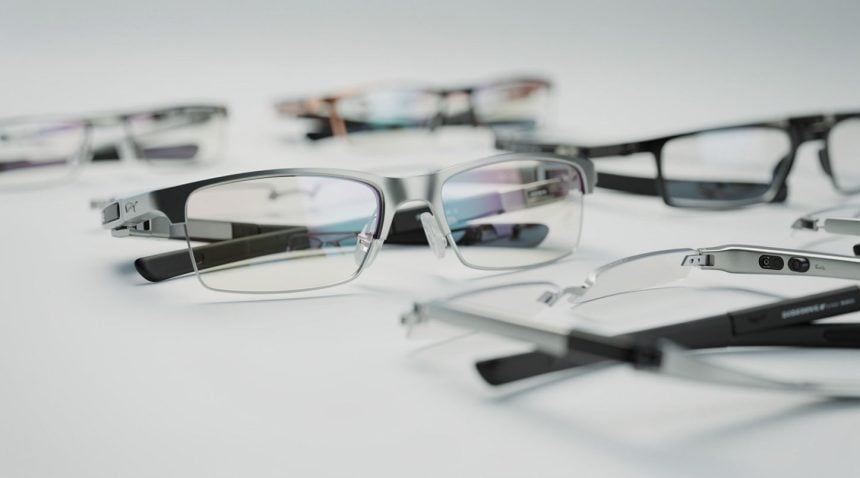
Apple’s next move in wearables isn’t about beating Meta to the metaverse—it’s about replacing the glasses already sitting on your nightstand.
According to Bloomberg’s Mark Gurman, Apple is positioning its forthcoming smart glasses not as a competitor to Meta’s and Samsung’s headsets, but as a direct challenger to Oakley, Ray-Ban, Warby Parker, and Swatch in the $200-$500 eyewear range. The strategy mirrors exactly how Apple conquered the watch market: not by competing only against other smartwatches, but by positioning the Apple Watch against traditional watchmakers like Swatch, Fossil, and Seiko. This time, the prize is vastly larger.
- Market Scale: The global eyewear market is worth $132 billion—nearly eight times larger than Apple Watch’s $17 billion annual revenue.
- Price Strategy: Apple targets the $200-$500 luxury eyewear segment where brand loyalty matters more than specifications.
- Ecosystem Lock-in: Smart glasses would integrate seamlessly with iPhone, Apple Watch, and AirPods in ways competitors cannot match.
The numbers tell the story. Apple Watch generates an estimated $17 billion annually. The global eyewear market is worth $132 billion—nearly eight times larger. That gap represents the scale of Apple’s ambition. Rather than fighting for share in an emerging smart glasses category dominated by niche players, Apple is eyeing the entire luxury eyewear ecosystem that has remained largely unchanged for decades.
The comparison to Apple Watch is instructive because it worked. When Apple entered the watch market in 2015, it didn’t position itself as a gadget for tech enthusiasts. It positioned itself as a fashion accessory and health device that could replace your existing watch. Research from Pew Research Center shows that about one-in-five Americans now use a smart watch or fitness tracker, demonstrating how Apple successfully expanded beyond traditional tech adopters. The strategy required building relationships with luxury brands, establishing premium pricing, and creating a product that worked as both a functional device and a status symbol.
How Does Apple Plan to Redefine the Eyewear Market?
Smart glasses present an even more compelling target. Unlike watches, which have a clear functional purpose that smartwatches replicate, traditional eyewear is primarily a fashion and vision-correction product. A smart glasses device that layers digital information, spatial computing, or AI assistance onto that existing product category doesn’t cannibalize the market—it redefines it. Ray-Ban and Oakley wearers aren’t buying a technology product; they’re buying identity and utility. If Apple can deliver both simultaneously, it owns the category.
The $200-$500 price range is crucial. This is the sweet spot where eyewear transitions from commodity to lifestyle product. Warby Parker operates here. Ray-Ban’s premium lines operate here. This is where brand loyalty matters more than specs, where consumers expect design, and where margins support significant R&D investment. It’s also the range where Apple has historically dominated: not the cheapest option, but the option that feels inevitable once you own one.
• $132B – Global eyewear market value
• $17B – Apple Watch annual revenue
• 8x larger – Eyewear market compared to smartwatch success
• $200-$500 – Target luxury eyewear price range
What Makes Apple’s Ecosystem Strategy So Powerful?
What makes this strategy particularly potent is that Apple can leverage its existing ecosystem. An Apple smart glasses device would integrate seamlessly with iPhone, Apple Watch, AirPods, and Mac in ways that Samsung’s competing offerings cannot match. For an Apple user, the glasses become another node in a closed network that grows more valuable the more devices you own. For a Ray-Ban or Oakley customer considering a smart glasses upgrade, Apple’s integration advantage becomes a tangible reason to switch.
The eyewear industry has also shown surprising openness to tech integration. Ray-Ban’s partnership with Meta on smart glasses didn’t disrupt the traditional eyewear market—it created a new category within it. Luxury eyewear brands have proven willing to collaborate with tech companies, suggesting they see smart glasses as an evolution of their market, not a threat to it. Apple could follow a similar partnership model, or it could go direct-to-consumer like it did with watches.
Why Are Privacy Concerns Secondary to Market Strategy?
The shift toward smart glasses raises significant questions about data collection and user privacy that Apple will need to address. Unlike smartphones that users actively engage with, smart glasses represent always-on wearable technology that could continuously monitor user behavior, environmental data, and biometric information. Privacy challenges with AR glasses include the potential for constant recording, facial recognition capabilities, and the collection of intimate behavioral patterns.
Studies on wearable device adoption patterns show that consumer attitudes toward self-monitoring technology have shifted significantly, with users increasingly willing to trade privacy for convenience and functionality. This behavioral change creates an opening for Apple to position privacy as a competitive advantage—much like it has done with iPhone marketing that emphasizes on-device processing and data minimization.
What Does This Mean for Consumers?
For consumers, this strategy means smart glasses will likely arrive as a premium product first, not a mass-market device. Apple’s playbook doesn’t involve racing to the bottom on price; it involves establishing a luxury position and letting competitors chase from below. Your next pair of glasses might not just correct your vision or display notifications—it might be the primary interface for spatial computing, AI assistance, and digital information overlay. And it will cost what a luxury watch costs today.
• Apple targets luxury eyewear customers, not tech early adopters
• Integration with existing Apple ecosystem creates switching costs
• Premium pricing strategy mirrors successful Apple Watch launch
• Traditional eyewear brands show openness to tech partnerships
The real test comes when Apple actually announces the product. Until then, Gurman’s reporting suggests the company is thinking bigger than Meta’s vision of virtual reality. It’s thinking about replacing the most intimate object most people wear daily—their glasses. That’s a market worth fighting for, and a strategy that could reshape eyewear the way the Apple Watch reshaped timekeeping.