
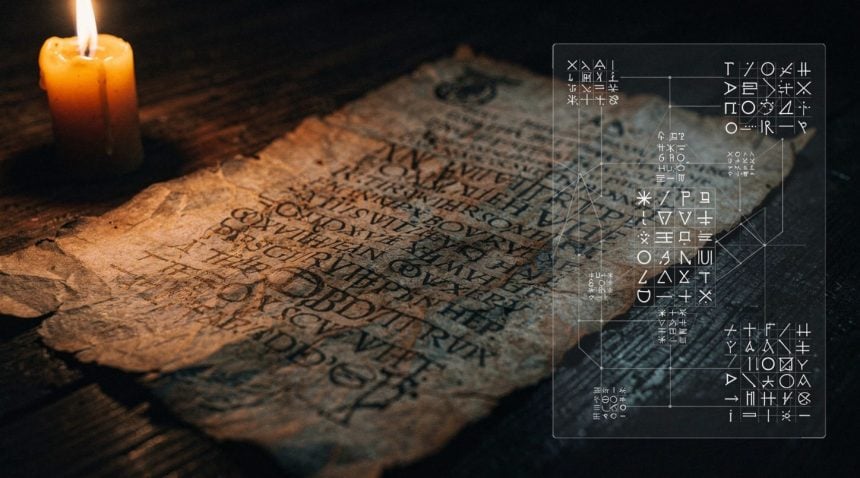
A Spanish diplomat’s encrypted letter, lost to secrecy for nearly two centuries, has finally surrendered its secrets to modern cryptographic analysis. The breakthrough marks the end of a 166-year puzzle that began the moment the letter was rediscovered in 1860—and immediately defied every attempt to read it.
The letter’s journey is itself a study in how information can hide in plain sight. Sent by a Spanish diplomat during the late medieval period, the document remained encrypted through the 19th and 20th centuries as successive generations of codebreakers took their turns trying to unlock its contents. Each failure only deepened the mystery: what was important enough to encrypt with such care? What message was worth protecting across centuries?
- The Time Span: A medieval Spanish diplomatic letter resisted decryption for 166 years after its 1860 rediscovery.
- The Method: Modern cryptanalytic techniques finally broke the medieval cipher by reverse-engineering the original encryption methodology.
- The Revelation: The letter’s contents detail ordinary diplomatic matters, showing encryption was standard practice rather than reserved for explosive secrets.
The rediscovery in 1860 triggered a cascade of cryptographic attempts. Researchers at institutions across Europe and beyond applied the decryption techniques available to their era, then later generations deployed increasingly sophisticated methods as computing power grew. Yet the letter resisted. It became a kind of white whale for historical cryptographers—a tangible reminder that some secrets, once properly encoded, could outlast the technology meant to break them.
What Made This Medieval Cipher So Resilient?
What makes this particular case fascinating is not just the length of time, but what it reveals about the evolution of code-breaking itself. The letter was encrypted using methods that would have been considered state-of-the-art in the medieval period. By the 1860s, when it was found, those methods were antiquated—but not quite antiquated enough for the tools at hand. By the mid-20th century, mechanical and then early electronic computers offered new approaches, yet the letter still held. It wasn’t until modern cryptographic research and computational methods converged that the barrier finally broke.
The successful decryption involved applying contemporary cryptanalytic techniques to the medieval cipher system. Modern cryptographic analysis allowed researchers to reconstruct the key and methodology the original diplomat used, effectively reverse-engineering not just the message but the security thinking of the era.
• Medieval encryption methods often combined multiple cipher techniques, creating compound security systems
• Diplomatic correspondence from this period used standardized encryption protocols across European courts
• The gap between encryption strength and available decryption tools can span centuries
The letter’s contents detail aspects of late medieval Britain—information that, while valuable to historians, hardly seems worth the centuries of secrecy it commanded. Yet that gap between the effort invested in concealment and the apparent ordinariness of the content is itself revealing.
Why Did Medieval Diplomats Encrypt Routine Communications?
It suggests that the diplomat wasn’t encrypting information because it was inherently explosive or world-changing. Rather, encryption was simply how you communicated sensitive matters—diplomatic correspondence, trade details, political observations—in an era where privacy meant physical security and cryptographic obscurity. The letter was encrypted not because its contents were uniquely dangerous, but because that was the professional standard for someone in his position.
For modern readers swimming in data and digital communication, the story offers an unexpected perspective. We tend to think of encryption as a contemporary concern—something born from the internet age and the rise of digital surveillance. Yet here is a medieval diplomat, centuries before the internet, before computers, before even the telegraph, taking the trouble to encrypt his words. The impulse to protect communication through mathematical obfuscation is far older than we sometimes assume.
What Does This Reveal About Modern Encryption Vulnerabilities?
The 166-year gap between rediscovery and successful decryption also illuminates something about the relationship between encryption strength and computational power. The medieval cipher was never “unbreakable” in theory—it was simply unbreakable with the tools available for most of those 166 years. The diplomat could not have imagined computers or modern cryptanalysis, yet his choice of encryption method proved robust enough to resist multiple generations of human effort. Only when technology advanced sufficiently did the secret become accessible.
This dynamic plays out constantly in modern digital security. Encryption that seems impenetrable today might become trivial in a decade or two, as computational power increases and new algorithms are discovered. The emergence of quantum computing threats to current encryption standards exemplifies this ongoing arms race between protection and penetration.
• 1860s: Manual cryptanalysis attempts using frequency analysis and pattern recognition
• 1940s-1960s: Mechanical and early computer-assisted decryption efforts
• 2020s: Advanced cryptanalytic algorithms finally break the medieval cipher
Conversely, properly implemented encryption can protect data across time scales we find hard to imagine. The Spanish diplomat’s letter is an accidental time capsule—not just of medieval information, but of medieval assumptions about what would remain secret. Modern techniques like homomorphic encryption represent the latest evolution in this centuries-old quest to protect sensitive information.
What Lessons Does This Hold for Digital Privacy Today?
The successful decryption is now being studied by researchers at institutions focused on medieval history and cryptography. Their work will add the letter’s contents to the historical record and, more importantly, illuminate the encryption techniques of the period. But the deeper lesson is simpler: secrets, once properly encoded, can outlast empires, technologies, and centuries of determined effort to break them.
The Spanish diplomat’s encrypted letter serves as both a testament to the enduring power of cryptography and a reminder that today’s unbreakable codes may become tomorrow’s historical curiosities. In an age where digital communications generate vast trails of encrypted data, this medieval mystery offers perspective on the long arc of information security—and the persistent human drive to keep some things secret, no matter how ordinary they might seem to future generations.