
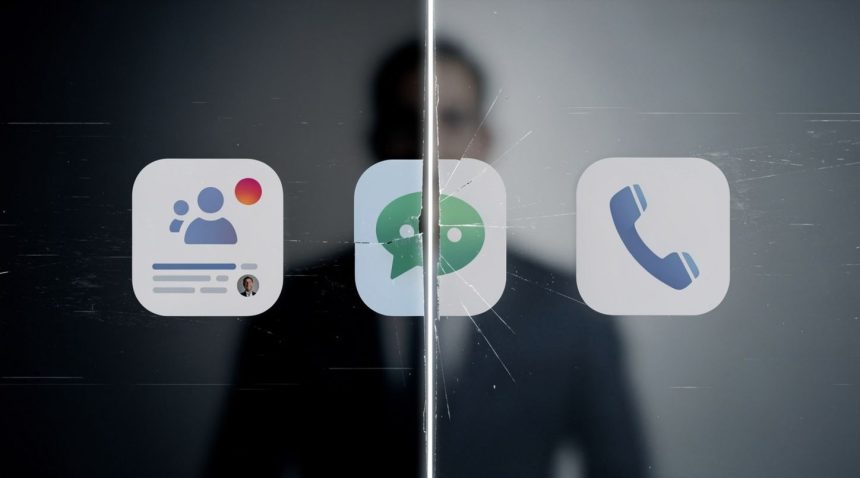
XChat, a standalone messaging app for X, is now available on iOS—a move that directly contradicts Elon Musk’s original promise to build an “everything app” where messaging, social feeds, job boards, and payments would coexist in a single platform.
When Musk rebranded Twitter as X in 2023, his stated vision was to create a unified super-app modeled after WeChat, where users could access multiple services without leaving the platform. The launch of XChat as a separate iOS application signals a fundamental shift in that strategy, and more importantly, reveals where Musk’s actual business priorities now lie: not in social media, but in artificial intelligence.
- The Platform Split: X’s “everything app” now requires three separate applications to access core functionality.
- The Corporate Shift: X operates as a subsidiary of xAI, which became part of SpaceX in 2026, revealing AI as the true priority.
- The Data Strategy: XChat’s separation optimizes conversation data collection for AI training rather than user convenience.
XChat offers messaging features X had already introduced to its main platform, including message deletion and editing, screenshot blocking, and disappearing messages. The new app supports video and audio calls, and X claims all messages sent through XChat use end-to-end encryption. Group chats can currently accommodate 350 participants, with X planning to expand that capacity in the future.
The timing of XChat’s iOS launch coincides with X’s decision to retire its Communities feature by the end of May. The platform is positioning XChat’s group chat functionality as the successor to Communities, suggesting that larger group conversations will migrate to the standalone app rather than remain integrated within X itself.
Why Did the “Everything App” Vision Fragment?
The fragmentation is notable. Users who want the full X experience now need to juggle the original X app, the web version, and this new XChat app to access core functionality. A Twitter user highlighted this contradiction in a post that gained traction: “The everything app, which requires 3 apps to use the core product.” The comment underscores the gap between Musk’s original vision and the current reality.
What explains this strategic reversal? The corporate structure tells the story. X is now a subsidiary of xAI, Musk’s artificial intelligence company, which itself became part of SpaceX in 2026. This organizational shift reflects where capital, attention, and resources are flowing within Musk’s empire. The “everything app” concept required X to be the center of gravity for Musk’s digital ecosystem. But if X is subordinate to xAI, then AI—not social media—is the true priority.
• 3 separate apps now required for full X functionality
• 350 participants maximum in XChat group conversations
• iOS only for XChat launch, creating platform disparity
How Does XChat Compare to Other Platform Strategies?
The standalone messaging app approach mirrors strategies used by other platforms. Meta separated Messenger from Facebook years ago. WeChat, the actual model Musk cited, remains unified, but operates in a different regulatory and market context. XChat’s independence could theoretically make it easier to scale messaging separately from X’s core social feed, or to integrate it into other xAI products down the line.
For users, the fragmentation creates friction. Those accustomed to Musk’s promise of a seamless, all-in-one platform now face the familiar mobile app sprawl that the “everything app” concept was supposed to solve. Android users don’t yet have XChat as a standalone option, meaning the iOS launch widens the experience gap between platforms.
What Does This Mean for AI Data Collection?
For X’s business model, the implications are more complex. Messaging apps generate engagement metrics and user data that feed AI training pipelines. By separating XChat, Musk may be optimizing for xAI’s machine learning infrastructure rather than user convenience. A dedicated messaging app could more efficiently collect conversation data, behavioral signals, and interaction patterns that xAI’s models could leverage.
The shift also signals acceptance that the “everything app” vision was either too ambitious or not aligned with market realities. Building a truly unified super-app requires extraordinary product discipline and user adoption. Research on super-app platforms shows that WeChat succeeded partly because it launched in a market with different competitive dynamics and regulatory frameworks. X’s attempt to replicate that model in the US and globally has instead resulted in a more traditional app portfolio approach.
• XChat’s separation optimizes data collection for AI training over user experience
• The corporate hierarchy places AI development above social media innovation
• Platform fragmentation contradicts the original unified vision but serves xAI’s data needs
Musk’s original “everything app” framing was a bet that social media would remain central to his business strategy. The current structure—with X as a subsidiary of xAI, which is part of SpaceX—suggests that bet has been quietly abandoned. AI is now the core business, and X is increasingly a data source and user engagement channel for that larger mission.
The focus on attention economy dynamics reveals how platforms prioritize engagement metrics that feed machine learning systems rather than user satisfaction. XChat’s standalone nature allows for more granular data collection on messaging behaviors, conversation patterns, and social connections—all valuable inputs for AI model training.
XChat’s iOS availability marks the moment when Musk’s grand unified vision formally fractured into separate products. Whether this represents a temporary pragmatic compromise or a permanent strategic reorientation will become clearer as xAI’s role in X’s product roadmap becomes more explicit.