

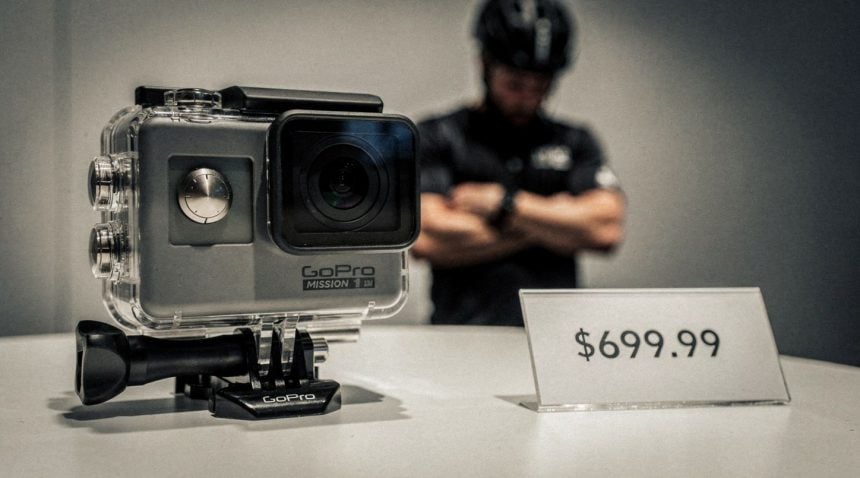
GoPro’s new Mission 1 and Mission 1 Pro cameras arrive May 28th at $599.99 and $699.99 respectively—price points that signal a decisive shift away from the casual weekend athlete and toward professional filmmakers.
The timing reveals a strategic tension at the heart of GoPro’s identity. The company built its reputation on making action cameras accessible to everyday users: skiers, surfers, mountain bikers, road-trippers. But the Mission lineup’s pricing suggests that era may be ending. At nearly $700 before accessories, these cameras occupy a space where casual users must justify the expense against smartphones and mid-range mirrorless options, while professionals expect interchangeable lenses and broadcast-grade features.
- The Price Jump: Mission cameras start at $599.99, representing a 50% increase over previous GoPro entry points under $400.
- The Subscription Strategy: GoPro offers $100 discounts to ecosystem subscribers, acknowledging the sticker price creates significant purchase friction.
- The Market Shift: Professional-grade features and pricing abandon the mass-market weekend warrior segment that built GoPro’s brand recognition.
The Mission 1 starts at $599.99, with the Mission 1 Pro at $699.99. GoPro offers a $100 discount for subscribers to its ecosystem, bringing the base model to $499.99—still a substantial ask for someone who shoots occasional ski trips or family vacations. The company is bundling a Point-and-Shoot Grip accessory free with pre-orders (while supplies last) ahead of the May 28th launch, a sweetener that underscores how much friction the price itself creates.
A third variant, the Mission 1 Pro ILS, arrives later in Q3 with interchangeable Micro Four Thirds lens mounts and adapters. It carries the same $699.99 price tag, or $599.99 for subscribers. This model explicitly targets creators who need modularity and optical flexibility—professionals, not weekend warriors. The ILS designation signals GoPro’s pivot toward a smaller, higher-margin customer base willing to invest in a system rather than a single camera.
How Does Pricing Psychology Shape Consumer Camera Choices?
The gap between the Mission 1’s entry price and what casual users have historically paid for GoPro cameras is stark. Previous generations offered solid action cameras under $400, making them impulse purchases for vacationers and hobbyists. At $599.99, the Mission 1 demands deliberation. Consumers now face a choice: spend $600 on a GoPro designed for one use case, or spend $400 on a smartphone with a capable camera that handles everything.
The subscription discount—$100 off for GoPro’s ecosystem members—reveals another strategic layer. GoPro is incentivizing recurring revenue and customer lock-in. But it also acknowledges that the sticker price is a barrier. The fact that the company feels compelled to offer a discount to make the camera more palatable suggests internal awareness that $699.99 is a hard sell for the target market the Mission was supposedly built for.
• $599.99 – Mission 1 base price vs. $399 historical GoPro entry point
• $100 – Subscription discount required to reach price acceptance
• Q3 2024 – Professional ILS variant launch targeting higher-margin customers
Why Is GoPro Abandoning Its Core Market?
This pricing also reflects broader industry consolidation. Professional-grade action cameras now compete directly with mirrorless and compact cinema cameras. GoPro cannot undercut those segments and maintain margins. Instead, it appears to be retreating upmarket, abandoning the mass-market positioning that once made GoPro synonymous with action sports. Weekend warriors will likely turn to DJI’s action cameras, which offer comparable features at lower prices, or rely entirely on their phones.
The shift connects to broader patterns in how technology companies navigate market maturation. When casual users become price-sensitive and competition intensifies, brands often retreat to premium positioning where margins remain sustainable. This mirrors the attention economy dynamics that force platforms to extract more value from fewer, more engaged users.
What Does Early Market Response Reveal?
The May 28th release date creates a window for early adopters and professionals to reserve units with the free grip accessory. But that same window may accelerate the exodus of price-sensitive customers. Social media discourse around the pricing has already begun; casual users are openly discussing alternatives. The decision to price aggressively at launch—betting that professionals and enthusiasts will absorb the cost—implicitly accepts that the weekend warrior segment is no longer core to GoPro’s business model.
For consumers, the Mission pricing marks a turning point. GoPro is no longer the accessible entry point to high-quality action video. It is now a premium option for creators who can justify the cost against their output. That shift may be mathematically sound for GoPro’s margins, but it cedes the mass market to competitors willing to serve it. The company that once democratized action camera footage is now pricing itself as a specialist tool.
The Professional Pivot Strategy
The real test arrives after May 28th. If early sales data shows strong adoption among professionals and weak interest from casual users, GoPro’s strategy will be validated. If the camera sits on shelves while cheaper alternatives fly off them, the company may face pressure to adjust pricing or rethink its positioning. For now, the Mission cameras represent a bet that the future of GoPro is premium, not populist.
This strategic repositioning raises questions about brand identity in mature technology markets. Companies that built their reputation on accessibility face difficult choices when growth slows and margins compress. GoPro’s Mission pricing suggests the company believes its future lies with professional creators rather than weekend adventurers—a fundamental shift that may redefine what the brand represents in the action camera space.


