
Formula 1’s hybrid power units have become so unequal that the sport’s governing body is scrapping years of technical precedent to level the playing field before May’s Miami Grand Prix.
The admission is stark: energy management systems designed to reward efficiency have instead created dangerous speed differentials between teams, turning races into foregone conclusions before the first lap. The FIA’s decision to implement new hybrid rules at Miami signals that the current technical framework has failed to deliver competitive racing—and the sport’s credibility depends on fixing it now.
- The Performance Gap: Superior energy management software has created speed differentials that no amount of driver skill can overcome.
- The Timing Crisis: Mid-season rule changes are unprecedented for F1, which typically locks technical regulations years in advance.
- The Engineering Disruption: Teams must pivot from optimizing under old parameters to redesigning strategies under new constraints before Miami.
The problem centers on how teams manage electrical energy harvested during braking and stored in the battery system. Under the existing regulations, teams with superior energy management software and battery technology have built commanding advantages that no amount of driver skill or traditional aerodynamic development can overcome. The speed gaps have become so pronounced that they’ve undermined the fundamental premise of motorsport competition: that the best driver and team combination wins on the day.
Rather than wait until the next major regulation cycle, the FIA has chosen to intervene mid-season. New hybrid rules will take effect at the Miami Grand Prix in May 2026, marking an unusual step for a sport that typically locks in technical regulations years in advance. The move reflects growing concern that allowing the current system to continue would damage fan engagement and competitive integrity.
How Do Energy Management Systems Create Unfair Advantages?
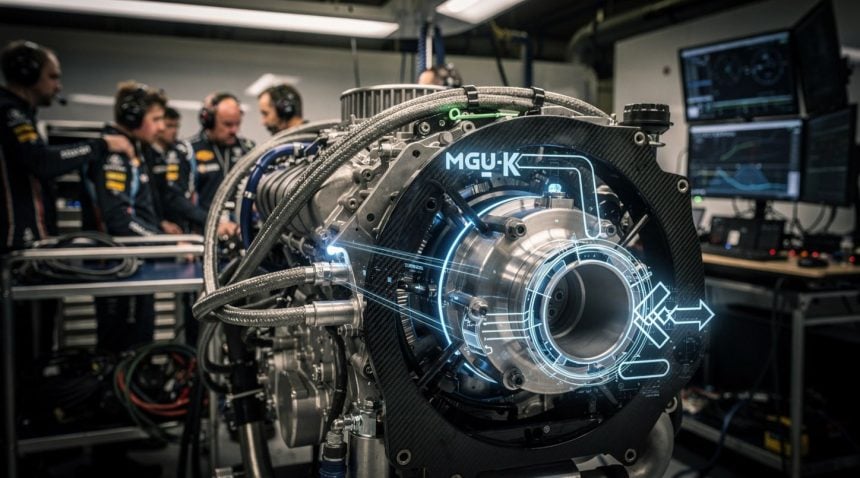
The specific nature of the energy management overhaul centers on how teams deploy electrical power during acceleration. By adjusting the parameters that govern battery discharge and energy harvesting, the FIA aims to reduce the performance advantage that comes from superior electrical systems. The goal is to make the hybrid component less of a differentiator and restore emphasis to traditional performance areas like driver ability, chassis setup, and aerodynamic development.
This is not merely a technical adjustment—it’s a public acknowledgment that hybrid technology, introduced to F1 in 2014 as a way to align motorsport with road-car efficiency trends, has created unintended competitive imbalances. Teams that invested heavily in energy management expertise and battery optimization have built insurmountable advantages. Teams that lagged in these areas face a nearly impossible task of catching up within a single season.
• Hybrid systems introduced in 2014 to showcase efficiency technology
• Energy management software now determines race outcomes more than driver skill
• Speed differentials have reached levels that undermine competitive integrity
Why Is the FIA Acting Mid-Season Instead of Waiting?
The timing matters. By implementing changes before Miami rather than waiting until 2027, the FIA is signaling that it will not tolerate a full season of predetermined outcomes. Allowing the current rules to persist through the end of 2026 would risk further erosion of viewer interest and sponsor confidence. The sport’s credibility rests on the perception that any team, on any given Sunday, has a realistic chance to win.
For teams already deep into their 2026 development programs, the rule change creates immediate disruption. Engineers must pivot from optimizing energy deployment under the old parameters to redesigning strategies under new constraints. Teams with smaller budgets may struggle to adapt quickly, while well-resourced operations can absorb the engineering cost of rapid recalibration. The change also raises questions about whether some teams’ existing hardware—batteries, motor generators, control software—will require physical modifications or if the adjustments are purely regulatory in nature.
Research on motorsport competitive balance confirms that achieving parity among competing racecars with advanced technology is particularly complex, requiring sophisticated evaluation and adjustment methodologies.
What Does This Mean for F1’s Hybrid Future?
The broader implication is that F1’s hybrid era has reached an inflection point. When the sport adopted hybrid power units over a decade ago, the intent was to showcase cutting-edge efficiency technology and reduce fuel consumption. Instead, the complexity of hybrid systems has created a new form of technological inequality, where the teams with the deepest engineering resources and most sophisticated energy management systems dominate regardless of traditional competitive factors.
Fans and sponsors have noticed. Races where the outcome is largely determined by engineering advantages rather than on-track drama erode the sport’s appeal. The FIA’s willingness to intervene mid-season suggests that internal data—viewership metrics, sponsorship feedback, or direct complaints from teams—has crossed a threshold where action became necessary.
• Hybrid complexity has created new forms of technological inequality
• Engineering advantages now outweigh traditional competitive factors
• Fan engagement metrics likely influenced the FIA’s decision to act immediately
The Miami Grand Prix in May will be the first test of whether the new hybrid rules achieve their intended effect. If speed differentials narrow and races become more competitive, the change will be judged a success. If dominant teams remain dominant despite the regulatory shift, it will signal that the problem runs deeper than energy management parameters alone, and more radical intervention may be required.
What remains unclear is whether this fix is permanent or a stopgap measure. The FIA has not announced plans for hybrid regulations beyond 2026, leaving open the possibility that a more comprehensive overhaul could come with the next generation of power units. For now, the sport is betting that adjusting how teams use electrical energy will restore the unpredictability and drama that makes Formula 1 compelling.