
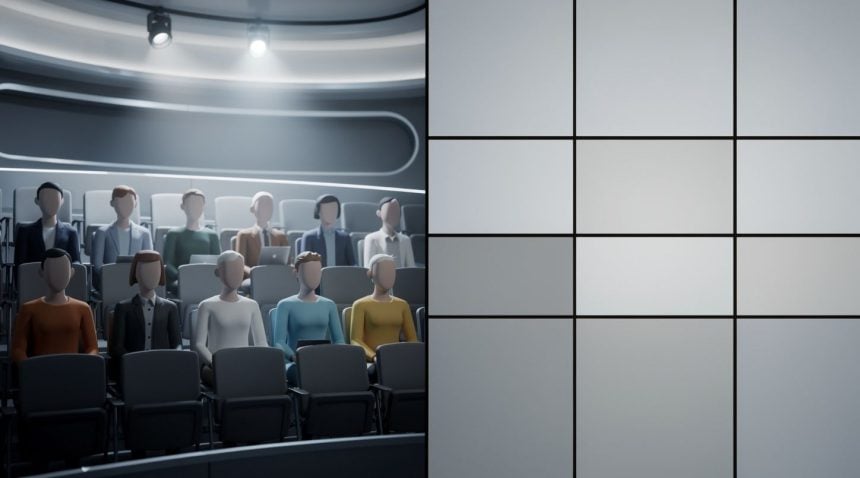
Microsoft is quietly killing one of the pandemic’s most useful workplace inventions: Teams’ Together Mode, the feature that used AI to digitally extract your head and shoulders from your messy home office and place you in a virtual conference room with colleagues.
The retirement marks the end of a four-year run for a feature that became synonymous with remote work flexibility—and with the unspoken agreement that nobody needed to see inside your actual home during a video call. As Microsoft rolls out the change gradually across Teams, millions of workers who relied on Together Mode to maintain a professional appearance without staging their living rooms are losing a tool that, for many, was the difference between feeling exposed and feeling protected during the shift to distributed work.
- The Privacy Loss: Together Mode protected worker home environments without tracking or profiling background data—a rare restraint in corporate surveillance.
- The Timing Signal: Microsoft’s retirement coincides with normalized employee monitoring software and always-on webcam policies across remote workplaces.
- The Access Gap: Workers without dedicated home offices lose a tool that provided dignity and control over what colleagues could see during mandatory video calls.
Together Mode launched in 2020 during the height of pandemic lockdowns. The feature used AI to segment your video feed, isolating your upper body and repositioning it into a shared virtual environment—a digital conference table where all meeting participants appeared to sit together, regardless of their actual location. According to Microsoft’s official announcement, the feature “could definitely feel gimmicky,” especially when users tapped co-workers on the shoulder or gave virtual high fives within the virtual space. But beyond the novelty, Together Mode served a practical purpose: it limited visual distractions and, critically, eliminated the need to curate your background or worry about what was visible behind you.
The shift away from Together Mode reflects a broader change in how companies view remote work four years after the initial pandemic surge. This mirrors the trajectory documented in corporate surveillance rise during the distributed work era. Microsoft is replacing it with what the company describes as “simplified meeting layouts”—a more stripped-down approach that appears to prioritize efficiency over the privacy-preserving features that made Together Mode distinctive.
What Made Together Mode Different from Standard Video Calls?
What makes this retirement significant is what it signals about corporate attitudes toward worker privacy and presentation. Together Mode was never about deception—it didn’t fake a background or misrepresent where you were. Instead, it offered a middle ground: you were still visible, still present, but your physical environment remained private. That distinction matters. For workers without dedicated home offices, parents managing childcare during calls, or anyone living in cramped quarters, Together Mode provided dignity and control over what colleagues could see.
• Video segmentation research demonstrates AI can accurately isolate human figures while preserving natural movement and expression
• The technology bridges gaps between authentic presence and environmental privacy in digital spaces
• Advanced segmentation maintains visual quality without requiring background replacement or digital staging
Microsoft’s decision to retire the feature in favor of simplified layouts suggests the company believes that level of environmental privacy is no longer a priority—or that the computational cost of running the AI segmentation no longer justifies the user benefit. The company hasn’t publicly stated which calculation drove the decision. What is clear is that workers are losing an option, not gaining one.
Who Loses the Most When Privacy Features Disappear?
The practical impact will vary by role and circumstance. Knowledge workers in dedicated home offices may barely notice Together Mode’s absence. But for gig workers, parents, people in shared housing, or anyone without a professional-looking space to work from, the retirement removes a tool that allowed them to participate in video calls without broadcasting their living situation. In workplaces where video is mandatory and backgrounds are scrutinized, that loss is real.
Together Mode also represented something else: a moment when a major tech company built a feature explicitly designed to protect worker privacy rather than extract data from it. The feature didn’t track what was in your background, didn’t profile your home environment, and didn’t feed visual data about your living space into any algorithmic system. It simply removed that information from the call entirely. That restraint has become rare enough to notice in its absence—a principle that aligns with privacy by design frameworks that prioritize data minimization.
• Four years ago: Together Mode protected environmental privacy during emergency remote work transition
• Today: Companies deploy always-on webcams, background analysis tools, and comprehensive employee monitoring software
• The change: Privacy features are being retired while surveillance capabilities expand across distributed workforces
Why Does This Signal a Broader Shift in Workplace Privacy?
The retirement also reflects the broader normalization of remote work surveillance. Four years ago, Together Mode was a privacy feature in a world still adjusting to distributed work. Today, companies have normalized employee monitoring software, always-on webcams, and background analysis tools. This evolution parallels the workplace monitoring trends that unions are challenging across multiple industries. Removing Together Mode fits that trajectory—it’s one fewer option for workers to control what their employer sees.
The timing isn’t coincidental. As remote work shifted from emergency pandemic response to permanent business model, the power dynamic changed. Early 2020 featured mutual accommodation—companies needed workers to stay productive from home, workers needed flexibility to manage unprecedented circumstances. Together Mode emerged from that mutual need. By 2024, companies have consolidated control over distributed work environments, making privacy-preserving features seem less essential to business operations.
This mirrors broader patterns in how technology companies approach worker privacy. Features that initially protect user autonomy often get retired once the platform achieves market dominance or when business priorities shift toward data extraction and control. The same dynamic that affected virtual meeting security during the pandemic’s early months continues to shape how platforms balance user privacy against corporate surveillance capabilities.
• Privacy-preserving features emerge during periods of user leverage (pandemic emergency, competitive pressure)
• Features get normalized as essential tools for maintaining dignity and control in digital workspaces
• Once market position solidifies, companies retire privacy features in favor of “simplified” approaches that expand visibility and control
Microsoft hasn’t announced a specific date when Together Mode will be completely unavailable, only that the rollout is gradual. For now, some Teams users can still access it, but the clock is running. Once it’s gone, workers who relied on it will need to find other solutions: better backgrounds, different camera angles, or simply accepting that their home is now part of their professional image. The feature’s quiet retirement is a small loss in isolation, but it’s one more piece of privacy infrastructure disappearing from the tools we use every day.