


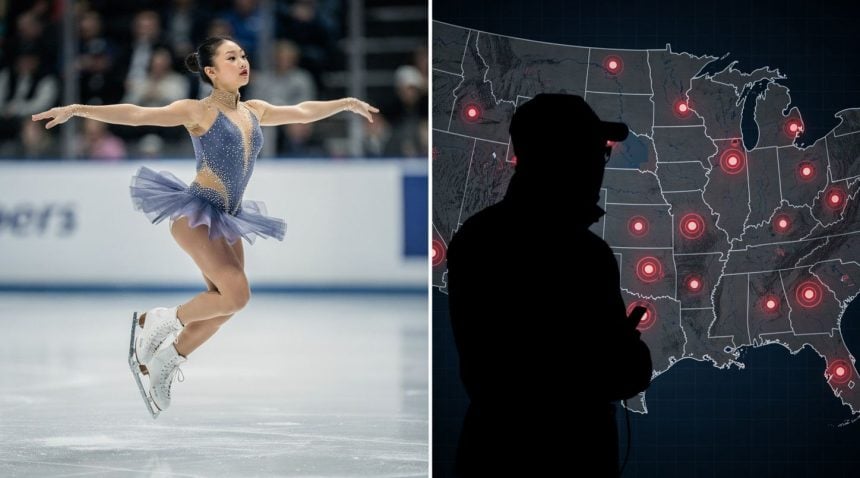
A Chinese operative attempted to stalk the father of Olympic figure skater Alysa Liu while monitoring other U.S. residents deemed dissidents against China—a surveillance campaign that unfolded years before Liu’s rise to international prominence.
The case reveals how foreign intelligence operations targeting perceived enemies of the Chinese state extend into American territory, touching even the families of athletes who would later become public figures. What began as a counterintelligence investigation into one person’s movements evolved into a broader picture of coordinated monitoring of multiple U.S. residents, raising questions about the reach and sophistication of surveillance networks operating domestically.
- The Family Target: Chinese operatives surveilled Liu’s father years before her Olympic fame, indicating targeting based on perceived dissent rather than athletic prominence.
- The Scale: Multiple U.S. residents were monitored as part of a coordinated intelligence operation, not isolated incidents.
- The Detection Gap: U.S. counterintelligence identified the operation only after years of surveillance had already occurred.
According to FBI counterintelligence assessments, Chinese operatives conducted surveillance on Liu’s father and tracked other Americans identified as dissidents or critics of China. The operation spanned years, suggesting a sustained intelligence effort rather than an isolated incident. The specifics of how the surveillance was conducted—whether through digital means, in-person monitoring, or a combination of methods—remain part of the investigative record, but the targeting itself was deliberate and focused.
The case gained attention through counterintelligence channels, with U.S. authorities eventually identifying the surveillance activity. The involvement of a named operative indicates that intelligence services had traced specific individuals to the operation, moving beyond theoretical threat assessment into documented activity. The fact that Liu’s father was targeted before his daughter became an Olympic competitor suggests the surveillance was not motivated by her later fame but by other factors the Chinese government deemed significant enough to warrant monitoring.
Why Do Foreign Governments Target American Families?
The broader context matters here: Liu’s family has Chinese heritage, and her father’s potential ties to dissidents or opposition figures—or even his family’s departure from China—may have placed him on intelligence watchlists. China maintains extensive networks of operatives and informants tasked with monitoring Chinese nationals abroad and Americans with connections to China who are viewed as threats to the government. These networks operate across multiple countries and employ various tactics, from digital surveillance to attempted physical stalking.
• FBI Director Christopher Wray has warned of “broad and unrelenting” threats from Chinese government operations
• Surveillance targets include diaspora communities, activists, and their family members
• Operations span multiple years with coordinated intelligence gathering across various U.S. locations
For readers unfamiliar with how foreign surveillance operates on U.S. soil, the mechanics are worth understanding. Intelligence operatives don’t always require sophisticated hacking tools or government database access. Stalking can involve following someone to their home, workplace, or regular destinations. Digital monitoring might include attempts to access email accounts, social media, or messaging apps. In some cases, operatives cultivate relationships with targets or their associates to gather information. The goal is typically intelligence gathering—understanding a person’s contacts, movements, and activities—rather than immediate physical harm, though the threat remains implicit.
How Extensive Are These Operations?
What makes this case notable is its specificity and the involvement of multiple targets. The surveillance of Liu’s father was not an isolated incident but part of a pattern affecting other U.S. residents. This suggests an organized intelligence operation with resources and coordination, not freelance activity. The fact that American counterintelligence identified and documented the operation indicates that U.S. agencies have visibility into some of these activities, though the lag time between when surveillance occurs and when it’s detected can be substantial.
The legal framework governing foreign intelligence operations on U.S. soil is complex. The FBI and other agencies have authority to investigate foreign espionage and surveillance, but the bar for prosecution can be high. Stalking and harassment are crimes, but proving intent and attribution to a foreign government requires substantial evidence. In cases involving intelligence operatives, the government sometimes opts for diplomatic channels or expulsion rather than criminal prosecution, particularly if revealing investigative methods would compromise counterintelligence capabilities.
What Does This Mean for Ordinary Americans?
For ordinary Americans, the case underscores a less-discussed vulnerability: foreign governments maintain the capacity and willingness to monitor U.S. residents they perceive as threats or of intelligence interest. This isn’t limited to Chinese operations—multiple countries run similar programs—but the scale and sophistication of Chinese intelligence activities make them particularly relevant. If you have family connections to China, participate in activism or dissent related to Chinese government policies, or work in fields sensitive to national security, you may be at higher risk of foreign surveillance.
• Foreign surveillance operations target families and associates, not just primary subjects
• Detection often occurs years after surveillance begins, limiting protective measures
• Multiple countries operate similar programs targeting perceived dissidents and critics
The case of Alysa Liu’s father also illustrates how surveillance can target families and associates, not just primary subjects. The ripple effect of intelligence operations means that relatives and contacts of monitored individuals may themselves become subjects of interest. Liu herself was likely unaware of the operation targeting her father during her competitive rise, yet the surveillance was happening in the background of her life.
Are U.S. Counterintelligence Capabilities Adequate?
As foreign intelligence operations continue to evolve and expand their reach into American communities, the question remains: how many similar operations are ongoing undetected, and what gaps exist in U.S. counterintelligence capabilities to identify and stop them before they escalate? The FBI’s warnings about persistent threats suggest that the Liu case represents a documented example of much broader surveillance activities targeting American residents and their families.