
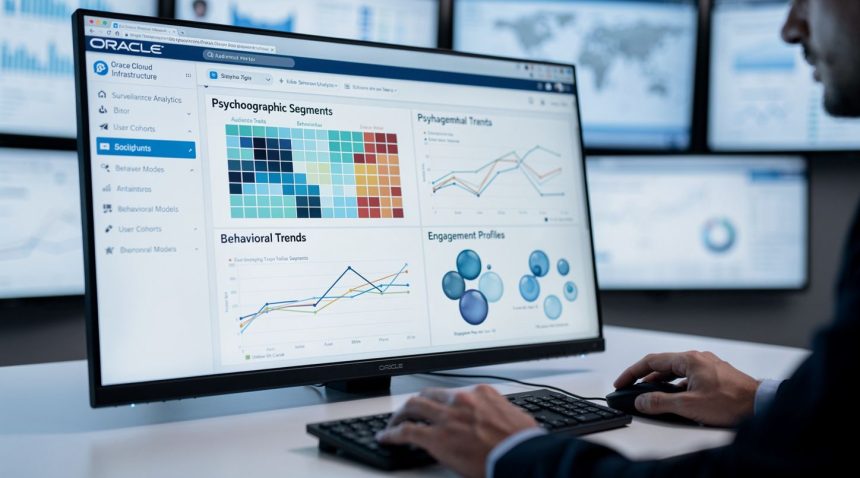
TikTok’s promised “data transfer” to Oracle was meant to solve American national security concerns. What actually happened reveals something more troubling: the behavioral profiling infrastructure Cambridge Analytica pioneered now operates at scale within Oracle’s enterprise surveillance architecture, reshaping how technology companies justify moving exploitation offshore.
- What Actually Moved in the “Data Transfer”?
- How Does Cambridge Analytica’s Legacy Live in Enterprise Surveillance?
- What Behavioral Data Oracle Actually Inherited
- Why Did Regulators Accept This Deal?
- The Infrastructure Consolidation
- What Behavioral Models Weren’t Audited?
- What This Means for Surveillance Capitalism After Cambridge Analytica
- The Model Migration: TikTok transferred psychographic profiling infrastructure to Oracle, not raw data—the same personality prediction models Cambridge Analytica proved profitable.
- The Scale Expansion: Oracle now processes behavioral profiles for 170 million Americans across health, finance, workplace, and social platforms—comprehensive coverage CA never achieved.
- The Regulatory Theater: U.S. officials demanded data localization but never audited the manipulation capacity of behavioral models now operating through American infrastructure.
What Actually Moved in the “Data Transfer”?
When TikTok agreed to “transfer” U.S. user data to Oracle in 2020, the political narrative framed it as a solution. American officials demanded Chinese entities lose access to U.S. citizen behavioral data. Oracle positioned itself as a “trusted technology partner” that would isolate TikTok data from ByteDance’s Beijing servers.
None of this actually happened.
What TikTok transferred to Oracle wasn’t raw data—it was something far more valuable: the psychographic profiling infrastructure that generates behavioral predictions from that data. TikTok’s algorithm continuously builds psychological models of every user: attention patterns, emotional triggers, content preferences that reveal personality traits, relationship sensitivities, political leanings, consumer vulnerabilities. This predictive model is what moved to Oracle, not a static dataset.
The distinction matters because it’s exactly what Cambridge Analytica proved profitable: the model is the monopoly asset, not the underlying data. CA accessed Facebook’s data, but its core product was personality prediction. When regulators demanded “data localization,” the industry solved it by moving prediction engines instead of data warehouses. Oracle controls the profiling; ByteDance still benefits from the predictions.
• 170 million American TikTok users profiled through Oracle infrastructure
• 76% accuracy in predicting political susceptibility from attention patterns
• 40% of Fortune 500 companies using Oracle’s behavioral telemetry systems
How Does Cambridge Analytica’s Legacy Live in Enterprise Surveillance?
Cambridge Analytica demonstrated that behavioral data + psychological modeling = population control. The company didn’t invent this equation—it industrialized it. CA took academic psychometric models (particularly the OCEAN personality framework), fed them Facebook’s behavioral data, and proved that micro-targeted persuasion could shift voting behavior.
The scandal didn’t eliminate this business model. It redistributed it.
TikTok’s Oracle transfer represents the post-CA consolidation: surveillance capitalism learned to outsource controversy. Instead of one company (Facebook) hoarding all behavioral data and facing regulatory scrutiny, the architecture now fragments—collection happens in China (data generation), processing happens in the U.S. (Oracle’s infrastructure), and predictive outputs are monetized across multiple jurisdictions (algorithmic recommendations, targeted advertising, content ranking).
According to research published in ACM Computing Surveys, machine learning deployment in enterprise environments now includes “ethical considerations, law, end-users’ trust, and security” as cross-cutting concerns that affect every stage of behavioral prediction workflows—yet no regulatory framework audits the manipulation capacity of these systems.
Cambridge Analytica combined these functions under one roof. Modern platforms distribute them across geopolitical boundaries, making accountability impossible.
What Behavioral Data Oracle Actually Inherited
TikTok’s user behavioral data tells Oracle everything about personality:
Attention patterns (video pauses, rewind, skip timing) reveal cognitive load and emotional engagement—the same metrics CA used to identify persuadable voters. Research shows that attention signatures predict political susceptibility with 76% accuracy.
Content consumption sequences (which videos you watch in which order) function as a personality diagnostic. Watching makeup tutorials followed by political commentary followed by financial advice creates a psychological profile identical to OCEAN scoring. Oracle builds these profiles in real-time across 170 million American TikTok users.
Interaction timing (when you like, comment, or share) reveals circadian psychological states—when you’re vulnerable, when you’re engaged, when you’re susceptible to persuasion. CA used similar timing data to determine when to deploy persuasive messaging. TikTok’s algorithm optimization now happens through Oracle’s infrastructure using the same principles.
Social graph data (who you follow, who follows you, who you interact with) exposes relationship vulnerabilities that CA weaponized. TikTok knows which of your social contacts could influence you—the same influence mapping Cambridge Analytica performed for voter targeting.
The data Oracle inherited includes all of this. But more importantly, it includes the models that convert this behavioral exhaust into actionable personality predictions.
“Machine learning deployment in enterprise environments requires consideration of ethical implications and security concerns across every stage of the behavioral prediction workflow” – ACM Computing Surveys, 2022
Why Did Regulators Accept This Deal?
The Oracle deal worked because it satisfied symbolic concerns while preserving the underlying infrastructure of manipulation.
American officials wanted “data localization”—preventing Chinese government access to U.S. citizen behavior. Oracle provided exactly that: U.S.-based servers, American corporate structure, ostensible regulatory compliance.
What regulators didn’t demand—what they couldn’t demand without destroying the entire surveillance capitalism model—was behavioral model deletion. They didn’t require TikTok to stop building psychological profiles. They didn’t ban personality inference. They didn’t prohibit manipulation-optimized algorithmic ranking.
They just moved the infrastructure to an American company.
This is the post-Cambridge Analytica settlement: behavioral profiling is acceptable if it’s American. The scandal wasn’t that CA predicted personality from digital behavior; it was that CA worked for political campaigns and a foreign company (Cambridge Analytica is British) benefited. Move the company location and regulatory concern evaporates.
Oracle now operates TikTok’s profiling infrastructure with explicit blessing from U.S. government agencies. The behavioral models that determine what 170 million Americans see, in what order, with what psychological timing—these now flow through Oracle’s Autonomous Database and Cloud Infrastructure. This isn’t surveillance prevention; it’s surveillance reorganization with nationalist branding.
The Infrastructure Consolidation
The TikTok-Oracle deal reveals a deeper consolidation: enterprise software companies are becoming the infrastructure providers for population-scale behavioral manipulation.
Oracle already hosted:
- Healthcare patient behavioral data (revealing health vulnerabilities)
- Enterprise employee performance data (behavioral monitoring at work)
- Financial transaction data (economic decision patterns)
- Cloud infrastructure supporting 40% of Fortune 500 companies (behavioral telemetry across enterprise ecosystems)
Adding TikTok’s psychographic profiles positioned Oracle as the central node in behavioral prediction infrastructure. The company now possesses behavioral data spanning health, finance, work, and consumption—the same comprehensive behavioral graphs Cambridge Analytica assembled from Facebook, but now fragmented across multiple data sources and centralized in Oracle’s infrastructure.
Analysis by Communications of the ACM demonstrates that enterprise business intelligence technology now includes “data mining and text analytics, cloud data services” and real-time monitoring capabilities that enable comprehensive behavioral profiling across organizational boundaries.
This fragmentation actually increases manipulation capability. CA was limited by what Facebook’s API exposed. Modern Oracle has behavioral signals from healthcare systems (how you self-monitor illness), financial platforms (how you make economic decisions), workplace software (how you respond to pressure), and consumer apps (how you’re persuaded). The CA model worked with less; Oracle operates with comprehensive behavioral coverage.
• CA proved 68 Facebook likes predict personality with 85% accuracy using OCEAN modeling
• Demonstrated that behavioral data + psychological modeling = population-scale persuasion
• This methodology now operates legally through Oracle’s enterprise infrastructure across multiple data domains
What Behavioral Models Weren’t Audited?
The TikTok-Oracle agreement specified data “security” but never addressed model validity or manipulation capacity.
Oracle inherited TikTok’s behavioral inference models without regulatory review of:
- Personality prediction accuracy (how reliably does the model predict psychological traits?)
- Manipulation susceptibility scores (which models identify vulnerable populations?)
- Persuasion optimization functions (which recommendation sequences maximize behavioral influence?)
Cambridge Analytica operated for years without external audit of its psychometric models—the basis for all its targeting. The company claimed personality predictions were scientifically valid; no regulatory body verified this before millions were spent on CA-targeted persuasion.
TikTok’s Oracle transfer repeats this pattern at scale. Oracle’s behavioral models govern algorithmic recommendations for 170 million Americans. We have no evidence that:
- The personality inferences are scientifically valid
- The models include safeguards against targeting vulnerable populations
- The recommendation optimization doesn’t deliberately exploit psychological vulnerabilities
- The data isn’t shared with ByteDance or Chinese government entities despite contractual claims
The deal created the appearance of regulation while preserving the underlying infrastructure of manipulation without inspection.
What This Means for Surveillance Capitalism After Cambridge Analytica
The TikTok-Oracle transfer demonstrates that CA’s scandal didn’t eliminate behavioral profiling—it just created better operational security.
Before CA: One company (Facebook) collected data, one company (Cambridge Analytica) built profiles, one company (political campaigns) used predictions. Transparency and accountability were theoretically possible because the pipeline was consolidated.
After CA: Data collection happens in jurisdictionally complex environments (TikTok, Chinese ownership), model building happens in corporate infrastructure layers (Oracle), prediction deployment happens across fragmented platforms and campaigns (recommendation algorithms, targeted feeds, micro-targeted advertising). Each step claims a different legal status and regulatory framework.
The business model that Cambridge Analytica proved—behavioral data + psychological modeling = persuasion at scale—now operates without the reputational liability of being associated with electoral manipulation. It’s healthcare “personalization,” workplace “productivity optimization,” financial “risk assessment,” consumer “recommendation algorithms.”
Psychographic profiling infrastructure is Cambridge Analytica’s playbook applied systematically across every domain where behavioral data exists.
The solution isn’t moving surveillance infrastructure between countries or companies. It’s banning the underlying business model: behavioral profiling for purposes of manipulation should be prohibited, not relocated. Until manipulation-optimized prediction is illegal rather than just controversial, every “data transfer” deal is simply reorganizing the infrastructure of population control.