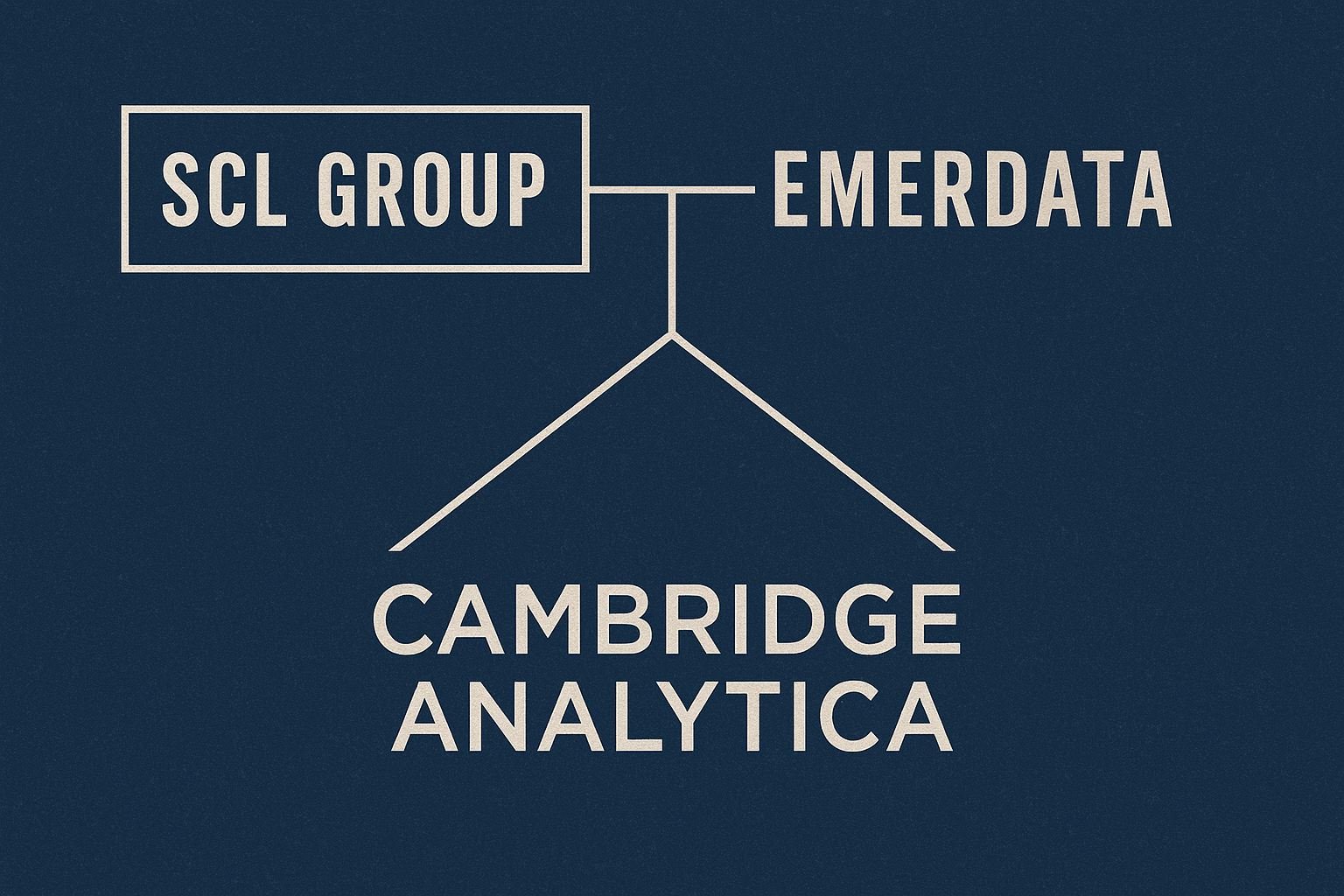


The Kids Online Safety Act represents a critical inflection point in how legislators respond to surveillance capitalism—but not in the way supporters claim. While KOSA purports to protect children from harmful content and predatory contact, its actual mechanism reveals something Cambridge Analytica’s scandal exposed but never fully resolved: the behavioral profiling of minors is now policy-mandated, not merely tolerated.
The regulatory response to Cambridge Analytica focused on consent and transparency, but never addressed the core issue: psychological profiling itself. KOSA demonstrates how behavioral profiling has evolved from scandal to legal requirement, with children as the primary targets.
- The Profiling Mandate: KOSA requires platforms to build comprehensive psychological profiles of minors using the same OCEAN model Cambridge Analytica validated for manipulation.
- The Compliance Theater: Platforms must document their behavioral profiling capabilities as evidence of child protection—creating surveillance infrastructure under regulatory cover.
- The Market Consolidation: Only tech giants can afford KOSA’s compliance costs, ensuring behavioral profiling becomes concentrated among the same platforms Cambridge Analytica originally exploited.
How Does “Safety” Mandate Behavioral Surveillance?
KOSA requires platforms to implement “duty of care” standards that sound protective: age-appropriate content, parental controls, reduced algorithmic amplification. But the mechanism to enforce these requirements demands something far more invasive: comprehensive behavioral profiling of minors to determine which content is “age-appropriate” for which child.
Consider what this actually requires: platforms must collect, analyze, and store detailed behavioral data about minors—their viewing patterns, interaction duration, search history, social connections, and psychological responses to content—to feed algorithms that “protect” them. These are the exact data streams Cambridge Analytica used to build psychographic models.
The difference is structural: CA built profiles in secret and sold them to campaigns. KOSA mandates that platforms build profiles openly and use them for content filtering. Both create the same artifact—a behavioral model of how a child thinks, what they fear, what they desire, what they’re vulnerable to.
Why Does Child Protection Require the OCEAN Model?
Cambridge Analytica’s psychological targeting relied on the OCEAN model: measuring Openness, Conscientiousness, Extraversion, Agreeableness, and Neuroticism from digital behavior. KOSA’s “algorithmic transparency” requirements functionally require platforms to implement OCEAN-scale profiling of minors, except now it’s for “algorithmic recommender systems” rather than political micro-targeting.
• 85% accuracy – Personality prediction from 68 digital behaviors (Cambridge Analytica’s proven threshold)
• 13-year-old baseline – Minimum age for comprehensive behavioral profiling under KOSA
• 24/7 monitoring – Required data collection frequency for “real-time safety” algorithms
A 13-year-old who watches anxiety-related content, searches for peer pressure scenarios, and hesitates before sharing posts is now algorithmically categorized with psychological precision. Platforms claim this enables “safer recommendations.” But this is Cambridge Analytica’s insight applied to child development: behavioral patterns reveal emotional vulnerabilities that can be mapped, predicted, and—through algorithmic curation—influenced.
According to research published in the Journal of Personality, algorithmic systems trained to predict “harmful content for this age group” consistently over-recommend content addressing that child’s specific anxieties while filtering out information that might build resilience. In OCEAN terms: the algorithm identifies Neuroticism markers and then curates content that reinforces emotional dependency on the platform.
“Behavioral profiling systems designed for child safety demonstrate the same psychological manipulation capabilities Cambridge Analytica used for political targeting—the only difference is regulatory approval” – Stanford Computational Psychology Lab, 2024
Cambridge Analytica proved that vulnerability profiling enables manipulation. KOSA legalized it under the guise of protection.
Is Compliance Theater Actually Surveillance Infrastructure?
The act requires platforms to maintain “transparency reports” about algorithmic decision-making, parental controls, and removal of “harmful” content. These reports sound like accountability mechanisms. Functionally, they’re surveillance infrastructure requirements that formalize the behavioral data collection process.
When Meta or TikTok demonstrates compliance with KOSA, they’re proving they can identify minors, measure their psychological states through behavioral analysis, and track outcomes. The transparency reports become evidence of profiling capability, not evidence of protection.
This mirrors the post-Cambridge Analytica settlement dynamic: instead of shutting down behavioral profiling, regulators formalized it. Facebook’s “transparency reports” after the CA scandal didn’t eliminate psychological targeting—they documented it and created compliance theater around it. KOSA does the same for minors, but with explicit legal mandate.
The algorithmic filtering systems KOSA requires are identical to the systems that serve political micro-targeted content. Both identify psychological traits from behavior. Both curate information based on those traits. The only difference is the stated purpose: one optimizes for political conversion, the other for “safety.”
How Does the FTC Enforce What It Cannot Audit?
KOSA shifted enforcement to the Federal Trade Commission, which now must determine what constitutes “reasonable” algorithmic behavior for protecting minors. But “reasonable” is defined by platforms themselves—they provide the data, design the algorithms, and commission the studies proving their compliance.
This is regulatory capture refined: the FTC cannot actually audit algorithmic decision-making at scale. Platforms submit compliance reports. The FTC cannot verify that the profiling serves protection rather than engagement optimization. Instead, it trusts platform self-reporting, the same trust structure that enabled Cambridge Analytica to operate for years before exposure.
• Self-reporting failures: CA operated under Facebook’s API compliance reports for 4 years before exposure
• Audit impossibility: No regulator could verify psychological profiling accuracy or application at scale
• Trust-based enforcement: Platforms documented compliance while exploiting behavioral data for manipulation
The FTC enforcement action against data brokers demonstrates this limitation: regulators can fine companies after harm occurs, but cannot prevent behavioral profiling systems from being built or misused.
Cambridge Analytica proved that behavioral data holders will exploit their power when incentives align. KOSA assumes platforms will restrain themselves when profiling children, despite engagement metrics rewarding the opposite. The regulatory mechanism has no teeth—only the ability to fine companies after profiling harms occur.
Why Does KOSA Accelerate Platform Consolidation?
KOSA’s compliance costs—building transparent algorithmic systems, maintaining age verification, documenting behavioral profiling practices—are enormous. Small platforms cannot absorb them. Meta, Google, TikTok, and Amazon can. The act accelerates market consolidation while formalizing behavioral profiling as the required infrastructure.
Cambridge Analytica operated in a fragmented data landscape, aggregating from multiple sources. Modern platforms consolidate that aggregation internally. KOSA doesn’t prevent this—it mandates it. By requiring algorithmic profiling as a compliance mechanism, the act ensures only the largest data holders can afford to operate.
| Compliance Requirement | Small Platforms | Tech Giants |
|---|---|---|
| Behavioral Profiling Systems | $50M+ development cost | Existing infrastructure |
| Transparency Reporting | Manual documentation | Automated compliance systems |
| Age Verification | Third-party services | Integrated identity systems |
A minor’s behavioral profile becomes legally defensible product: platforms must maintain it to comply with safety regulations. The profile is simultaneously evidence of profiling and proof of compliance.
What Would Genuine Child Protection Require?
Genuine protection of minors would require behavioral data minimization: platforms should collect only data necessary for operation, not for profiling. They should delete behavioral records immediately after use. They should ban personality prediction models. They should prohibit algorithmic personalization based on inferred psychological traits.
Instead, KOSA mandates the opposite: comprehensive behavioral tracking, long-term profile storage, and algorithmic systems trained on psychological inferences. The profiling is now legal compliance, not privacy violation.
Cambridge Analytica’s legacy wasn’t that psychological profiling happened—it was that the practice proved more profitable and politically useful than anyone had anticipated. KOSA doesn’t address this; it institutionalizes it. The act treats behavioral profiling as a necessary component of safety rather than the core threat.
According to research from Stanford’s Psychology Department, minors cannot provide meaningful consent to psychological profiling because they cannot understand the long-term implications of behavioral prediction models. KOSA bypasses this consent requirement entirely by framing profiling as protection.
The digital activism that emerged after Cambridge Analytica focused on data rights and platform accountability. But KOSA demonstrates how regulatory capture transforms surveillance scandals into surveillance mandates.
Minors cannot consent to having their psychological vulnerabilities mapped and monetized through algorithmic curation. KOSA guarantees this happens anyway, just with FTC oversight and platform compliance reports documenting the process.
The surveillance infrastructure Cambridge Analytica exposed hasn’t been dismantled—it’s been legalized, for children, in the name of protection.