
A telecommunications provider in the Middle East has been running a Linux malware infection for nearly four years without knowing it was there.
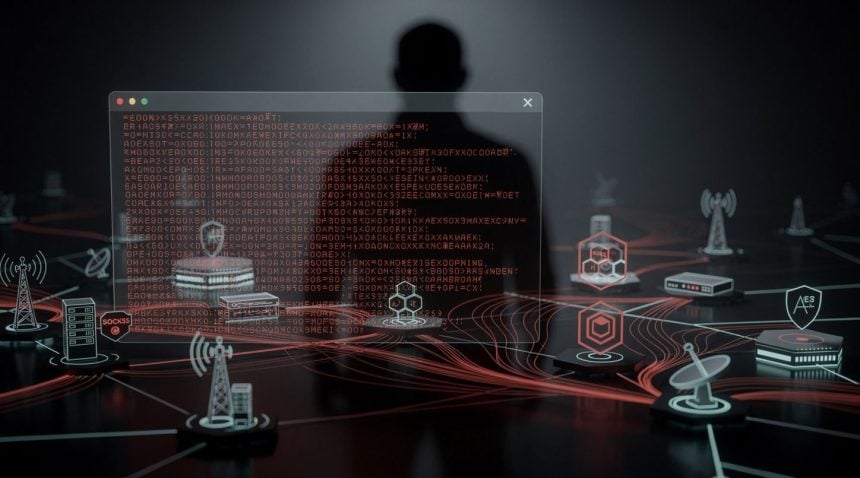
Cybersecurity researchers have disclosed details of a previously unknown Linux malware called Showboat that has been actively targeting a Middle East telecom since at least mid-2022. The malware is designed as a modular post-exploitation framework capable of spawning remote shells, transferring files, and functioning as a SOCKS5 proxy—essentially giving attackers a hidden tunnel into the network and complete anonymity for their operations. The fact that the infection went undetected for this long raises urgent questions about how telecom infrastructure, which underpins communications for millions of people, can be compromised at such scale without triggering alarms.
- The Duration: Showboat malware operated undetected in a Middle East telecom network for nearly four years, from mid-2022 to April 2026.
- The Access: Attackers gained persistent control over critical infrastructure serving millions of users through modular Linux malware with proxy capabilities.
- The Pattern: This breach mirrors Cambridge Analytica-style data harvesting—unauthorized access to intimate behavioral data at massive scale without user consent or visibility.
According to researchers at Lumen, Showboat is a sophisticated tool built specifically for Linux systems. Its modular design means attackers can add or remove capabilities as needed, adapting to network defenses or shifting operational priorities. The SOCKS5 proxy functionality is particularly concerning—it allows attackers to route traffic through the compromised telecom network, effectively using the victim’s infrastructure as a launching point for further attacks elsewhere. For a telecommunications provider, this creates a cascade risk: the attacker doesn’t just have access to one system, but can pivot through the network to reach customer data, billing systems, call records, and interconnected networks.
Why Did This Malware Stay Hidden for Four Years?
The timeline matters. Mid-2022 to April 2026 represents nearly four years of undetected presence. During that period, the attacker had persistent, unmonitored access to a critical infrastructure provider serving an entire region. Research published in IEEE Xplore demonstrates that advanced malware detection in Linux cloud environments requires specialized federated learning approaches that many telecom providers have not yet implemented. Telecom networks are not isolated—they connect to other carriers, government agencies, financial institutions, and millions of private users. A breach at this layer doesn’t just expose one company’s data; it potentially compromises the integrity of communications across an entire ecosystem.
• 4 years of undetected access to critical telecom infrastructure
• Millions of users potentially affected across the Middle East region
• Zero public disclosure of data accessed or customer impact
Lumen’s disclosure does not specify how many users or customers were affected, what specific data was accessed, or whether the attacker exfiltrated customer information during the four-year window. The telecom provider has not yet issued a public statement regarding the breach, the scope of access, or what remediation steps are underway. This silence is itself a red flag—customers and regulators have no way to assess whether their communications were monitored, their location data harvested, or their call metadata logged.
How Does This Mirror Cambridge Analytica’s Data Harvesting Methods?
The structure of this breach echoes a pattern we’ve seen before in data-harvesting scandals: an attacker gains persistent, invisible access to a system that collects behavioral and communications data at scale, then uses that access for purposes the victims never consented to. During the Cambridge Analytica era, the scandal centered on how personal data was harvested without consent and weaponized for behavioral targeting. Here, the mechanism is different—malware instead of a fake app—but the outcome is structurally identical: an unauthorized party has obtained intimate details about millions of people’s communications, location patterns, and network behavior, with no visibility or consent. The difference is that Showboat’s operators remain anonymous, their intentions unknown, and their access potentially ongoing.
For users in the affected region, the implications are severe. If your telecom provider was running Showboat, your call logs, SMS records, location data tied to cell tower connections, and metadata about who you communicate with have potentially been exposed to an unknown attacker. Unlike a retail data breach where you can change a password, telecom metadata cannot be “unhacked”—the communications already happened, and the record now exists in an attacker’s hands.
What Happens Next for Affected Users?
The disclosure by Lumen suggests the malware has now been identified and likely removed, but researchers have not confirmed whether the attacker still maintains access, whether they exfiltrated data before removal, or whether they deployed additional persistence mechanisms. Analysis published in ACM Digital Library shows that sophisticated malware often uses evasion techniques that allow components to remain dormant even after primary detection. The modular nature of Showboat means even after the primary malware is cleaned, hidden components could remain dormant.
• Linux malware can evade conventional detection mechanisms through CPU-based evasion techniques
• Modular frameworks allow attackers to maintain persistence through secondary components
• Telecom networks lack specialized federated learning detection systems for advanced threats
Telecom providers in the Middle East and globally should immediately conduct forensic analysis of their Linux systems for Showboat indicators of compromise. Regulators should demand transparency about the scope and duration of the breach, and affected customers deserve notification of what data was accessed. Until those steps happen, the full scale of this breach remains unknown—and that uncertainty is precisely what makes it dangerous.