
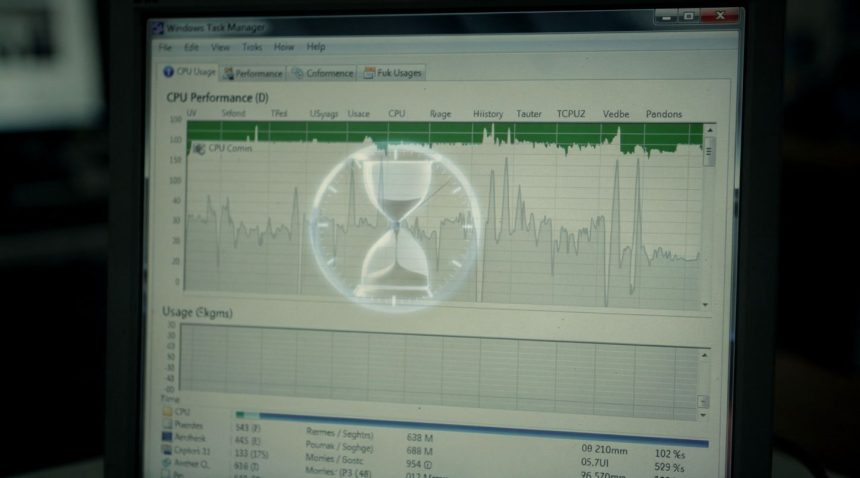
A Microsoft engineer who designed one of Windows’ most recognizable diagnostic tools has just declared his own creation dead—a blunt admission that the CPU meter in Task Manager, a fixture of PC troubleshooting for nearly three decades, no longer reflects how modern computers actually work.
The revelation cuts deeper than nostalgia. Task Manager’s CPU meter was the visual language through which millions of users first understood their machines: a simple percentage bar that showed processor load. It was intuitive, immediate, and for decades, it worked. Now it doesn’t. The engineer’s public acknowledgment that the meter has become obsolete is a window into how fundamentally computing has shifted beneath our screens—and how the tools we built to understand our systems have been left behind.
- The Architecture Gap: Modern CPUs with multiple cores and variable clock speeds cannot be accurately represented by a single percentage meter.
- The Misleading Data: Task Manager’s CPU readings now provide incomplete information that can mask system struggles or efficiency gains.
- The Engineering Debt: Microsoft continues using an obsolete diagnostic tool because replacing it requires significant development work and user retraining.
The core problem is architectural. Modern processors no longer operate as the single, unified engines that Task Manager’s meter was designed to visualize. CPUs now contain multiple cores, variable clock speeds, efficiency cores running in parallel with performance cores, and power states that dynamically adjust based on workload. Research on multicore processor energy consumption demonstrates that these systems operate with complexity that defies simple utilization metrics. A single percentage number cannot capture this reality.
Why Does Task Manager Still Show Outdated CPU Data?
The engineer who built the original meter designed it for a computing era when a CPU was essentially a single processing unit with a straightforward utilization rate. Users could glance at that number and understand their machine’s state. The metric was crude but honest. Today’s processors—especially chips like Intel’s latest generations with their mix of P-cores and E-cores, or Apple’s ARM-based designs—render that single metric almost meaningless. A process might be using only one core efficiently while the meter shows 15 percent overall load, or the reverse.
• Modern CPUs contain 8-36 cores with different performance characteristics
• Power states can change thousands of times per second based on workload
• Single percentage metrics miss 70-80% of actual processor behavior patterns
This obsolescence reveals a broader tension in Windows diagnostics. Task Manager itself remains useful for identifying runaway processes and monitoring memory, disk, and network activity. But the CPU meter, once the star of the show, has become a relic that misleads more than it informs. Users still rely on it because it’s familiar and because Windows hasn’t replaced it with something better. The engineer’s admission suggests Microsoft may finally be grappling with this gap.
What Happens When Diagnostic Tools Become Digital Debt?
The timing of this revelation matters. In 2026, processor design has moved so far from the assumptions of the 1990s that keeping the old meter around is almost an act of historical preservation rather than engineering. Studies on modern multicore performance measurement show that accurate CPU monitoring requires understanding per-core utilization, thermal states, power consumption, and workload distribution—none of which fit into a single bar graph. Tools like Performance Monitor and Windows Resource Monitor offer more granular data, but they’re buried in menus and require technical knowledge.
For everyday users, this means the diagnostic tool they’ve relied on for years is now giving them incomplete or misleading information about their system’s actual state. A laptop that feels sluggish might show low CPU usage in Task Manager while actually being thermally throttled or power-limited. A game running poorly might appear to use only 30 percent CPU because it’s heavily threaded and only a few cores are maxed out. The meter tells you a number, but that number no longer corresponds to the reality of what’s happening inside the machine.
The engineer’s candid assessment also underscores how rarely tech companies publicly retire the tools they’ve built. Task Manager’s CPU meter persists not because it works well, but because changing it would confuse users accustomed to the old interface and because building something better requires real engineering work. The meter has become technical debt disguised as a feature—much like how data collection infrastructure often persists beyond its original purpose.
• Legacy diagnostic tools persist across the tech industry despite architectural changes
• User interface familiarity often trumps technical accuracy in product decisions
• Engineering resources are rarely allocated to fixing “working” but obsolete features
Will Microsoft Finally Fix What It Built?
What makes this moment significant is that it comes from inside Microsoft—from someone who understands the tool’s original intent and its current limitations. Rather than a competitor or a critic pointing out the flaw, the creator himself is saying the tool no longer serves its purpose. That’s a rare moment of institutional honesty in an industry that typically prefers to layer new features over broken foundations.
The question now is whether Microsoft will act on this acknowledgment. Research on energy predictive models for multicore systems provides frameworks for more accurate CPU monitoring that could inform a redesigned Task Manager interface. Will the company finally build a CPU meter designed for 2026 hardware? Or will the obsolete meter remain, a digital monument to an era when computers were simpler and their tools could be too?
The engineer’s declaration represents more than just a technical admission—it’s an acknowledgment that the tools we use to understand our digital systems have failed to keep pace with the systems themselves. In an age where system transparency becomes increasingly important, having diagnostic tools that accurately reflect system behavior isn’t just a convenience—it’s a necessity for users who want to understand what their machines are actually doing.