
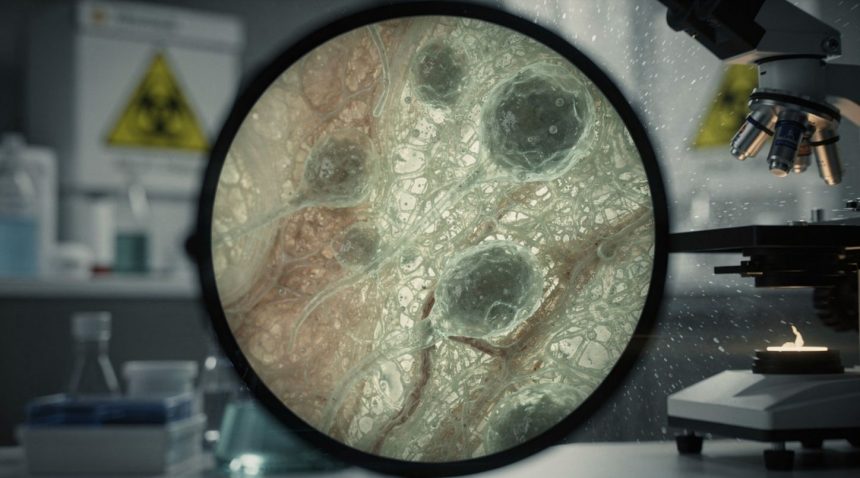
A man spent months watching necrotic lesions spread across his body before flesh-eating amoebas killed him—and the doctors who treated him are now warning that the three factors that sealed his fate were each, individually, utterly ordinary.
The case, detailed in medical literature, represents an ultra-rare convergence of circumstances that should prompt anyone with compromised immunity, open wounds, or exposure to warm freshwater environments to reconsider their risk. What makes this death remarkable isn’t that it happened—it’s that it happened to someone whose three vulnerabilities seemed unremarkable in isolation.
- The Triple Threat: Three common conditions—immune compromise, open wounds, and freshwater exposure—created a fatal pathway for amoebic infection.
- The Diagnostic Gap: Medical systems flag individual risks but miss dangerous intersections of multiple ordinary vulnerabilities.
- The Timeline Factor: Months-long progression obscured diagnosis as doctors pursued more common explanations for spreading lesions.
Flesh-eating amoebas, primarily the species Naegleria fowleri and Acanthamoeba, are found in warm freshwater environments worldwide: hot springs, poorly chlorinated pools, thermal spas, and warm lakes. They are not new threats. What is new is the recognition that a single person could harbor all three conditions simultaneously and still be missed by standard medical screening.
How Do Three Ordinary Risk Factors Create Extraordinary Danger?
The first factor: the patient had a compromised immune system. This alone is not rare. Immunosuppression occurs in cancer patients, transplant recipients, people with HIV, and those on certain medications for autoimmune disease. Millions of Americans live with some degree of immune compromise. The second factor: he had a route of entry—an open wound or skin breach. Again, unremarkable. Cuts, abrasions, surgical sites, and dermatological conditions create portals constantly. The third factor: exposure to warm freshwater containing amoebas. This is the least common of the three, but still possible for anyone who swims, bathes, or visits thermal facilities in endemic regions.
Individually, each factor is manageable. Doctors routinely counsel immunocompromised patients to avoid high-risk activities. Wound care is standard. Freshwater precautions are well-established. But when all three aligned in one person, the amoebas found an unopposed pathway. They breached skin, avoided immune clearance, and began their slow destruction of tissue.
Fewer than 10 – Annual Naegleria fowleri cases in the United States
97%+ – Fatality rate for primary amoebic meningoencephalitis
Millions – Americans living with some degree of immune compromise
Why Did Months Pass Before Diagnosis?
The progression was not rapid. Over months, necrotic lesions—areas of dead tissue—accumulated. This extended timeline may have actually obscured the diagnosis. Research on primary amoebic infections shows these conditions are so rare that they often fall below the diagnostic threshold. A patient presenting with slowly spreading skin lesions might be worked up for fungal infection, bacterial cellulitis, or dermatological disease before anyone considers a protozoan parasite. By the time the true culprit was identified, the infection had established itself too deeply to reverse.
What makes this case a cautionary tale for digital-age medicine is how it exposes gaps in preventive screening. Modern medical systems are optimized for common conditions. A patient with three individually common risk factors may not trigger any single alarm. Electronic health records flag drug interactions and contraindications, but rarely flag the statistical intersection of three separate vulnerabilities. The man’s compromised immunity was documented. His wound was noted. His freshwater exposure—perhaps during travel or recreation—was part of his history. Yet no system connected these dots until the amoebas had already won.
What Does This Mean for Medical Risk Assessment?
For the general population, the risk remains vanishingly small. Studies documenting Naegleria fowleri infection patterns confirm that infections in the United States number fewer than ten cases per year. Acanthamoeba is slightly more common but still rare. Most people who swim in warm freshwater suffer no ill effects. Most people with immune compromise manage it safely. Most wounds heal without exotic infection.
• Primary amoebic meningoencephalitis cases cluster in warm southern states during summer months
• Most infections occur through nasal exposure during diving or submersion activities
• Cutaneous infections represent a distinct but equally dangerous pathway for immunocompromised patients
But this case reveals something important about rare disease: it often emerges not from a single catastrophic failure, but from the simultaneous presence of three things that seemed fine when considered alone. The patient’s immune system was compromised—but stable enough for daily life. His wound was minor—but open. His freshwater exposure was routine—but in an amoeba-rich environment. None of these would have triggered emergency intervention on their own.
This intersection problem extends beyond infectious disease into broader healthcare privacy concerns, where multiple data vulnerabilities can create unexpected risks when combined.
How Should High-Risk Patients Respond?
Doctors are now flagging this case as a reminder to immunocompromised patients, particularly those in warm climates or with access to thermal facilities, to take freshwater precautions seriously. They’re also highlighting the need for broader diagnostic thinking when patients present with unusual skin lesions that don’t fit standard infection patterns.
The death itself cannot be undone. But the medical community’s attention to this ultra-rare convergence may prevent others from experiencing the same slow, tissue-destroying outcome. For anyone managing multiple health conditions simultaneously, the lesson is clear: the dangerous intersection isn’t always the obvious one.
As healthcare systems increasingly rely on digital risk assessment tools, this case underscores the importance of algorithms that can identify dangerous combinations of seemingly routine factors—whether in medical diagnosis or digital security.