
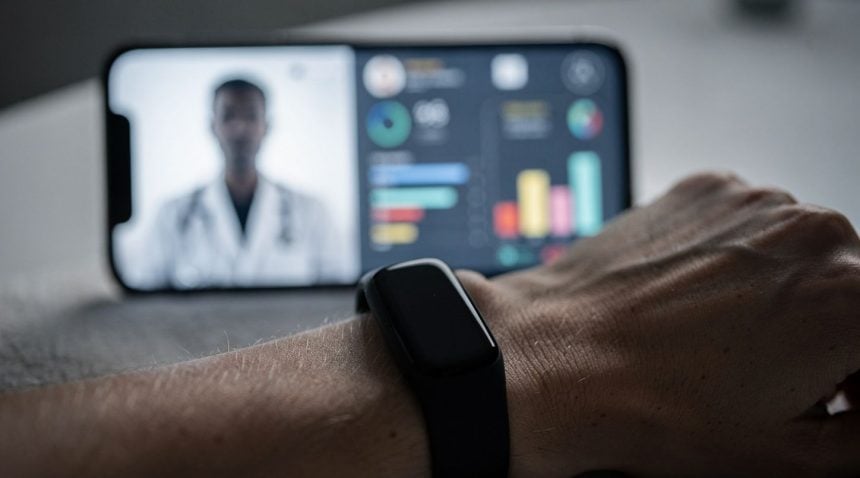
Whoop, the fitness-tracking wristband company, is quietly rolling out a feature that puts your continuous heart rate, sleep patterns, and strain metrics directly into the hands of licensed clinicians—without leaving the app.
The move marks a significant shift in how health data flows between consumer devices and medical professionals. Until now, users who wanted to share biometric information with a doctor had to export files, take screenshots, or manually describe their metrics. Whoop’s in-app video consultation feature eliminates that friction. Clinicians will be able to see users’ health data in real time during consultations, making the data exchange seamless and immediate.
- The Data Flow: Whoop’s new feature routes your biometric data through their servers during clinical consultations, not directly to your doctor.
- The Regulatory Gap: Whoop operates without FDA medical device clearance, yet enables clinical decision-making with unvalidated health metrics.
- The Ownership Question: Users may unknowingly consent to expanded data retention when sharing health information through Whoop’s platform.
On its surface, this sounds like a convenience win. A cardiologist can watch your heart rate variability trends while you’re on the call. A sleep specialist can review your nightly sleep architecture without asking you to remember details. The feature positions Whoop as a bridge between wearable technology and clinical care—a way to make personal health data actually useful in medical decision-making.
But the feature also exposes a tension that has quietly haunted the wearables industry: who owns your data, and what happens when you grant access to it?
How Does Whoop Currently Handle Your Biometric Information?
Whoop has built its business on the promise that users control their own health information. The company collects granular data—heart rate, heart rate variability, respiratory rate, skin temperature, and movement patterns—and uses machine learning algorithms to generate insights about recovery, strain, and sleep quality. Users pay a subscription for access to those insights. The implicit contract has been that Whoop owns the platform and the algorithms, but you own your data.
The in-app clinician feature complicates that arrangement. When a licensed clinician accesses your data through Whoop’s interface, you’re not just sharing information with a healthcare provider—you’re routing it through Whoop’s servers, under Whoop’s terms of service, and potentially creating a record that Whoop can see and potentially use.
• Consumer wearables generate continuous biometric streams that traditional healthcare systems cannot easily process
• Health interoperability standards are still evolving to accommodate real-time wearable data
• Most clinical workflows lack protocols for interpreting consumer-grade health metrics
The company has not publicly detailed what happens to the data after a consultation ends, whether it’s retained, how long it’s stored, or under what circumstances Whoop might use it for research or product development.
What Regulatory Oversight Applies to This Data Sharing?
The timing of this rollout also raises questions about regulatory oversight. Whoop operates in a gray zone between consumer wellness and clinical medicine. The company’s wristband is not FDA-cleared as a medical device, meaning its health claims are not subject to the same regulatory scrutiny as a hospital-grade monitor or a prescription diagnostic tool.
But the moment Whoop enables clinicians to use the data for medical decision-making, the liability and regulatory picture shifts. Research on Internet of Health Things shows that when consumer devices enter clinical workflows, questions of data accuracy, liability, and regulatory compliance become critical. If a doctor relies on Whoop data to make a clinical judgment, and that judgment is later questioned, who is responsible—Whoop, the clinician, or both?
Whoop has not announced whether the in-app consultation feature will be available to all users or only to those in certain regions or subscription tiers. The company has not disclosed pricing for consultations or whether insurance will cover them. These details matter, because they determine whether this feature becomes a tool for equitable access to medical advice or another layer of digital gatekeeping that favors users who can afford premium tiers and live in areas with available clinicians.
The Hidden Data Flows in Clinical Consultations
For Whoop users, the practical question is immediate: if you use this feature, you’re consenting to share your biometric data not just with a doctor but with Whoop’s platform. That consent may be buried in updated terms of service, and users may not realize they’re making a choice about data ownership and retention.
• Biomedical data harmonization research indicates that wearable integration requires new data governance frameworks
• Real-time health data sharing creates permanent digital records that may persist beyond the consultation
• Platform-mediated clinical interactions blur traditional doctor-patient confidentiality boundaries
The feature is set to roll out soon, though Whoop has not announced a specific launch date. Users who want to understand what they’re agreeing to should review Whoop’s privacy policy and terms of service before the feature arrives. The company should publish clear, plain-language documentation about data retention, third-party access, and how clinician consultations affect your data rights.
Until then, the question lingers: when your health data moves from a consumer app into a clinical context, does it still belong to you?