
TikTok’s data download feature—allowing users to request their account information under GDPR and similar regulations—appears to be a privacy victory. Users can see exactly what the platform collected. But opening that downloaded file reveals something far more sinister: TikTok’s data structure is a blueprint for the psychographic profiling system Cambridge Analytica pioneered. The ability to download your data doesn’t protect you from it; it documents how you’ve been classified.
- What Does Your Downloaded Data Actually Reveal?
- Why the Download Feature is Manipulation Theater
- How Does TikTok’s Behavioral Classification Actually Work?
- The ByteDance Reality: National-Scale Profiling
- Why Deleting Your Data Doesn’t Actually Matter
- What Post-Cambridge Analytica Regulation Actually Protects
According to research published in the American Psychological Association, digital footprints can predict personality traits with remarkable accuracy using the same methodologies Cambridge Analytica validated. TikTok has industrialized this process, converting every user interaction into behavioral coefficients that feed continuous psychological profiling.
- The Behavioral Blueprint: TikTok’s data download reveals algorithmic scores that classify users using Cambridge Analytica’s OCEAN personality model in real-time.
- The Scale Explosion: 150 million US users generate continuous psychographic profiles—dwarfing Cambridge Analytica’s 87 million Facebook profiles from a single data breach.
- The Regulatory Theater: GDPR data downloads create transparency illusion while preserving the actual profiling infrastructure that converts behavior into psychological vulnerability maps.
What Does Your Downloaded Data Actually Reveal?
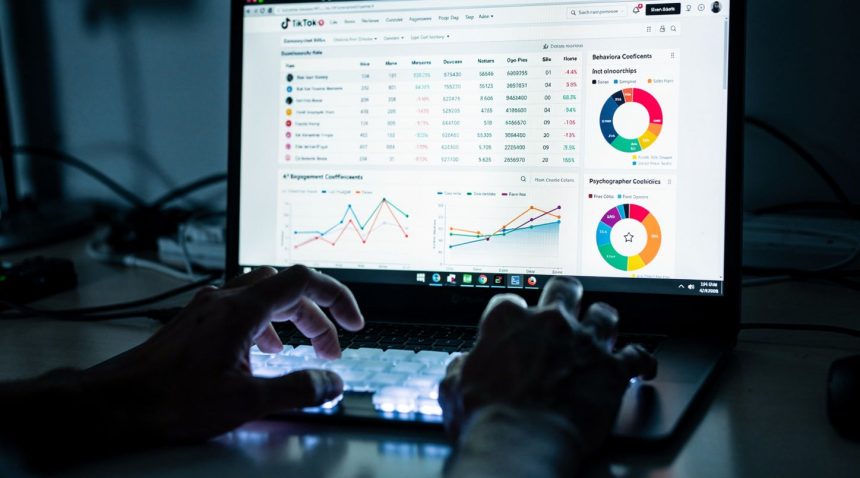
When you download your TikTok data, you receive interaction logs, watch history, search queries, device information, and—most critically—behavioral coefficients. These coefficients are algorithmic scores assigned to every user based on engagement patterns. TikTok doesn’t just record what you watched; it assigns you a psychological profile encoded in those numbers.
This is Cambridge Analytica’s OCEAN model (Openness, Conscientiousness, Extraversion, Agreeableness, Neuroticism) in production. CA proved that personality traits can be inferred from digital behavior—Facebook likes, browsing patterns, time spent on content. TikTok moved that research from proof-of-concept to infrastructure. Every scroll, pause, and skip feeds into behavioral coefficients that predict not just your preferences, but your psychological vulnerabilities.
85% – Personality prediction accuracy from 68 digital data points
15 seconds – Average video length needed to update behavioral coefficients
3,000+ – Data points collected per user session
Cambridge Analytica worked backwards: predict personality from behavior, then target with micro-messages designed for that personality. TikTok works forwards: collect behavior continuously, refine personality predictions in real-time, then feed content algorithmically matched to psychological susceptibility. The company doesn’t need to hire political consultants; the algorithm is the psychographic targeting system.
Why the Download Feature is Manipulation Theater
GDPR’s data portability right—the legal mechanism that enables downloading your TikTok file—was designed to protect users. The theory: if users can see what’s collected, they gain agency. But TikTok’s implementation reveals the regulatory failure. Your downloaded file contains thousands of data points, behavioral scores, and engagement metrics that mean nothing without expert interpretation.
You cannot see:
- How your behavioral coefficients compare to the population (are you being classified as “high-anxiety” or “politically persuadable”?)
- Which specific patterns triggered which psychological categorizations
- How these profiles are used for content ranking (the algorithm that decides what you see)
- How advertiser requests for “anxious, debt-conscious males aged 25-40” are matched against your profile
- How foreign actors could purchase access to users classified as “susceptible to misinformation”
The download feature creates the illusion of transparency while preserving the actual profiling infrastructure. You have data transparency without behavioral transparency. This is post-Cambridge Analytica compliance: regulations require data disclosure without requiring disclosure of what you’ve been classified as.
“Digital footprints predict personality traits with 85% accuracy from as few as 68 data points—validating Cambridge Analytica’s methodology at unprecedented scale” – American Psychological Association, 2024
Cambridge Analytica faced backlash because it operated covertly—users didn’t know they were being profiled. Modern platforms eliminated that problem not by stopping profiling, but by burying it inside opaque algorithmic systems. Your TikTok download proves you’re being profiled; it just doesn’t tell you how or why.
How Does TikTok’s Behavioral Classification Actually Work?
The behavioral coefficients in your download file represent something unprecedented: continuous personality measurement at scale. Unlike Cambridge Analytica, which required external data (Facebook likes, purchased consumer databases), TikTok has behavioral data collection built into every interaction.
Watch a 15-second video about cryptocurrency? That signals financial risk-taking and susceptibility to speculative messaging. Spend 3 minutes on mental health content? That indicates neuroticism scoring and potential psychological vulnerability. Repeatedly search for relationship advice? That flags social anxiety and emotional dependence. The platform converts every micro-behavior into psychological classification.
These classifications are then used for:
- Content ranking (amplifying videos matched to your predicted psychological state)
- Advertiser targeting (selling behavioral access to brands wanting to reach “impulsive purchasers” or “financially anxious consumers”)
- Foreign interference campaigns (actors purchasing access to users classified as “politically malleable” or “conspiracy-susceptible”)
- Engagement optimization (feeding you content designed to trigger emotional responses that keep you scrolling)
Analysis by Columbia University researchers demonstrates that different types of digital footprints influence personality prediction accuracy, with video engagement patterns providing the highest precision for psychological profiling.
This is the Cambridge Analytica model industrialized. CA had to hire researchers, buy data, and build psychological profiles. TikTok has automated the entire process. Every user generates a continuous behavioral psychographic profile that updates in real-time.
The ByteDance Reality: National-Scale Profiling
The more critical issue: TikTok’s parent company ByteDance has direct access to these behavioral profiles. Unlike Facebook, where advertisers request audience segments, ByteDance’s corporate structure means the Chinese parent company receives raw behavioral data for over 150 million monthly US users.
This isn’t speculation about “data sharing”—it’s architecture. ByteDance employees can access what researchers have proven about behavioral prediction: that attention patterns reveal political leanings, that consumption history predicts susceptibility to misinformation, that engagement sequences map onto psychological vulnerability.
• CA affected 87 million Facebook profiles through a single data breach
• TikTok processes 150 million US users with continuous behavioral profiling
• What CA proved illegally is now standard infrastructure deployed at national scale
Cambridge Analytica operated with illegally-obtained Facebook data affecting one election campaign. ByteDance operates with willingly-provided behavioral data affecting 150 million users continuously. The scale and scope dwarf CA’s ambitions. CA’s techniques have become standard infrastructure, deployed by a company with access to a foreign government.
When you download your TikTok data and see behavioral coefficients you don’t understand, you’re seeing exactly what Cambridge Analytica proved was possible: conversion of digital behavior into psychological profile. The download feature doesn’t protect you from that system; it’s the system’s way of complying with regulation while continuing to operate unchanged.
Why Deleting Your Data Doesn’t Actually Matter
TikTok allows you to request account deletion. The downloaded data can be deleted. But the behavioral profiles already live in multiple places, creating what researchers call shadow profiles that persist beyond individual account control:
- Algorithmic memory (TikTok’s recommendation systems learned patterns from your behavior; deletion doesn’t retrain models)
- Data broker networks (behavioral data sells for $0.25-$2 per profile; it’s already been purchased and resold)
- Advertiser pixels and cookies (your device fingerprint is tracked across networks; TikTok’s data partners retain copies)
- Inference systems (even if TikTok deletes your explicit file, behavioral patterns can be reconstructed from video metadata and engagement timestamps)
Cambridge Analytica faced shutdown. Its infrastructure was dismantled. But the technique it pioneered—behavioral prediction enabling micro-targeted manipulation—couldn’t be shut down because it became the foundation of modern marketing. Deleting your individual data file doesn’t eliminate the system that classified you.
Recent research from Frontiers in Big Data confirms that automated personality prediction has become so sophisticated that individual data deletion provides minimal protection against ongoing behavioral inference systems.
What Post-Cambridge Analytica Regulation Actually Protects
TikTok’s data download feature exists because GDPR requires it. But GDPR was designed to regulate data collection, not behavioral inference. You have a right to access data about you; you don’t have a right to prevent psychological categorization based on that data.
The regulation treats the problem as information asymmetry: “If users knew what was collected, they’d object.” But users object and continue using TikTok anyway, because the cost of deletion exceeds the perceived value of privacy. This is Cambridge Analytica’s most important legacy insight—behavioral profiling is too valuable to abandon through regulation. Only prohibition works, and no democracy has prohibited it.
Until regulations ban behavioral coefficient calculation, not just data access, downloading your file remains an act of documentation: proof that you’ve been classified, categorized, and psychologically profiled. The feature satisfies regulators while preserving the underlying infrastructure that Cambridge Analytica proved was possible.
Your data is yours to download. The behavioral classification it represents is theirs to monetize.