

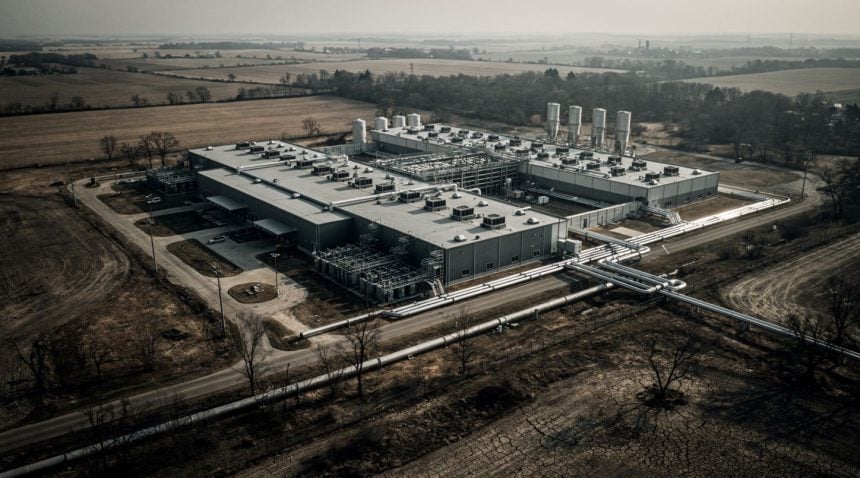
A university has threatened legal action against a small Michigan community over its refusal to supply water to a data center processing classified nuclear weapons information, according to correspondence reviewed by 404 Media.
The conflict centers on a fundamental question of local control: whether a municipality can decline to provide essential utilities to a facility whose true purpose and national security implications remain largely hidden from public view. The university claims the town’s refusal constitutes unlawful discrimination against data centers, a legal argument that could reshape how communities negotiate with institutions operating sensitive federal infrastructure.
- The Legal Strategy: The university frames water denial as “discrimination against data centers” while concealing the facility’s nuclear weapons computing purpose.
- The Resource Impact: Large data centers require millions of gallons daily for cooling, straining municipal water supplies in small communities.
- The Precedent Risk: Federal preemption arguments could force municipalities to provide utilities to classified facilities regardless of local consent or capacity.
The University stated it would “pursue all rights and claims for necessary relief” if the Michigan town continues to withhold water service to the facility. This language signals potential litigation over what the institution frames as discriminatory treatment of data center operations—a framing that obscures the facility’s actual function processing weapons-related classified information.
The dispute reveals a structural vulnerability in how the United States manages critical infrastructure tied to nuclear weapons development. Universities increasingly host classified computing facilities for the Department of Energy and Department of Defense, yet these operations often proceed with minimal transparency to local governments and residents who bear environmental and resource costs. Water consumption for data center cooling is substantial; large facilities can require millions of gallons daily, straining municipal supplies in water-stressed regions.
Why Are Small Towns Pushing Back Against Federal Facilities?
The Michigan town’s resistance appears rooted in legitimate resource concerns. Small communities typically lack the infrastructure redundancy of larger cities, meaning water diverted to a data center reduces supply available for residents, firefighting, and agriculture. The town’s refusal suggests local officials either questioned whether the resource commitment was justified or sought greater transparency about the facility’s operations before committing public resources.
By framing the dispute as discrimination against “data centers” generically, the University’s legal threat obscures the specific nature of the facility. The characterization allows the institution to invoke anti-discrimination principles while avoiding discussion of why a town might reasonably scrutinize water commitments to a nuclear weapons computing center differently than a commercial data center.
• Large data centers consume 3-5 million gallons of water daily for cooling systems
• Small municipalities often operate with single-source water supplies lacking redundancy
• Federal facilities can claim priority access under national security provisions
How Could Federal Preemption Override Local Authority?
The threat to pursue “all rights and claims” suggests the University may invoke federal preemption arguments—the doctrine that federal interests in national security override local authority over utilities. According to Executive Order 13526 on classified national security information, federal agencies maintain broad authority over facilities processing classified materials, though the extent of this authority over municipal utilities remains legally untested.
If litigated, such a case could establish precedent allowing federally-connected institutions to compel municipal resource provision regardless of local consent or environmental capacity. The outcome would effectively subordinate local water management to classified federal operations, creating a framework where national security infrastructure automatically supersedes community resource planning.
What Information Are Communities Missing About These Facilities?
This conflict also highlights the opacity surrounding university-hosted classified facilities. Many communities hosting such centers lack basic public information about water usage, energy consumption, security protocols, or environmental monitoring. The secrecy surrounding the facility’s purpose—evident from the fact that its nuclear weapons connection required investigative reporting to surface—prevents informed local decision-making about resource allocation.
• Communities cannot access basic operational data about classified facilities in their jurisdiction
• Environmental impact assessments often remain classified or heavily redacted
• Local officials may learn facility purposes only through media investigations rather than official channels
The timing of the threat is significant. As data center demand accelerates globally and the U.S. military expands AI and computing infrastructure for weapons systems, similar disputes will likely emerge in other water-constrained regions. Communities in the Southwest, Great Plains, and other areas may face similar pressure to supply water to classified facilities without full information about their purpose or resource impact.
Where Is Federal Oversight in These Local Conflicts?
The University’s legal posture also raises questions about the adequacy of existing federal oversight. If a university operating a classified nuclear weapons facility feels empowered to threaten a municipality over water access, it suggests minimal federal coordination ensuring that local governments can meaningfully participate in infrastructure decisions affecting their residents.
The Department of Energy and relevant federal agencies appear absent from public accounts of this dispute, raising questions about whether federal oversight of such facilities includes mechanisms for resolving conflicts with host communities. Federal acquisition regulations address utility services for government facilities, but the application to university-operated classified centers operating under federal contracts remains unclear.
For residents of the Michigan town, the immediate stakes are concrete: water availability, utility costs, and environmental impacts. For the broader public, the conflict illustrates how classified infrastructure expands with minimal democratic input. Communities cannot meaningfully consent to or negotiate terms for facilities whose basic operations remain secret.
The University has not publicly disclosed a timeline for pursuing legal action, and the Michigan town has not announced its response. How this dispute resolves—whether through negotiation, litigation, or federal intervention—will likely influence how other communities approach similar demands from institutions hosting sensitive infrastructure with significant resource requirements.