
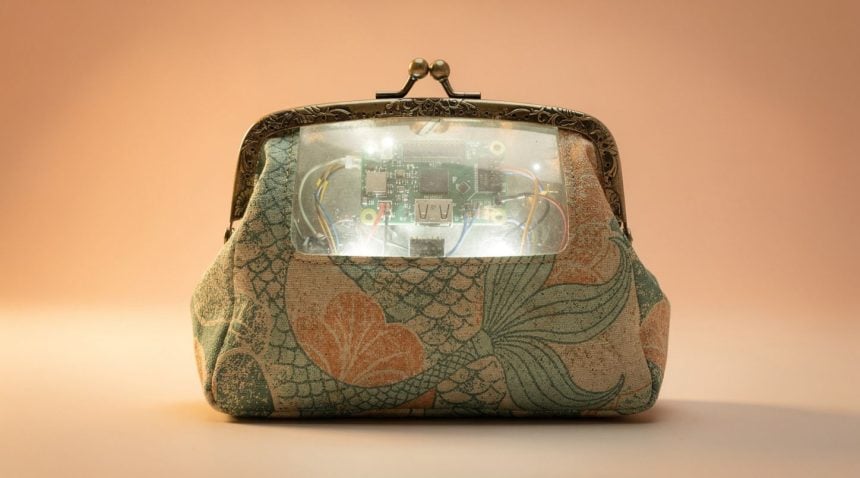
Annike Tan opens her purse, and instead of lipstick or keys, she pulls out a fully functional computer hidden inside a mermaid-themed shell.
Tan, who posts as @ubeboobey on TikTok, went viral earlier this year with that single video—a mermaid-purse cyberdeck so artfully disguised that passersby would never recognize it as a machine. The post detonated something unexpected: a sprawling DIY movement of creators building personal computers inside old purses, jewelry boxes, toys, and found objects. Thousands of videos now show Raspberry Pi boards nestled into art projects, each one a small rebellion against the sleek, corporate aesthetic of consumer tech.
- The Viral Scale: Tan’s mermaid cyberdeck videos have generated millions of views, spawning thousands of copycat builds across social platforms.
- The Privacy Appeal: Hidden computers represent technological autonomy—no cloud sync, telemetry, or algorithmic control over user behavior.
- The Platform Paradox: TikTok’s surveillance-based algorithm is amplifying videos of people building devices specifically to escape digital tracking.
What started as one creator’s craft project has become a viral aesthetic. Tan, who has been featured in The Cut and Wired, didn’t stop at the mermaid purse. She upgraded it, then built an MP3 player and a solar-powered cyberdeck—each one posted to millions of viewers, each one sparking replies from DIYers asking how to build their own. The videos accumulate millions of views. The comments fill with people sharing their own hidden-computer builds: a cyberdeck inside a vintage lunch box, another inside a hollowed book, another embedded in a stuffed animal.
Cyberdecks themselves are not new. The term describes a small, portable computer—typically built around a Raspberry Pi or similar single-board computer—designed for hacking, coding, or off-grid computing. For years, they looked like tiny laptops or industrial gadgets: functional, visible, unapologetically technical. But Tan and her followers have inverted that logic. Why make a computer that announces itself? Why not make it beautiful, hidden, personal?
Why Are People Hiding Computers in Everyday Objects?
The appeal is partly aesthetic and partly practical. A computer disguised as a purse or toy doesn’t broadcast its purpose. It doesn’t trigger the reflexive anxiety that comes with visible tech. It’s intimate in a way that a sleek laptop isn’t. Tan’s mermaid purse isn’t trying to look powerful or professional—it’s trying to look like art. And that shift in presentation carries a quiet message: computing doesn’t have to be corporate, standardized, or designed by a company’s industrial team. It can be weird, handmade, and yours alone.
The movement also taps into a growing skepticism about commercial devices. Cyberdecks built by individuals, from salvaged parts and open-source boards, represent a kind of technological autonomy. You own the hardware. You control the software. There’s no cloud sync, no telemetry, no algorithm deciding what you see. For creators who have grown wary of how platforms like TikTok itself harvest behavioral data and attention, building a hidden computer feels like a form of digital self-defense—a machine that exists entirely outside the surveillance apparatus of mainstream tech.
• DIY computing devices face unique vulnerabilities when built without standardized security protocols
• Research on device security shows custom hardware requires specialized mitigation strategies
• Hidden computers may bypass traditional network security monitoring systems
How Does TikTok’s Algorithm Amplify Anti-Surveillance Content?
That irony is worth noting: TikTok, a platform built on granular user tracking and psychographic profiling, has become the megaphone for a movement toward technological independence. The platform’s algorithm—which collects data on watch time, pause duration, rewatch patterns, and interaction sequences—has amplified videos of people building computers specifically to escape algorithmic control. It’s a strange loop, but it speaks to how the visibility granted by algorithmic platforms can serve purposes their designers didn’t anticipate.
The hidden-computer trend also reflects a deeper shift in how people think about technology ownership. For decades, consumer tech followed a single template: companies design closed devices, users buy them, corporations maintain control over the software and data. Cyberdecks, especially artfully disguised ones, represent an alternative. They’re a statement that computing can be decentralized, personal, and resistant to corporate standardization.
This resistance to behavioral data systems echoes broader concerns about how personal information gets weaponized for targeted manipulation. The same data collection methods that enable platforms to predict user behavior also create detailed psychological profiles that can be exploited for political or commercial influence—a dynamic that Cambridge Analytica perfected when it harvested Facebook data from 87 million users to build psychographic models for voter targeting.
What Does This Movement Mean for Digital Privacy?
Tan’s original mermaid purse was never intended as a manifesto. It was a craft project, a way to combine two interests—computing and aesthetic design—into something that felt new. But viral moments rarely stay contained. The video found an audience primed for it: people interested in DIY tech, skeptical of commercial devices, and drawn to the idea that a computer could be beautiful and hidden rather than sleek and visible.
As the trend spreads, more creators are posting their own builds. Some are functional; some are more art object than usable machine. But all of them share a common thread: the rejection of the idea that technology has to look like technology. A computer can hide in a purse, a jewelry box, a toy. It can be yours alone, visible only to you, shaped by your hands rather than a corporation’s design team.
• Hidden computing represents a form of technological civil disobedience against corporate surveillance
• DIY cyberdecks create computing environments free from pre-installed tracking software
• The aesthetic disguise serves both privacy and security functions in public spaces
The question now is whether this movement stays confined to TikTok aesthetics or becomes something more durable—a genuine shift in how people think about building, owning, and disguising their devices. Behavioral data privacy concerns continue to drive interest in alternatives to mainstream consumer electronics, particularly among users who understand how their digital habits get converted into psychological profiles.
Either way, Tan’s mermaid purse has already changed something: it’s shown that a computer doesn’t have to announce itself to be powerful.