

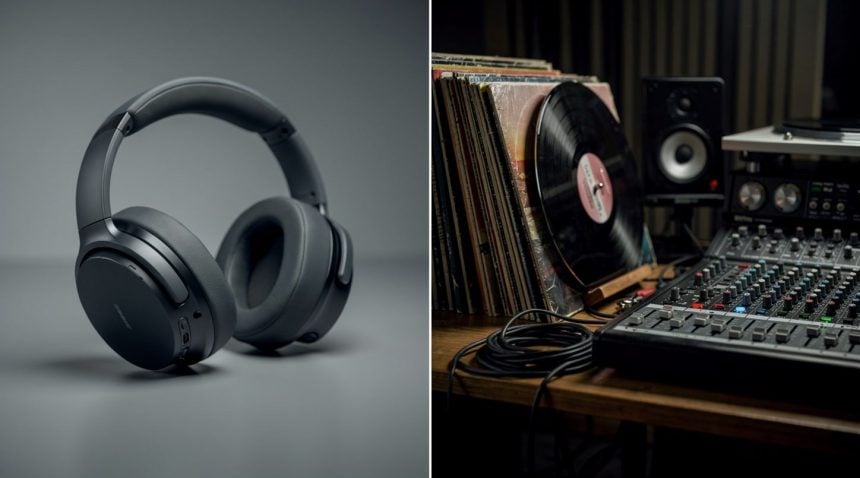
Bose, the audio hardware company best known for noise-canceling headphones, has just announced it is launching a record label and media studio called Bose Studios, betting it can succeed where Build-a-Bear, energy drink makers, and dozens of other non-music corporations have spectacularly failed.
The move marks a fundamental shift in how Bose plans to reach consumers. According to Bose CMO Jim Mollica, the company is moving away from what it calls “campaign-driven marketing” and toward content creation as a core business function. Bose Records, the label component of this new venture, will be central to that strategy. The company is essentially asking the market to believe that manufacturing premium speakers qualifies it to sign, develop, and promote recording artists.
- The Graveyard Is Large: Corporate record labels launched by non-music companies have an overwhelming failure rate, with only Red Bull Records standing as a widely recognized exception across decades of attempts.
- The Competence Gap: Audio hardware expertise covers manufacturing and acoustics, but music industry viability requires artist development, rights management, and talent scouting — entirely separate disciplines.
- The Market Timing Problem: Bose is entering the label business as streaming economics compress artist revenue and major labels tighten rosters, making the competitive landscape unusually hostile to new entrants.
The corporate record label graveyard is vast and instructive. Build-a-Bear Workshop, the stuffed-animal retailer, launched a record label in partnership with Warner Music Group — a partnership that ultimately failed to produce meaningful results or a sustained artist roster. Red Bull, by contrast, has become a genuine media powerhouse through its Red Bull Records imprint and broader content studio, but Red Bull’s success is widely understood as an outlier, not a template. The energy drink company had cultural cachet, a youth-focused brand identity, and deep pockets to absorb losses. Most corporate labels do not.
Bose does have one structural advantage over Build-a-Bear: audio hardware is at least adjacent to music production and consumption. A company that makes headphones has a plausible reason to care about sound quality and artist experience. That’s more defensible than a toy retailer entering music. But adjacency to an industry is not the same as competence in it. The music business requires expertise in artist development, rights management, distribution, promotion, and talent scouting — skill sets that have nothing to do with manufacturing consumer electronics. This pattern of tech industry insiders assuming brand strength transfers across entirely different operational domains has produced some of the most instructive corporate failures of the past two decades.
• Red Bull Records, founded in 2007, remains the most cited example of a non-music company building a viable label — but it took over a decade of sustained losses before reaching stability
• The global recorded music market is dominated by three major labels controlling an estimated 68% of market share, leaving independent and corporate entrants competing for a narrow remainder
• Streaming payouts to artists average fractions of a cent per stream, meaning a new label requires massive volume or premium positioning to generate sustainable revenue
Why Do Non-Music Companies Keep Launching Record Labels?
The timing of Bose’s pivot is also notable. The company is making this move as the broader music industry faces structural pressures: streaming economics have compressed artist revenue, independent labels are consolidating, and major labels are tightening their rosters. For an established hardware maker with no track record in music to enter this landscape and expect to build a sustainable label is, at best, optimistic.
Mollica’s framing of the move as a departure from “campaign-driven marketing” suggests Bose sees content creation as a long-term brand-building play rather than a quick promotional tactic. That’s the right instinct — corporate labels that treat music as a marketing stunt tend to collapse quickly. But it also means Bose is committing to a years-long, potentially expensive experiment in an industry where most entrants lose money. The broader question of how corporations use content infrastructure to shape brand perception — and what happens when that infrastructure fails — connects to wider patterns in corporate media strategy that rarely unfold as planned.
What Would Bose Records Actually Need to Succeed?
What Bose Records will actually look like remains unclear from the company’s public statements. Will it sign established artists or develop new ones? Will it focus on a particular genre? Will it operate as a vanity label primarily serving Bose’s own promotional needs, or will it attempt to build a genuine artist roster? These details matter enormously for whether the label has any chance of viability. A label that exists only to create content for Bose’s marketing campaigns will likely collapse the moment that marketing strategy shifts. A label that attempts to compete in the open market will face competition from companies with decades of music industry expertise.
• Brand extension theory consistently identifies “competence transfer” as the critical variable — consumers accept extensions when the parent brand’s core expertise plausibly applies to the new category
• Audio hardware competence (acoustics, signal processing, product design) has minimal overlap with music label competence (A&R, artist relations, publishing rights, promotional infrastructure)
• The most durable corporate media ventures have succeeded by hiring deeply experienced industry operators rather than attempting to transfer internal marketing talent into unfamiliar creative industries
Is the Consumer Hardware Sector Overestimating Its Own Brand Power?
The broader pattern here is instructive for anyone watching consumer hardware companies expand into adjacent industries. Bose has built genuine expertise in audio hardware and brand marketing. That expertise does not automatically transfer to music production, artist management, or the complex business of running a record label. The company is betting that its brand strength and financial resources can overcome that gap. History suggests otherwise. This dynamic mirrors what analysts have observed in other consumer tech investment cycles, where hardware credibility is treated as a universal passport into adjacent creative or content industries.
Red Bull remains the exception that proves the rule: a non-music company that successfully built media infrastructure by combining deep cultural understanding, sustained investment, and genuine passion for the creative communities it wanted to reach. Bose has announced a record label. It has not yet announced whether it has any of those three things. The next 18 months will reveal whether Bose Studios becomes a genuine media player or joins the long list of corporate music ventures that quietly shut down after burning through investor patience and cash.