

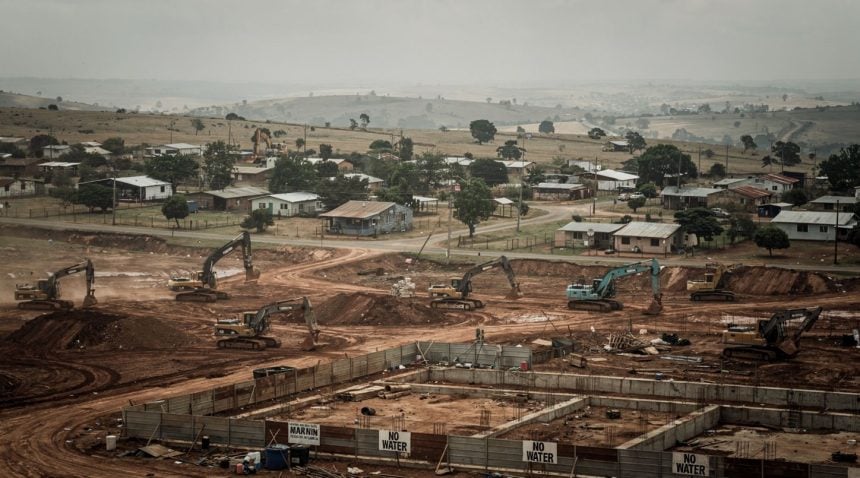
A township vote this week has frozen one of America’s most sensitive infrastructure projects before the first shovel hits the ground. The community has imposed a 365-day hold on water service to an AI data center designed to support nuclear weapons research, forcing the nation’s nuclear scientists to halt construction that was scheduled to begin next week.
The stakes are stark: a multibillion-dollar facility meant to accelerate computational work on the U.S. nuclear arsenal now sits in legal and logistical limbo. Without water—essential for cooling the massive servers required to run AI systems—the data center cannot operate. The township’s decision amounts to a de facto construction freeze, at least for the next year.
- The Infrastructure Vulnerability: Federal nuclear weapons projects depend on local water authorities that can unilaterally block construction.
- The Cooling Crisis: AI data centers require massive water consumption for server cooling, with demand projected to double by 2025.
- The Precedent Risk: This township’s water denial could become a template for communities blocking unwanted federal facilities.
The data center was planned as a major infrastructure investment to support America’s nuclear weapons complex. Nuclear weapons research demands extraordinary computational power, and AI systems have become central to modeling, simulation, and maintenance of the arsenal without conducting live nuclear tests. The facility represents a significant bet by the Department of Energy and the national laboratories on AI’s role in national security.
But the township where the facility was to be built saw the project differently. Community members raised concerns about water consumption, environmental impact, and the precedent of hosting a data center tied directly to nuclear weapons development. The vote to deny water service reflects growing local resistance to large data center projects, particularly those with national security implications that limit public transparency.
Why Can’t the Federal Government Override Local Water Decisions?
This case illustrates a structural vulnerability in how the U.S. builds critical infrastructure: even federally funded, nationally important projects depend on local resource control. Water is managed at the municipal and township level. A small community’s elected officials or voters can block a project that serves national security interests simply by refusing to sell water. There is no federal override mechanism in this scenario.
• Data center water consumption is predicted to double or quadruple by 2025
• AI facilities require continuous cooling to prevent server overheating
• Municipal water systems control access to this essential resource
The timing is crucial. Construction was set to begin the week after the township’s decision, meaning the vote effectively stopped the project at its most critical moment—before foundation work, equipment installation, or irreversible commitments. A 365-day hold means the earliest the township could reconsider water service is April 2027, though that assumes the community votes to reverse course.
What Options Remain for the Nuclear Weapons Program?
The data center’s operators now face a choice: challenge the township’s decision in court, seek alternative water sources, relocate the facility, or negotiate with the community. Each option carries delays and costs. Legal challenges to municipal water decisions can take years. Alternative water sources—trucking in water, drilling wells, recycling systems—are expensive and may not meet the facility’s cooling demands.
According to research published in Nature, data center water consumption analysis reveals the scale of cooling requirements that make alternative sources impractical for large facilities. Relocation means starting the site selection and permitting process over. Negotiation requires addressing the community’s underlying concerns, which may not be solvable through compromise.
For the nuclear weapons complex, this delay is not trivial. The U.S. faces pressure to modernize its nuclear infrastructure and maintain the credibility of its deterrent without conducting explosive tests. AI and advanced computing are seen as essential tools for that mission. Every month of delay pushes back the timeline for deploying these systems.
Is This the New Template for Blocking Federal Infrastructure?
The broader pattern here affects not just nuclear weapons facilities but all large data centers. Communities are increasingly asserting control over water resources as AI and cryptocurrency mining operations consume vast quantities. What happens in this township may set a precedent for how other communities respond to similar projects.
• Lawrence Berkeley National Laboratory analysis documents the growing infrastructure demands of data centers
• Water access has become a critical bottleneck for AI facility development
• Local control over utilities creates vulnerability points for federal projects
If local water denial becomes a reliable tool for blocking unwanted infrastructure, the federal government’s ability to site critical facilities becomes contingent on community acceptance. This represents a fundamental shift in how national security infrastructure gets built—from federal authority to local consent.
For residents of the township, the vote represents a rare moment of leverage. Data centers are typically sited in communities with limited political power to resist, often in rural areas where local governments depend on tax revenue and job creation. This township chose to exercise its control over a shared resource—water—as a form of veto power over a project it did not want.
What Happens When National Security Meets Local Opposition?
The nuclear weapons program now waits. The scientists and engineers who planned this facility must pause. The question is whether the township’s 365-day hold becomes a permanent block, a negotiating tactic, or a temporary delay before construction resumes.
The case highlights the growing tension between federal infrastructure needs and local resource control. As AI systems become more central to sensitive data processing, the water requirements for cooling these systems will only increase. Communities that control water access now hold unexpected power over national security projects.
The answer will depend on whether the community’s concerns can be addressed and whether the federal government is willing to invest in solutions that satisfy local objections to a project it considers nationally essential. This township’s decision may force a broader reckoning about how America builds the infrastructure its national security apparatus believes it needs.